|
Getting your Trinity Audio player ready...
|
Columbia University’s Task Force on Antisemitism has issued a new report concluding that students lack meaningful access to Middle East scholarship that does not come from an “explicitly anti-Zionist” perspective.
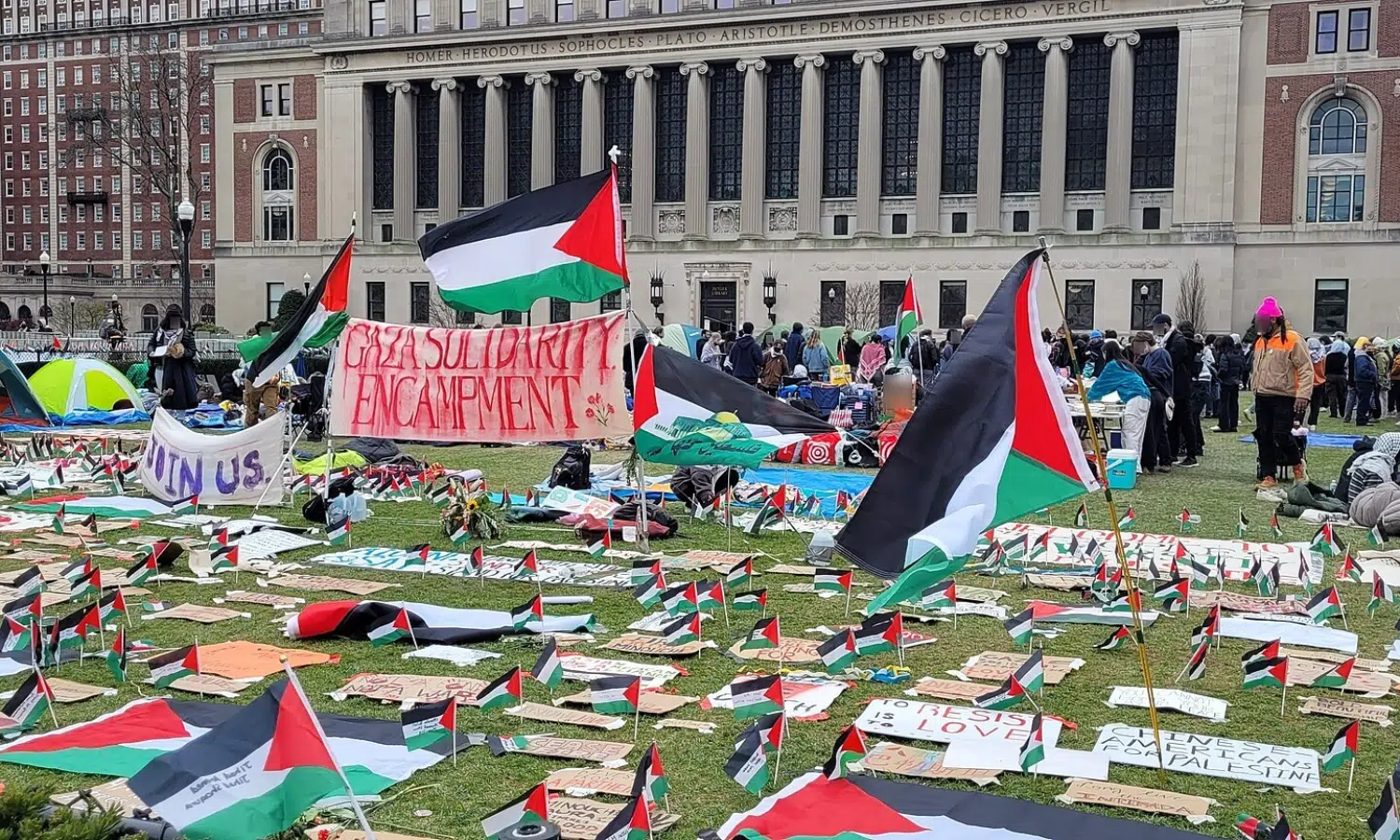
The findings mark the task force’s fourth public assessment since it was established following the 2024 anti-Israel protests that swept the campus.
The latest report can be read in full HERE.
Earlier reports addressed protest rules, hostile incidents targeting Jewish students, and the overall campus climate. Together, they documented a deep sense of alienation among many Jewish and Israeli students.
This latest release turns to the academic environment itself and warns that anti-Israel messaging has penetrated far beyond courses connected to the region.
Anti-Israel Messaging Across Unrelated Courses
The task force cites repeated cases where professors introduced political commentary on Israel in classes unrelated to the Middle East. One student recounted that “in a class on feminism, the professor opened the first session by announcing it had been 100 days since Israel began waging war on Gaza.” Similar accounts emerged from courses in photography, architecture, nonprofit management, film, music humanities, and Spanish.
The report stresses that these comments often blindsided students, who expected coursework aligned with the class description — not ideological statements about a foreign conflict. Many Jewish and Israeli students told the task force they felt targeted or unwelcome when professors framed Israel in harsh, accusatory terms without space for alternative viewpoints.
Ensuring Academic Rigor Without Turning Classrooms Into Activist Spaces
The task force affirms that academic freedom allows faculty to explore challenging ideas. It notes, however, that instructors should present a range of perspectives and build environments where students “feel free to express other views.”
To prevent required courses from turning into “exercises in anti-Israel activism and advocacy,” the report recommends that professors disclose in advance when their courses take a particular stance on sensitive political issues. That transparency, it argues, allows students to make informed choices about their academic paths.
Key Recommendation: Hire Faculty Who Do Not Treat Zionism as Illegitimate
The report’s most urgent recommendation calls for Columbia to hire senior scholars in Middle East history, politics, political economy, and policy who do not approach the region through an anti-Zionist lens. Students reported that courses treating Zionism as a legitimate national movement are scarce, while courses portraying it as inherently illegitimate dominate the field.
“The University should work quickly to add more intellectual diversity to these offerings,” the task force wrote, warning that the current imbalance undermines academic integrity and leaves students without access to rigorous, multi-perspective scholarship.
This report is the first released since Columbia agreed to pay $221 million to settle federal investigations into alleged failures to address antisemitism, stemming in part from last year’s encampment. Some faculty members not only supported the encampment but held office hours there, intensifying concerns about political advocacy replacing academic boundaries.
University Response
While Columbia has not yet committed to implementing the hiring recommendations, Acting President Claire Shipman thanked the task force and indicated the administration would continue advancing its broader proposals.
“Thank you for your time, your engagement, your insights, and your care,” Shipman said. She added that Columbia must remain a place that protects academic freedom and free expression while ensuring that all students “feel safe, heard, and welcome.”