|
Getting your Trinity Audio player ready...
|
An Israeli-owned restaurant in Lisbon, Portugal, confirmed on Tuesday that it would close this weekend, citing more than two years of sustained harassment, vandalism, and organized pressure linked to the surge in antisemitism following the October 7th massacre..
Tantura, founded ten years ago by chefs Elad Budenshtiin and Itamar Eliyahu, said the ongoing hostility left the owners with no viable path forward. The restaurant will cease operations on Saturday, January 10.
A Space Built on Culture and Connection
When Tantura opened its doors, the founders envisioned a place shaped by Israeli and Jewish culinary traditions. The menu reflected Israel’s diverse cultural influences and aimed to bring people together through food.
For much of the past decade, the restaurant served as a welcoming destination for residents and visitors alike. That sense of openness, however, eroded after Hamas’s October 7th massacre in southern Israel.
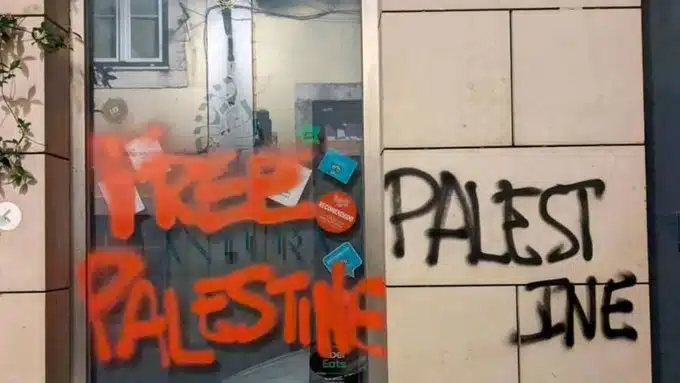
According to the owners, the restaurant soon became a repeated target. Antisemitic graffiti appeared on its exterior. Online platforms filled with defamatory claims. Activists promoted boycott campaigns and hostile messaging. Over time, the owners said, the environment surrounding the restaurant changed fundamentally. “The place that was meant to be a space of connection and joy turned into an arena of daily struggle,” the owners said.
Vandalism and a Coordinated Narrative
In June 2024, activists defaced the restaurant’s walls and windows with slogans including “Free Palestine” and “Tantura is a massacre.” The vandalism mirrored allegations advanced by the Collective for the Liberation of Palestine (CLP).
The group claims that Israeli forces massacred residents of the Arab village of Tantura in May 1948 during the War of Independence.
“The campaign began with an attempt to destroy the name of our restaurant,” Budenshtiin and Eliyahu said. They noted that the name Tantura held personal meaning, inspired by a beach in Israel where they were married.
From there, they said, false narratives spread rapidly. Graffiti and online attacks soon gave way to a broader campaign of harassment.
‘We Are Not Politicians’
Throughout the ordeal, the owners emphasized that they never sought political engagement. They described themselves as chefs whose work centers on hospitality and shared human experience. “We are not politicians,” they said. “We live in a country we love, bringing people and cultures together through food.”
Still, the pressure intensified. Physical vandalism and digital abuse continued, leaving the future of the restaurant increasingly uncertain. Ultimately, the owners said, the decision to close ranked among the most difficult choices they have faced.
A Pattern Beyond One Restaurant
Since October 7, Israeli- and Jewish-owned businesses have increasingly faced intimidation, vandalism, and economic targeting. For Lisbon, the loss of Tantura represents more than the end of a restaurant. It underscores the real cost of antisemitic incitement and the shrinking space for Jewish cultural expression in public life.
Take Action
CAM has launched Report It — a secure app to report antisemitic incidents anonymously and in real time. Don’t stay silent — download it today on the Apple Store or Google Play. See it. Report it. Stop it. Together, we can fight this hate.