|
Getting your Trinity Audio player ready...
|
A new UK academic study indicates that Jewish victims of religiously-motivated hate incidents frequently avoid responding publicly in the moment, even as antisemitic targeting remains disproportionately high.
The research, published in 2026 by scholars at the University of West London, focuses on the split-second decisions victims make immediately after experiencing religious harassment, intimidation, or discrimination. Through interviews with 30 victims and three focus groups, the study compares responses among Jewish, Muslim, and Hindu participants across the UK.
Antisemitism Remains Disproportionately High
The study is set against a complex national backdrop. While overall hate crime in Britain declined for the first time in a decade, religiously-motivated offenses continued to rise.
By March 2023, authorities had recorded 9,387 religious hate crimes nationwide. Muslims represented 39 percent of reported victims. Jews accounted for 17 percent, despite making up less than one percent of the UK population. Hindus comprised roughly three percent.
These figures underscore a persistent reality: Jews remain vastly overrepresented among victims of religious hate crimes in Britain, both in absolute terms and relative to population size.
How Victims React in First Moments
Rather than examining long-term coping strategies, the study concentrates on what happens immediately after an incident occurs. Participants described a range of initial responses. Some chose not to react publicly. Others attempted to report the incident or seek assistance. A number confronted perpetrators verbally, while a smaller subset described physical responses.
Among Jewish and Hindu participants, refraining from public response was the most common reaction. None reported confronting perpetrators or retaliating at the time of the incident.
Muslim participants described a wider range of reactions, including verbal confrontation, reporting incidents, and, in fewer cases, physical responses. One Muslim interviewee described the moment as a choice between internalizing the insult or responding publicly so others might “learn from it.” That perspective did not emerge in interviews with Jewish participants.
Visibility and Risk in Public Spaces
All participants were considered visibly identifiable as members of their religious communities, though visibility varied.
Muslim women often described wearing hijab or niqab. Some Muslim men wore turbans or beards. Jewish men were commonly identifiable through kippot or traditional dress, often with beards. Jewish women were described as less consistently identifiable in public settings.
Researchers recruited participants through religious institutions, hate crime support organizations, and referral networks. Interviews lasted between 45 and 60 minutes and included individuals from varied backgrounds.
The study focuses exclusively on immediate reactions. Longer-term behavioral changes, such as avoiding specific locations or altering daily routines, will be examined separately.
What Silence Indicates for Jewish Communities
For Jewish communities, the findings point to a familiar and troubling pattern. Silence in the face of antisemitic abuse often reflects an immediate assessment of personal safety and potential escalation.
The researchers do not argue that Jewish victims are inherently passive. Rather, the study highlights how fear of retaliation, skepticism about effective intervention, and prior experience shape real-time decisions in public spaces.
These pressures have intensified since October 7. Global events involving Israel continue to trigger surges in antisemitic hostility across the Diaspora. For many Jews, antisemitism is not limited to isolated incidents. It is experienced as an ongoing presence in daily life.
From Silence to Documentation
While the study captures moments when victims remain silent for safety reasons, it also highlights the importance of reporting once the immediate threat has passed.
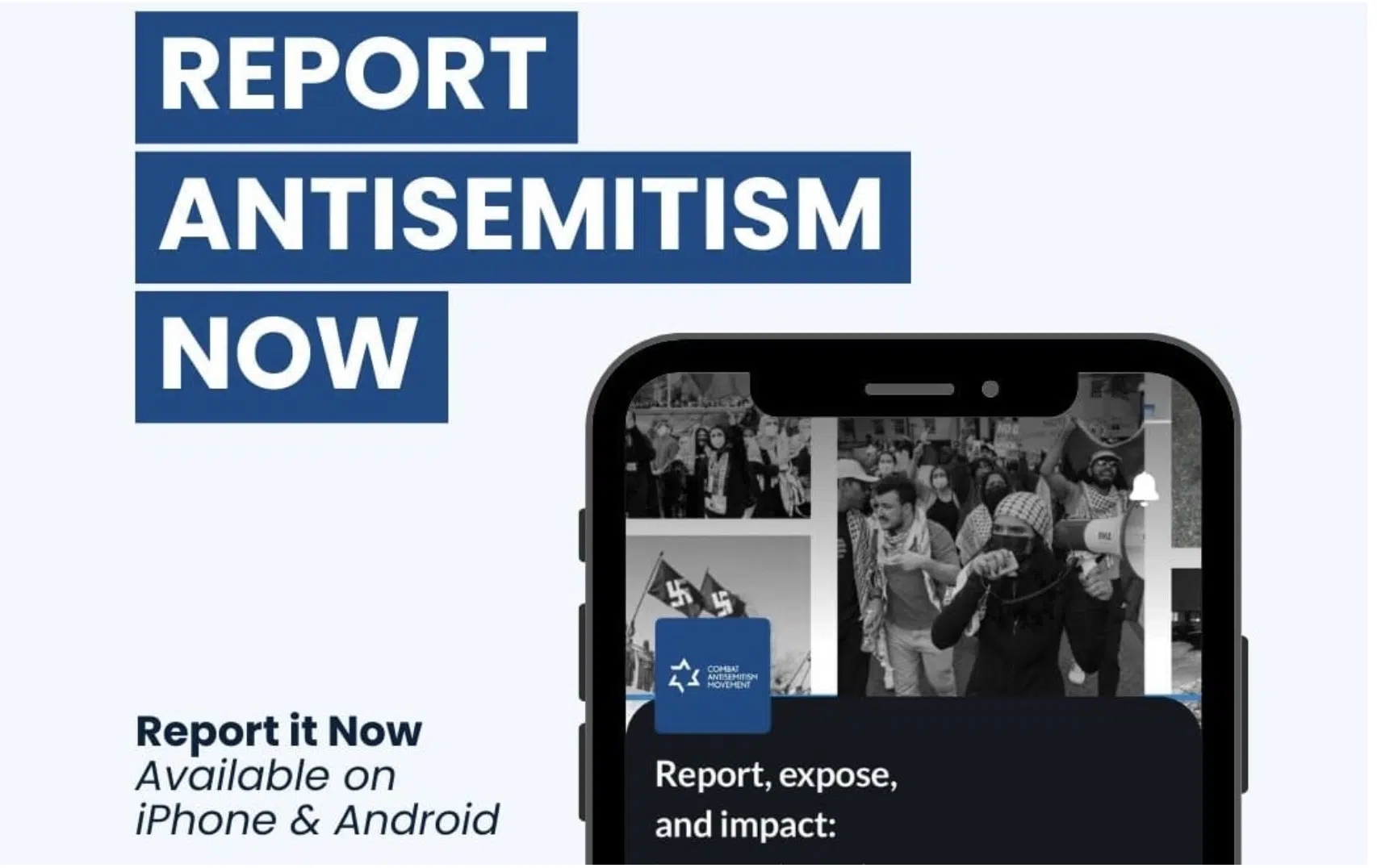
That gap is where the Combat Antisemitism Movement (CAM) “Report It” app plays a critical role. The app allows victims and witnesses to document antisemitic incidents securely and anonymously, without requiring confrontation or public exposure.
Each report contributes to identifying patterns, tracking escalation, and strengthening the evidence needed to demand accountability from institutions and authorities. In environments where antisemitism often goes unchallenged in real time, documentation becomes essential.
If you experience or witness antisemitism, use CAM’s “Report It” app to record incidents safely and anonymously, whether immediately or afterward.
Download it on the Apple App Store or on Google Play.
See it. Report it. Stop it.