
|
Getting your Trinity Audio player ready...
|
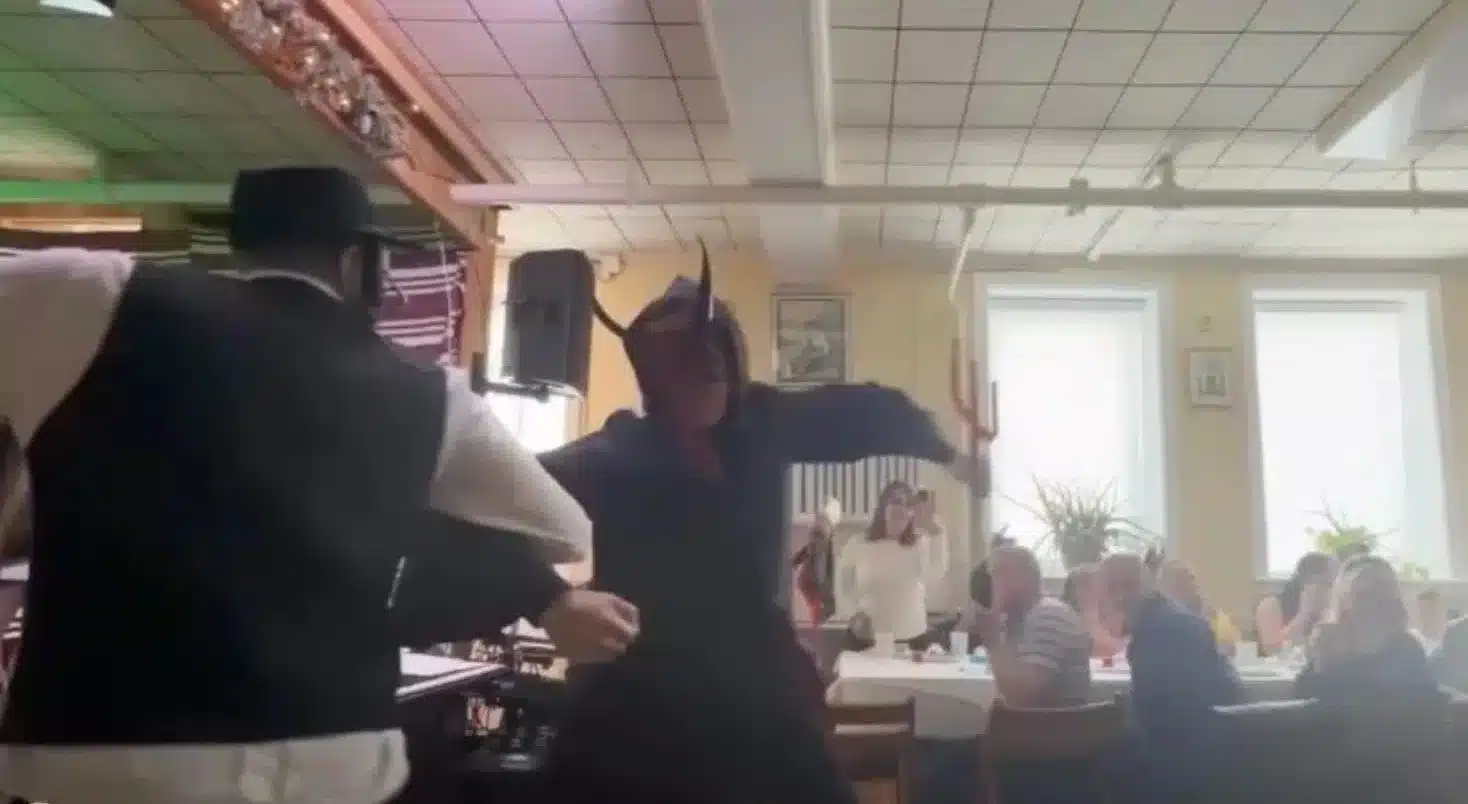
A Christmas pageant recently held at St. Mary Protectress Ukrainian Orthodox Church has sparked criticism after featuring a Jewish caricature rooted in antisemitic stereotypes.
The performance took place in Clifton, New Jersey. It followed a traditional Ukrainian Christmas folk performance. Alongside angels, carols, and the Three Wise Men, the pageant included a Hasidic Jewish character portrayed as greedy and morally corrupt.
The character entered carrying a sack of coins. He danced with the devil and tried to distract Christians from honoring Jesus by offering alcohol. Meanwhile, the scene unfolded before children and families gathered for a holiday celebration.
Video footage posted by the church showed the character speaking in mock Yiddish. He also identified himself using a derogatory slur for Jews. As a result, the performance reinforced the charge that Jews were responsible for Jesus’s death — one of the most enduring antisemitic myths.
A Tradition Long Criticized
Antisemitic depictions of Jews have appeared in traditional Ukrainian Christmas folk performances for centuries. However, in recent years, many Ukrainian communities have begun revising or removing these elements.
This shift has gained momentum as Ukraine has sought to confront antisemitism, especially amid its ongoing war with Russia. In some updated versions, performers have replaced Jewish caricatures with contemporary political villains.
Still, other communities have chosen to retain the original portrayals. They often defend the choice as harmless tradition.
Lev Golinkin, a Ukrainian-born Jewish author who has written extensively about antisemitism, said the Clifton pageant deeply disturbed him.
“It feels like a betrayal,” Golinkin said. “America should be where things are left behind, where there are new starts. Instead, this teaches a new generation to mock.”
History Is Not a Defense
Ukrainian writers and scholars have long acknowledged that antisemitism was embedded in parts of traditional culture. In a 2017 interview, art critic Diana Klochko explained that antisemitic motifs shaped religious narratives and everyday life.
Yet she also stressed a clear boundary between history and choice. “This is history,” Klochko said. “It is not mandatory to drag this from tradition into the contemporary world.”
Critics said the Clifton performance did not preserve culture. Instead, it revived ideas that have fueled centuries of violence against Jews.
Slurs, Myths, and Lasting Harm
After discovering that potential customers preferred Jesus to alcohol, the Jewish character alerts King Herod to the perceived threat. Herod then orders Jesus’s death. Consequently, the story draws directly from antisemitic tropes portraying Jews as greedy, deceitful, and dangerously powerful.
The character refers to himself using a term once common in Ukrainian speech. Today, however, most Jewish communities widely recognize it as a slur. Hearing it spoken publicly in New Jersey felt especially painful to Golinkin. “‘Zhyd out’ was ‘kike out’ — that was the slogan of my childhood,” he said. “We left everything to build a life where you don’t hear that.”
Golinkin emphasized that the pageant does not define Ukrainian culture as a whole. Still, he said staging such imagery reflects a deliberate choice. “Ukraine has so much more than this,” he said. “Choosing this filth is shameful. It doesn’t do justice to the culture — or to the future.”
As antisemitism rises worldwide, critics warn that reviving these portrayals — especially for children — normalizes hatred under the cover of tradition.
Take Action
CAM has launched Report It — a secure app to report antisemitic incidents anonymously and in real time. Don’t stay silent — download it today on the Apple Store or Google Play. See it. Report it. Stop it. Together, we can fight this hate.