
|
Getting your Trinity Audio player ready...
|
The Nebraska Legislature gave initial approval on Friday to a bill — LB 538 — to address and prohibit antisemitic discrimination in the state’s public K-12 schools and institutions of higher education.
The legislation, introduced by State Senator Brian Hardin and supported by the Combat Antisemitism Movement (CAM), defines antisemitism using the International Holocaust Remembrance Alliance (IHRA) Working Definition of Antisemitism, including its 11 contemporary examples, which was adopted by the state in 2023, and requires Nebraska’s Department of Education to adopt policies that explicitly prohibit discrimination, including antisemitism.
It also mandates the Commissioner for Education and Coordination Commission for Postsecondary Education each designate a Title VI coordinator to investigate complaints and incidents of discrimination as defined in the bill, attempt to resolve issues, and submit an annual report to the Nebraska Legislature.
Following Friday’s 42-0 advancement vote, the bill will now undergo an enrollment and review process and final voting, before being sent to Nebraska Governor Jim Pillen for signature.
The full text of LB 538 can be read HERE, with Amendments 1861 and 1385, both adopted on Friday, HERE and HERE.
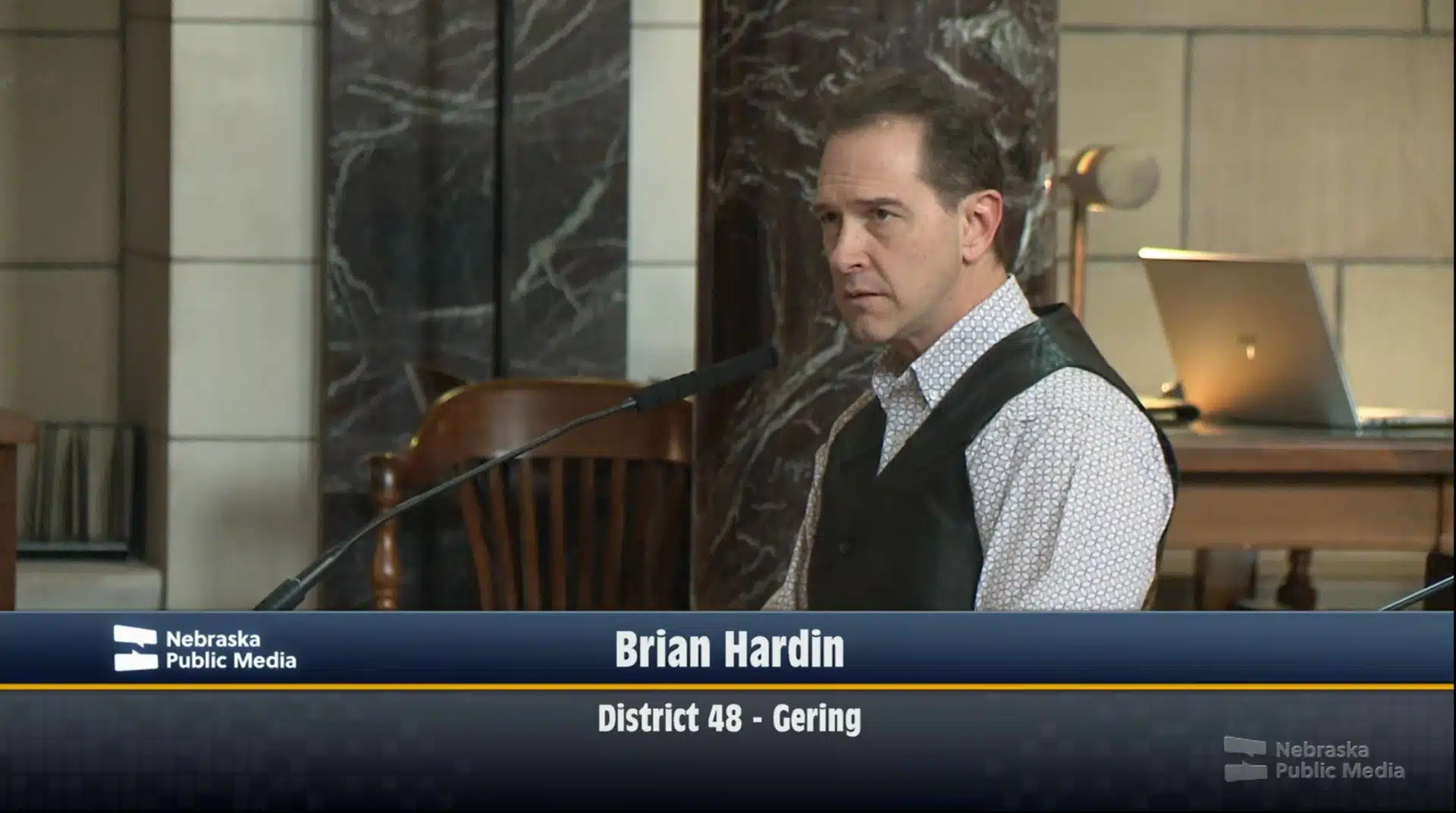
“LB 538 takes a firm and necessary stand against discrimination, including antisemitism, in our public schools and universities,” Senator Hardin said at an Education Committee hearing on the legislation last year. “This is not just about one group, or one issue. This about ensuring that all students and educators in Nebraska have the right to learn and work in an environment free from hatred, harassment, and prejudice.”
“This bill ensures that antisemitism is recognized, addressed, and treated just as seriously as any other form of hate or bigotry,” Senator Hardin emphasized. “This is not a partisan issue. It’s a matter of fundamental fairness and decency. Just as we would not tolerate racism or sexism in our schools, we cannot turn a blind eye to antisemitism, which is often ignored or dismissed.”
In testimony at the same hearing, CAM Founder Adam Beren said, “LB 538 is a timely and critical bill that responds to the current needs of K-20 students, especially Jewish students who are facing an unprecedented situation. Passage of this bill will demonstrate Nebraska is taking a significant step toward affirming its commitment to combating hatred in all forms while ensuring the safety and dignity of its Jewish community. Let’s be proactive, and keep antisemitism out of Nebraska and the Midwest, and send a clear message to the rest of the country that antisemitism will not be tolerated.”
A total of 37 U.S. states have adopted the IHRA antisemitism definition, according to a database compiled by the Antisemitism Research Center (ARC) by CAM.
Over the past year, CAM has led an organized effort to engage and educate state legislators across the U.S. on antisemitism-related issues and potential policy remedies, such as the Nebraska bill.
Legislative initiatives have also been put forth in Arkansas, Kansas, Kentucky, Missouri, Nevada, Oklahoma, Tennessee, and Wisconsin, and six of these states — Arkansas, Kansas, Kentucky, Nevada, Oklahoma, and Tennessee — have seen new laws enacted since the start of last April.
At the end of June, lawmakers and executive officials from 17 states convened in Kansas City, Missouri, for the first-ever CAM-organized State Leadership Summit on Antisemitism.