|
Getting your Trinity Audio player ready...
|
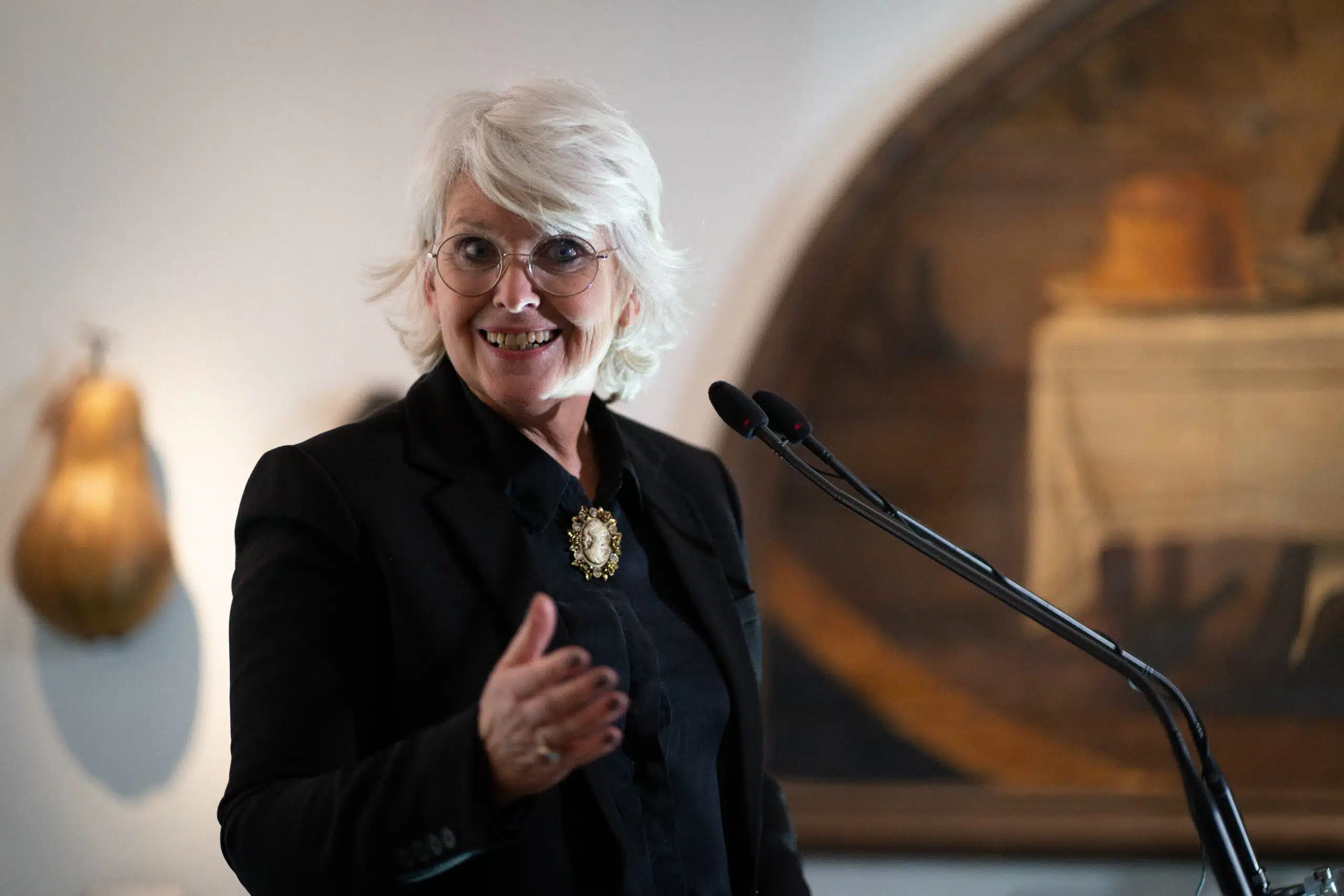
Ambassador Isabelle Rome has spent decades at the heart of France’s justice system and public life, serving as a magistrate, Minister Delegate for Equality, Diversity, and the Fight Against Discrimination, and now Ambassador for Human Rights.
In her current role, she is also responsible for France’s international work on Holocaust remembrance and related issues, including the fight against antisemitism.
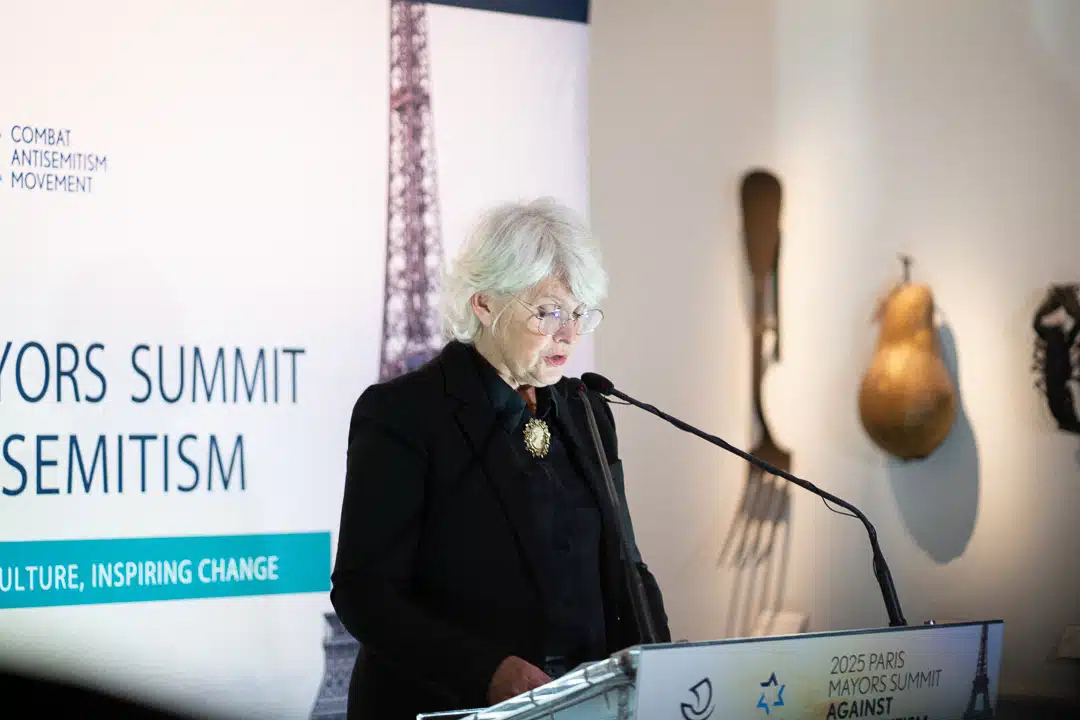
Following her recent participation in the 2025 European Mayors Summit Against Antisemitism, organized by the Combat Antisemitism Movement (CAM), Ambassador Rome spoke with CAM about the sharp rise in antisemitic violence in the aftermath of October 7th, the legal tools France is deploying, and the urgent need for clarity in how antisemitism is identified, prosecuted, and confronted.
France has seen a dramatic surge in antisemitic threats and attacks since October 7th. From your perspective, where do you see the greatest institutional or legal failures in protecting French Jews today?
“Since October 7th, we have seen a very significant increase in antisemitic acts and antisemitic speech,” Ambassador Rome said. “This obliges us to constantly adapt and to find new responses.”
She stressed that France already had a broad, coordinated framework in place to confront antisemitism, pointing to a governmental plan launched in January 2023 that brought together twelve ministries. The plan addresses racism, antisemitism, and discrimination based on origin, with education at its core. “Everything begins with education,” she said.
That approach, she explained, goes well beyond classroom lessons. It includes mandatory training for teachers, judges, police officers, and public servants, as well as a concrete requirement that every child, during their schooling, visit a Holocaust memorial site. “This is not symbolic,” Rome emphasized. “It is a structural educational requirement.”
She noted that authorities closely tracked how these measures were implemented, including how many schools participated and how many students completed memorial visits, because effectiveness depended on execution, not policy alone.
Alongside education, Rome underscored the importance of enforcement. France applies enhanced penalties when violent acts or threats are committed with an antisemitic motive, and it has established specialized legal and policing mechanisms to address hate crimes, including those committed online. “In France, incitement to hatred based on religion is a criminal offense,” she said. “Speech that incites hatred or violence because someone is Jewish can be prosecuted.”
That legal clarity, Rome added, was especially critical in an era when antisemitism increasingly spreads through digital platforms.
As Ambassador for Human Rights, how do you respond to efforts that attempt to justify or minimize antisemitic violence by framing it as political resistance?
“This is one of the most dangerous dynamics we face today,” Ambassador Rome said. “Antisemitism must never be contextualized or relativized. There is no ‘yes, but.’ There is no justification.”
She expressed deep concern over the way antisemitism was often reframed within political discourse, warning that ambiguity from public figures only fueled confusion and impunity. For that reason, she said, public officials carry a particular responsibility to speak with precision and moral clarity.
“In my role, especially as someone responsible for Holocaust remembrance, my language must be precise and unequivocal,” she said.
Antisemitism, Rome stressed, must be identified plainly and directly. It cannot be excused through geopolitical arguments or recast as a form of political expression. “This is why antisemitism must be named for what it is,” she said.
Rome pointed to the International Holocaust Remembrance Alliance (IHRA) Working Definition of Antisemitism as a critical reference point in this effort. She noted that she had publicly emphasized its importance and even produced a video explaining the definition so that it was accessible beyond legal and academic circles.
“People need a clear reference to understand what antisemitism is and what it is not,” she said. While the IHRA definition was not itself a criminal statute, Rome emphasized that it played an essential role in guiding law enforcement and judicial authorities. Judges, prosecutors, police officers, and public servants, she said, must understand the definition in order to correctly identify antisemitic acts.
Without that shared understanding, she warned, antisemitic violence risks being treated as ordinary crime, erasing its ideological motive and weakening the justice system’s ability to respond effectively.
You now oversee France’s portfolio on Holocaust remembrance and antisemitism. What, in your view, is the most urgent misunderstanding the public has today about the nature of contemporary antisemitism?
“One of the most serious challenges today is the resurgence of antisemitism in universities,” Ambassador Rome said, warning this trend was especially troubling because universities shaped future leaders and influenced public debate.
She explained that contemporary antisemitism does not always take the forms people expect. While classical symbols and stereotypes still appear, she said, antisemitism today often presents itself through attacks on the State of Israel.
“It is essential to say this clearly,” Rome said. “When someone says that Israel should not exist, that is antisemitism.” That principle, she noted, is explicitly reflected in the IHRA definition, yet it remains widely misunderstood, or deliberately ignored. “Some people genuinely do not understand this,” she said. “Others understand it and continue to deny Israel’s right to exist.”
This gap in understanding, Rome explained, is what makes confronting contemporary antisemitism so difficult. Education is indispensable, but it cannot stand alone. “Education alone is not enough,” she said. “But without education, nothing is possible.”
France has begun to respond by adopting new legislation requiring universities to establish specific mechanisms to combat antisemitism, including formal reporting channels and disciplinary procedures. “This is a necessary step,” Rome said, “but it is only a first step.”
Educational interventions often focus on the Holocaust, yet younger generations encounter antisemitism primarily through social media narratives about Israel and global politics. How should France adapt its educational approach to address this shift?
“We have expanded our efforts beyond traditional Holocaust education,” Ambassador Rome said, while stressing that remembrance and transmission remained essential foundations.
She explained that since October 7th, France has taken additional steps to adapt its educational strategy to contemporary realities, particularly the way antisemitism circulates online and through distorted narratives about Israel and global politics.
After October 7th, she said, France launched a new initiative in partnership with the United Nations Educational, Scientific and Cultural Organization (UNESCO) focused specifically on training teachers. The program equips educators with practical tools to address contemporary antisemitism, including how it spreads on social media and how misinformation shapes students’ perceptions. “Teachers are on the front line,” Rome said.
The initiative, she noted, was presented by then-Prime Minister Gabriel Attal and supported with a dedicated budget, reflecting the government’s recognition that educators required sustained support to meet this challenge.
“They need resources, training, and guidance,” she said, “to address these issues confidently and accurately in the classroom.”
You spent much of your professional life inside the French justice system as a magistrate. Do you believe the judiciary fully understands the dynamics of antisemitic crime, or is there a need for deeper structural change?
“There has been real progress, especially in training,” Ambassador Rome said. She noted that judges and prosecutors today were more aware of antisemitic crime than in the past.
But she was clear that this progress remained insufficient. “It is not enough,” she said. “Training takes time, and it must be continuous.”
Rome stressed that understanding antisemitism cannot be limited to a handful of specialists. Every level of the justice system must be equipped to recognize it. “Every judge, every prosecutor, every police officer must understand how antisemitism functions,” she said, “including its contemporary forms.”
She warned that failures in this understanding still have concrete consequences. Antisemitic violence, she said, was sometimes prosecuted without recognizing the antisemitic motive behind it. “That must change,” Rome said.
While she acknowledged that the overall direction is improving, she emphasized that the work is far from finished. “The movement is going in the right direction,” she said, “but the work is far from complete.”
In your current role as France’s Ambassador for Human Rights, how do you see your responsibility today in combating antisemitism and defending French democratic values?
“When I was appointed in May 2024, after October 7th, I understood that this role would be important,” Ambassador Rome said. “I did not fully anticipate how politically charged it would become.”
She explained that the position had evolved significantly in recent years. What was once focused largely on memorial work, including remembrance, transmission, and restitution, now carries a far more political dimension. “Today, even memory itself has become political,” she said.
Rome described her responsibility as twofold: to defend democratic values and human rights, and to do so with clarity and objectivity, even amid intense polarization. “That means rejecting simplistic divisions,” she said. “I am neither “only for Jews’ nor ‘only for Palestinians.’ I am for the law, for human rights, and against antisemitism — without hesitation.”
That commitment, she stressed, is why language matters so deeply in her role. “Antisemitism must never be contextualized,” Rome said.
She pointed again to the IHRA definition as an essential reference, noting its importance as a shared framework for identifying and addressing antisemitism across institutions. For a jurist, she added, such common reference points were indispensable.
“As a judge, I believe deeply in the importance of shared legal frameworks,” she said. Rome closed with a warning that resonated beyond France. “Clarity is not optional,” she said. “It is a democratic obligation.”