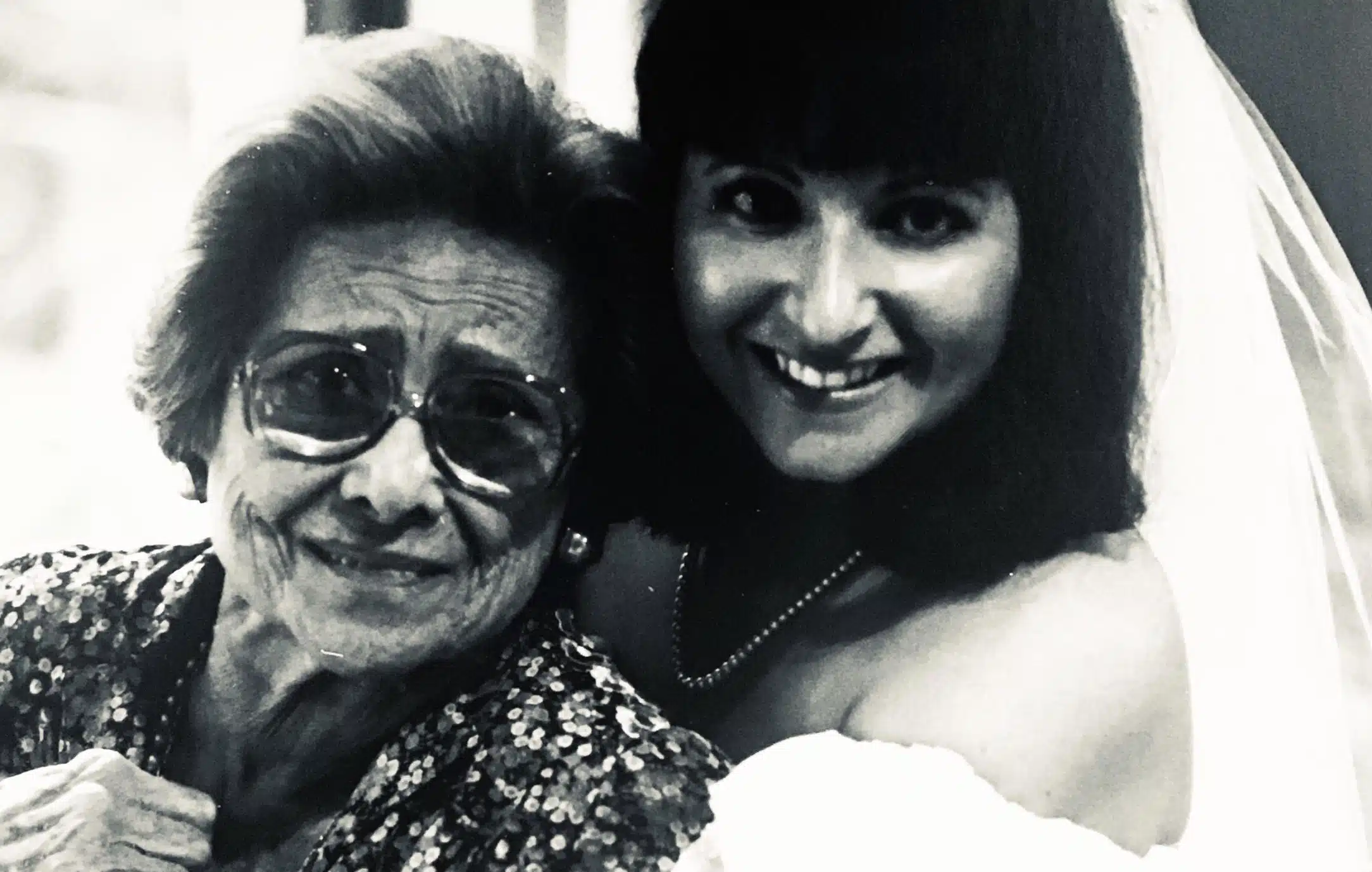
For Linda Margolin Royal, the story of Chiune Sugihara is not a distant chapter of history. It is the reason she is alive.
Her father and grandparents were among the thousands of Jews saved by the Japanese diplomat who defied his government to issue life-saving visas during the Holocaust. For decades, that story remained hidden within her family. It surfaced only late in her father’s life — reshaping how she understood her past, and what it demanded of her.
Royal’s novel The Star on the Grave draws on that legacy. But as antisemitism rises globally, the story she carries no longer belongs only to the past.
Speaking from Sydney, near Bondi Beach — a place once synonymous with refuge — Royal describes a reality that has shifted as antisemitism re-emerges even in places people believed were safe. Sugihara’s actions, she argues, cannot be confined to history. They stand as an example — one that still needs to be learned.
In her conversation with the Combat Antisemitism Movement (CAM), Royal reflected on uncovering her family’s connection to Sugihara, the responsibility that followed, and why the courage of one individual remains as urgent today as it was then.
Your father and grandparents were among those saved by Sugihara’s visas. When you came to understand that connection, did it feel like a story — or something you were responsible for carrying forward?
Royal did not grow up knowing that her family owed its survival to Chiune Sugihara. “I didn’t even know who he was,” she said. “I looked him up and discovered that this man saved 6,000 Jews and realized he’s the reason I’m here.”
That moment gave her, for the first time, a story she felt compelled to tell. “I always wanted to write something significant,” she said. “And I said, ‘Oh, now I’ve finally found my story.’”
“It’s historical fiction inspired by my family’s story, with Sugihara’s story woven through it in a parallel narrative,” she said. “The main protagonist is heavily influenced by my own characteristics, and I wrote my grandmother as faithfully as possible, true to the remarkable personality she was.”
The story was rooted in lived experience — her family’s escape from Europe, which she described as “hair-raising” and which became the foundation of the novel’s central narrative. Royal made a deliberate decision to tell it as fiction, seeing storytelling as the most effective way to reach people beyond those already familiar with Sugihara’s legacy.
“Anyone could just go and watch a documentary or read a book about him,” she said. “But storytelling is what compels them to feel it, and to carry it forward.”
That choice shaped both the structure of the novel and the sense of responsibility she brought to it.
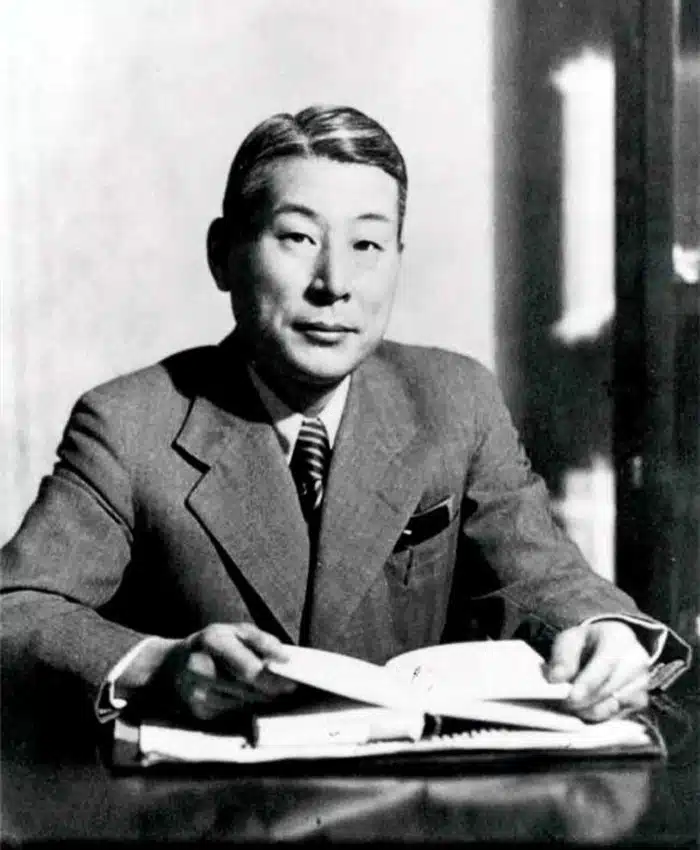
You are writing at the intersection of inherited memory and historical record. How did you navigate the line between what was passed down within your family and what you had to reconstruct through research?
“It was really difficult,” she said. “There’s a lot of false information online, and big gaps in information, because he sort of fell into obscurity.”
Those gaps were especially apparent in the historical record surrounding Sugihara, whose story remained unevenly documented for years after the war. To navigate that uncertainty, she turned to a trusted source. “Luckily, I became really closely connected with his only surviving son, Nobuki,” she said. “If he was happy with what I wrote, then I was satisfied.”
At the same time, significant parts of the story were never spoken at all. Like many survivors, her grandparents rarely discussed what they had endured. “They didn’t talk about their experiences,” she said. “There was clearly a lot of trauma I wasn’t privy to.”
“You piece it together,” she said. “You understand more as you get older.”
Survivor histories are shaped as much by silence as by what is spoken. Was there anything you came to understand only indirectly — something you were never told outright, but that became clear to you over time?
What mattered most, she said, was not what she was told, but what was left unsaid. “She never displayed any trauma,” she said of her grandmother. “She was always the life of the party.” Both of her grandparents had fled Europe, leaving behind their parents and relatives in Warsaw they would never see again. “They didn’t talk about their experiences during the war,” she said.
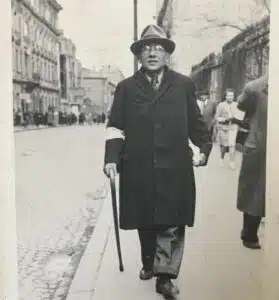
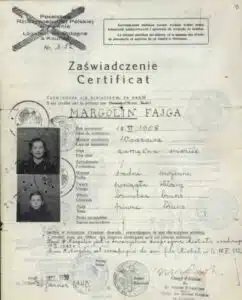
Among the fragments preserved from that time is a letter sent from the Warsaw Ghetto to family members who had escaped to Japan.
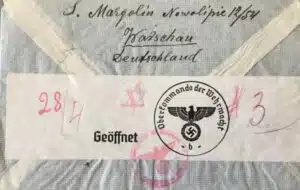
“My grandmother said they had a visa to Curaçao,” Royal recalled. “I thought she was talking about a Japanese city, as with her Polish accent the name sounded like Kiraso.”
Only later did she understand what her grandmother had meant. The visa was a transit document through Japan, issued as part of a broader escape route organized with the help of another “Righteous Among the Nations,” Dutch diplomat Jan Zwartendijk. Curaçao was listed as the final destination, but in practice, none of the refugees ever went there, dispersing instead through networks that connected them to safety around the world.
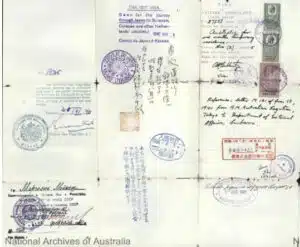
What she inherited was not a full account, but fragments — shaped by memory, silence, and survival.
As you researched Sugihara’s actions and the broader rescue effort, what surprised you most about his story?
What struck Royal most was that Sugihara was not defined by a single moment, but by a pattern across his life. “People like Sugihara are rare,” she said. “Not because the choice is unclear — but because so few are willing to make it.”
From a young age, Sugihara consistently refused to follow the path expected of him. When his father pushed him toward a career in medicine, he reportedly left his entrance exam blank and walked away, choosing instead to pursue international relations. Later, while serving in a senior position in Manchuria, he resigned after witnessing the mistreatment of Chinese civilians by Japanese forces.
“He had an extremely strong moral compass,” Royal said. “So few did, unfortunately.”
When institutions fail — or refuse to act — what responsibility falls on the individual to defy them?
Sugihara’s actions were not a single act of defiance, but a series of deliberate choices made in direct opposition to authority. “His story makes clear that morality is not determined by consensus,” she said. “There are moments when following the crowd is the failure—and the responsibility is to act anyway.”
Sugihara asked his government for permission to issue visas. “He asked three times, and three times they said no,” Royal said.
By then, he had already begun. “I think he was already two weeks into it,” she said. “He had already illegally issued something like a thousand visas before they got back to him.”
He made that decision knowing exactly what it would cost. It would end his diplomatic career, and he was not alone—he had a wife and three young children who would bear the consequences with him.
“If I didn’t issue them, I’d be disobeying God,” she said, recalling how Sugihara explained it. “He did not do what was fashionable,” she said, “but what was right.”
Sugihara’s actions required him to continue issuing visas despite clear restrictions and pressure from his government — not as a single act, but as a sustained choice. What did you come to understand about the nature of that kind of moral clarity, and how rare it was then — and remains today?
What set Sugihara apart resisted easy explanation.
At one point, she wondered whether his actions reflected something deeper in his background. “I even asked his son — was he a samurai?” she said, referring to the traditional Japanese code of ethics that emphasizes honor, integrity, and duty. But that alone did not account for it. “There aren’t 20 million Sugiharas in Japan,” she said.
In her research, she also came to believe that Sugihara may have understood more than most. Though serving as a consul, he was also tasked with monitoring German and Soviet troop movements, placing him in a position to see the reality unfolding around him. “I think he saw a lot more than we know,” she said. “No single explanation fully accounts for what he did.”
You’re speaking about Sugihara’s actions in the context of today’s world. Living in Sydney, and particularly near Bondi Beach, how have recent events shaped the way you think about the relevance of his story now?
“My family settled in Bondi in 1941,” Royal said. “It was a place of refuge. That’s where many Holocaust survivors rebuilt their lives.”
For decades, that sense of safety defined the area. Along the beachfront, a set of steps became informally known as the “Jerusalem Steps” — a meeting point woven into the daily rhythm of Jewish life.
“You’d say, ‘I’ll meet you there,’ because that’s where everyone used to socialize,” she said.
That sense of permanence has fractured. Since October 7, antisemitism in Sydney has intensified in ways that have shattered the sense of safety many believed was permanent.
“My grandparents would be looking down, thinking, ‘Are you kidding us?’” she said. “We came here from Europe to be safe — and this is happening here?”
The shift forced her to revisit her own work. After completing her novel, she added a passage reflecting not only on Bondi as a place of refuge, but on how fragile that refuge can be — even on the far edges of the world.
For Royal, Sugihara’s story is not simply a chapter of the past. It is a standard by which the present must be judged.
“He didn’t wait for permission,” she said. “He acted.”
“That is what endures. Not just the scale of what he did, but the clarity of the choice.” Sugihara understood what was happening. He understood the cost. And he acted anyway.
His legacy does not only ask to be remembered. It asks to be followed.
Because in the moments that define history, what matters is not what people believed — but what they were willing to do.
Purchase Linda Margolin Royal’s bestselling book “The Star on the Grave” on Amazon or at Pomeranz Books in Jerusalem.
Watch:
Linda Margolin Royal on “The Power of One”
The Japanese Rescuer: A Lesson in Bravery for the Struggle Against Antisemitism