|
Getting your Trinity Audio player ready...
|
When Peter Paltchik steps onto the judo mat, he carries far more than personal ambition. As a two-time Olympic medalist and the most decorated judo fighter in Israeli history, Paltchik has spent his career competing under intense scrutiny.
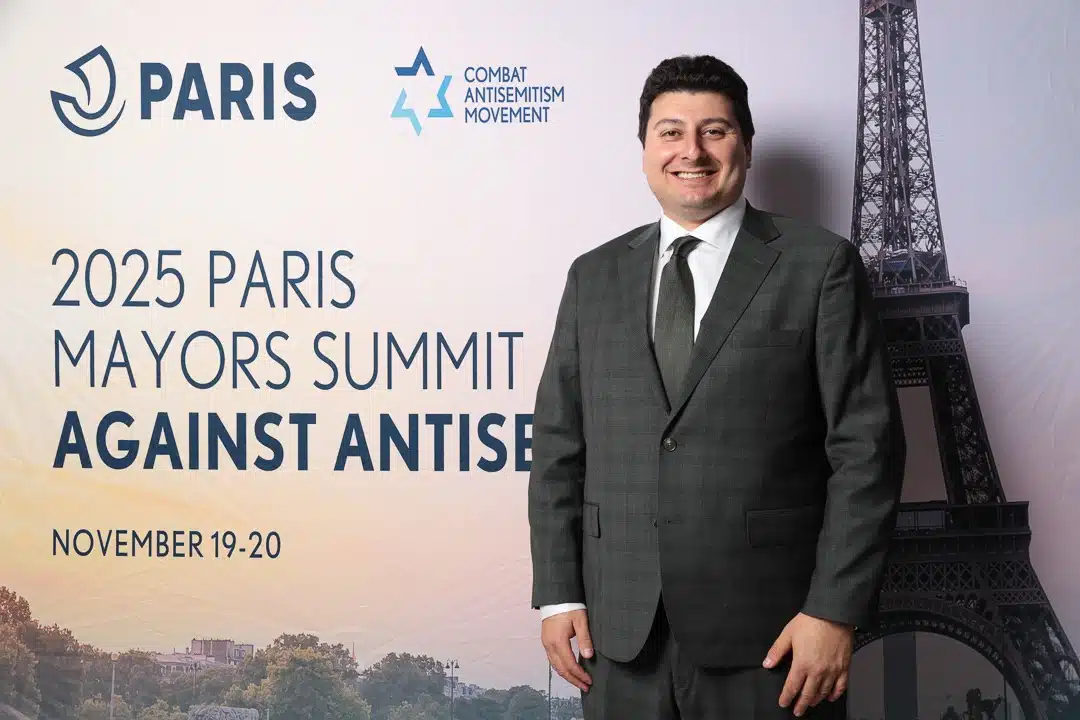
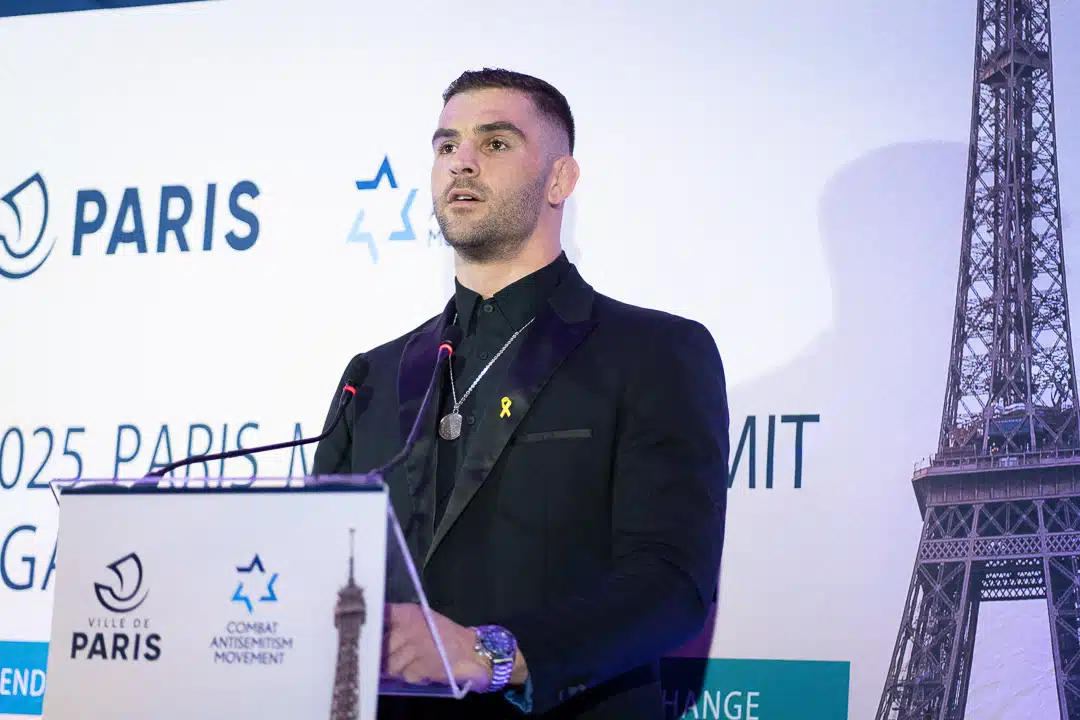
After speaking at the 2025 European Mayors Summit Against Antisemitism in Paris last month, Paltchik sat down with the Combat Antisemitism Movement (CAM) to reflect on the moments that shaped his career, the hostility he has faced as an Israeli athlete, and the responsibility he feels to speak openly about Israel — even when doing so comes at a personal cost.
As Israel’s most accomplished judo fighter — a European champion, a two-time Olympic medalist, and a consistent podium winner at the world level — what moment made you feel the deepest pride in representing Israel?
“Of course, the Paris Olympics stand out,” Paltchik said. “But there was another moment that shaped me deeply, and it happened before October 7 — at the World Championships in Qatar.”
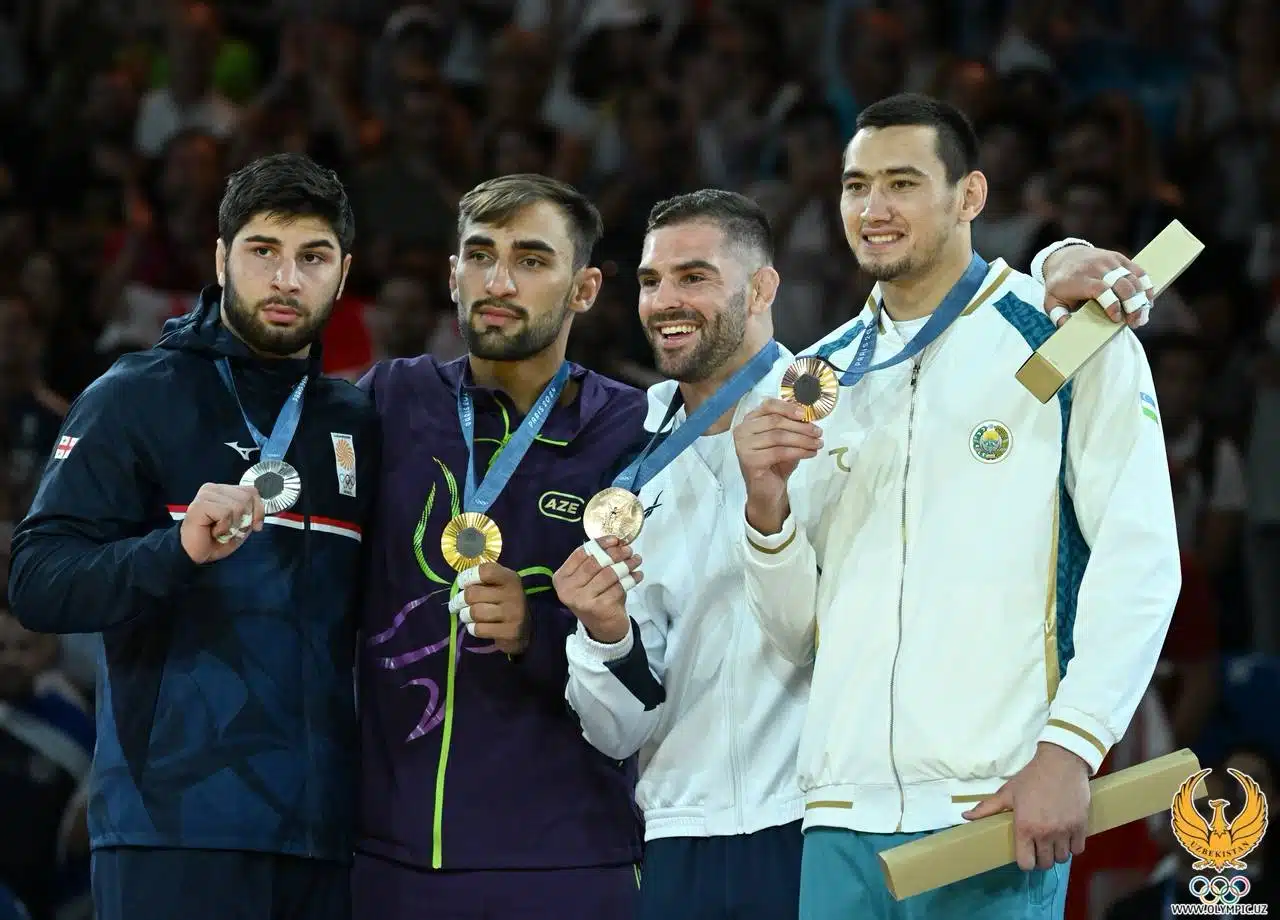
Winning a bronze medal there carried a weight far beyond sport. Qatar does not recognize Israel, and Paltchik felt that reality immediately. “Standing on the podium with the Israeli flag in Qatar was something very special,” he said. “To bring Israel’s flag into a country like that meant a lot.”
In the days leading up to the competition, Paltchik encountered open hostility from local volunteers during routine pre-competition checks. “When they saw ‘Israel’ on my back number, they said ‘Palestine’ instead,” he recalled. “They mocked me. I had to be extremely careful with my reaction. It was the day before my competition, and I didn’t want to create problems for the International Judo Federation.”
Maintaining composure was essential. “As an athlete, emotional control is critical,” he said. “You have to contain everything that interferes with clear thinking. It’s not easy, but that discipline is built into me.”
Despite the hostility, Paltchik went on to win the medal.
“After October 7, everything changed,” he said. “What had been pride before became a national mission.”
That shift defined his return to the world stage less than a year later. “To come back one year later, at the Paris Olympics — the biggest stage of all — carrying the Israeli flag after everything that had happened, that was a very, very special moment for me,” Paltchik recalled.
You’ve spoken often about carrying the Israeli flag onto the mat. Beyond the competition itself, what responsibility did you feel—and did you ever worry about the backlash or hostility you might face off the mat?
Paltchik noted the responsibility of representing Israel had always extended far beyond sport. “Israeli athletes carry a responsibility that other athletes simply don’t,” he said. “You represent more than just Israelis — you represent the Jewish people. That’s not something new. It’s always been like that.”
In recent years, however, he said the burden has intensified dramatically. “There are no other athletes who come to the Olympics and, at the same time, have to adjust to terror attacks, to fear, or even to hostile comments from staff,” he said. “There is nothing like that.”
That reality, he added, was unavoidable. “Whether you like it or not, you represent more than sport. You represent a nation.” After October 7, the backlash became especially pronounced. Most of the threats he received came through social media, but they quickly escalated beyond online abuse.
“At first, I didn’t think much of it,” he said. “I thought it was just trolling. But then it became very serious — very specific. And it was directed not only at me, but at my family.”
At that point, the threats were treated as a real security concern. “I realized I couldn’t just ignore it,” he said. “We had to take it seriously.” Despite the risks, retreat was never an option.
After October 7, you used your platform to speak publicly about the war, the hostages, and Israel’s resilience. What made you decide you couldn’t stay silent?
Paltchik said the decision came from a simple but urgent question. “I thought to myself: what can I do? How can I contribute?”
“I’m not a soldier. I can’t run to Gaza and fight,” he said. “My duty is on the mat as an Olympic athlete. I need to stay focused, stay sharp, and bring myself in the best possible shape to the Paris Olympics.”
At the same time, silence was not an option. “I decided I had to be very active and very loud about Israel’s story,” he said. “To use every platform I have.” He began working with pro-Israel organizations and Israel’s Ministry of Foreign Affairs to share accurate information about the war, the hostages, and Israel’s reality. “That was my way of participating,” he said.
For Paltchik, speaking out was not separate from his athletic mission — it was part of it.
Did speaking out after October 7 have professional consequences for you as an athlete?
The fallout went far beyond criticism and nearly cost him the Olympic medal he had just won. “A lot of what I did in the beginning of the war almost cost me my medal,” Paltchik said. “People don’t know that, because I wasn’t able to talk about it at the time.”
Within minutes of his medal victory in Paris, international journalists began publicly questioning whether he should be allowed to keep it. “They questioned whether I was even a legitimate Olympic athlete — not because of anything related to sport, but simply because I’m Israeli,” he said.
Formal complaints followed, demanding that his medal be revoked. “They tried to take my medal from me,” he said. “They protested against the Olympic Committee for allowing me to compete and to win.”
The accusations centered on a moment after the medal ceremony, when someone in the crowd threw him a flag from an IDF unit. Paltchik kissed the flag and returned it. “Because of that, they claimed I was supporting terrorism,” he said.
The campaign became serious enough that the chair of the Israeli Olympic Committee flew to Switzerland for an emergency internal hearing to defend Paltchik’s right to retain the medal he had already earned. “It was a huge drama,” he said. Ultimately, the effort failed and Paltchik kept his medal.
“This wasn’t about fair play,” he said. “It was about trying to erase an Israeli athlete after he had already won.”
What advice do you have for young Jewish or Israeli athletes today who feel the pressure of antisemitism in sports?
“To young Jewish or Israeli athletes, I say this: your identity is not a weakness — it’s your strength,” he said. Antisemitism, he acknowledged, creates enormous pressure. Sport, however, builds something essential in response. “Sport taught me resilience,” he said. “It teaches you how to stand firm when the pressure is real.”
His advice is simple. “Walk into every arena with pride. Stay focused on excellence. And remember — you never stand alone. Your performance is the loudest answer,” he emphasized.
As you look ahead, how do you hope to use your voice and experience — inside and outside the sport — to strengthen Jewish pride and counter antisemitism?
For Paltchik, the future is shaped by both confidence and clarity. “What gives me hope is the strength and pride I see in Israeli and Jewish athletes who continue to show up and compete at the highest level,” he said. “They don’t disappear. They don’t step back.”
At the same time, he is clear-eyed about the dangers facing international sport. “What concerns me is when politics replaces fair play, and when identity overshadows performance,” he said. “That’s when sport stops being sport.”
Still, his outlook remains resolutely optimistic. “Our resilience has always carried us forward,” Paltchik said. “And that’s why I truly believe it will continue to do so.”