|
Getting your Trinity Audio player ready...
|
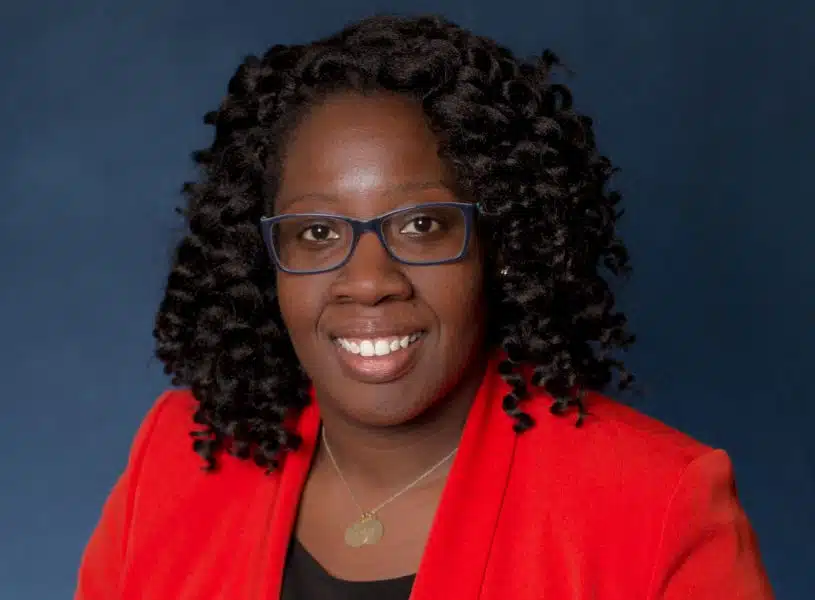
In honor of Black History Month in February, the Combat Antisemitism Movement (CAM) recently spoke with Kathleen St. Villier Hill, executive director of the Elijah Cummings Youth Program (ECYP) in Israel.
Founded nearly three decades ago in Baltimore, ECYP is a two-year leadership fellowship for high school students from Maryland’s 7th congressional district. The program brings African American and Jewish teens together for sustained dialogue, leadership training, and cross-cultural learning.
Inspired by the late U.S. Congressman Elijah Cummings’s commitment to strengthening ties between the Black and Jewish communities in his native Baltimore, ECYP prepares participants to navigate differences and confront difficult truths with clarity and courage.
When Congressman Cummings helped establish ECYP in the 1990s along with Black and Jewish community leaders, what problem was he trying to solve — and how do you understand that founding vision today?
St. Villier Hill said the program began with a question rooted in Baltimore itself — how do two large communities living side by side move past separation and stereotype to build genuine understanding?
“He was asking: How can we get to know each other better?” she noted. “What are ways to build those bonds and those bridges between two constituent groups in his district — large African American and Jewish communities?”
From the outset, ECYP worked directly with high school students, initially through exposure to Jewish life and Israel. “Twenty-eight years later, there’s been some evolution,” St. Villier Hill said. “Now it’s about building young leaders who understand life in a diverse society — particularly the Jewish and Black story. By understanding people who are different from yourself, you learn how to lead now and into the future.”
Given that it is Black History Month, what would you most want people to understand right now?
“I love that we have a month of Black history,” St. Villier Hill says. “But the story of the Black community can’t be summed up in a month.”
For St. Villier Hill, Black history carries both trauma and joy — and reflects the layered realities of diaspora. As the daughter of Haitian immigrants, she said her own experience did not mirror the traditional African American narrative. “My experience of Blackness is not the African American story,” she said. “Diaspora work is actually quite important to my being.”
She draws a parallel to Jewish life. “The Jewish Diaspora story is also not always understood,” she explained. “If all you see is one version of Jewish identity, that becomes the stereotype.”
Exposure, she argued, was what begins to dismantle stereotypes. “If my school is 90% Black, how would I know any different?” she asked. “Unless I have an opportunity to know someone different from myself.
ECYP works with students over two pivotal years of high school. By the time a fellow completes the program, what shift in judgment or sense of responsibility should be evident — and what experiences tend to make that shift possible?
Each year, ECYP works with two small cohorts of students who apply in 10th grade and participate through 11th and 12th grades. “Our hope is that these experiences disrupt isolation and build real familiarity across lines that rarely intersect,” St. Villier Hill said.
Although roughly 75 percent of participants are African American and 25 percent are Jewish, the program’s most meaningful shift begins with direct peer engagement. “Peer-to-peer exposure is powerful,” she explained. “I get to know a friend who can share their experience with me in a way that is real — not the stereotypes we see in movies or on social media.”
Students engage in leadership workshops centered on identity and voice. “Who am I? Who am I in relationship to somebody else? How can I tell my story?” St. Villier Hill said, describing the questions students are asked to confront.
Public speaking is central, and writing is being added to deepen reflection. Immersion reinforces that formation. Students travel to the American South to study the civil rights movement, examining both Black–Jewish solidarity and tension.
“We can’t glorify the relationship,” she said. “We have to talk through the tensions.”
Historically, students spent three-and-a-half weeks in Israel. While the program has not returned to Israel since the October 7th massacre two and a half years ago, students instead traveled to Poland in 2025, visiting Auschwitz to learn more about the Jewish experience. “For us, it was important that we still show and have an immersive experience that talks about the Jewish Diaspora life,” she said. “Not just talking about a story, but living an experience at a site that is pivotal for that community.”
The impact is visible in how students enter difficult conversations. “We hope that by giving these real-life experiences, training them as leaders, they’re able to go into their spaces and have nuanced conversations — to be at the table,” she added.
When Black and Jewish students examine their histories together, what are the most difficult historical and communal tensions that must be addressed directly to ensure the history is taught honestly and in full?
Students study Jewish involvement in the civil rights movement and in the early formation of the National Association for the Advancement of Colored People (NAACP), alongside moments when tensions surfaced.
“There are stories to break down,” St. Villier Hill stated. “We don’t say, ‘We lived in this golden age.’” For her, partnership requires honesty. “Not all allyship is agreement,” she pointed out — and leadership meant recognizing both solidarity and strain without simplifying either.
Since October 7, many young people are exposed to narratives about Israel and Jews that are distorted, hostile, and amplified online. How do you prepare students to navigate those claims thoughtfully?
ECYP brings in outside voices to help students process what they are seeing and hearing. “I know I’m not always the lead,” she said. “So we bring in people who can talk through the nuance — especially around social media and the platforms our students are navigating.”
Rather than providing talking points, the focus is on conversation. “We’re doing a lot of difficult conversation work,” she said. “Helping our students walk away without total agreement — but understanding that the world is not just black and white.”
“Our kids are pretty savvy,” she added. “They know what they see on social media isn’t the whole story.”
Many ECYP participants go on to attend Historically Black Colleges and Universities (HBCUs), where campus climates may differ. But preparation remains essential. “I want to make sure we’re having the conversations they need to be set up for success based on their trajectory,” she said.
Students must understand what their Jewish peers may face — even if those issues are not central to their own campus experience. “I want it to be a relatable conversation,” St. Villier Hill said, “so they can understand the story — and be supportive if they need to be.”
When students encounter stereotypes or politicized narratives about Jews, how do you guide them in examining those claims critically and in context?
She said that many students came from largely homogeneous schools. “Our schools are pretty siloed,” she noted. “They tend to go to schools with kids that look like them.”
Students are prompted to reflect on identity and stereotypes. “What are the stereotypes that we hear about African Americans?” she asks. Those same questions are extended across communities.
Travel deepens that process. After returning from Eastern Europe, one Black student described how sustained time with a Jewish peer changed his perspective. “He said, ‘This is my best friend for life,’” St. Villier Hill recalled. “I’m going to go to him and ask questions when I don’t know, when I’m unsure, when I’m unclear.”
“If we don’t have experience with someone,” she added, “of course I’m going to have a stereotype. I don’t know anything else.”
“Change begins with human-to-human relationships,” she emphasized.
A decade from now, how would you define success for ECYP — not in terms of growth or scale, but in the kind of civic leadership its alumni embody?
ECYP has operated for nearly three decades and now counts roughly 300 alumni. “We’ve got alumni who are engineers, who are teachers, who go into various different careers,” St. Villier Hill said.
Success means alumni carry that formation into their professional and civic lives. “Our hope is that in those moments, wherever you are, you’re able to be that leader at your organization, at your hospital, in whatever you do,” she added.
In 2025, St. Villier Hill helped launch a Baltimore chapter of Rekindle, a national initiative bringing Black and Jewish adults together for structured dialogue on anti-Black racism and antisemitism. Alumni, and even alumni parents, have participated. “I feel like our parents are really important,” she said. “Some haven’t had exposure to the Jewish community. And vice versa.”
At a time of deep polarization, ECYP advances a deliberate model — sustained proximity reshapes how tomorrow’s leaders think, speak, and act. As St. Villier Hill suggests, sometimes just knowing somebody can alter the trajectory.
To learn more about the Elijah Cummings Youth Program in Israel, please visit: ecyp.org