|
Getting your Trinity Audio player ready...
|
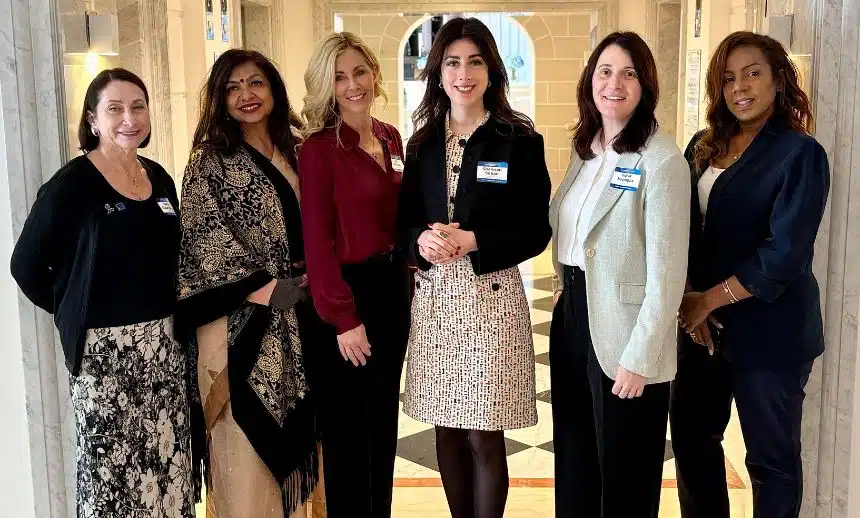
This op-ed was authored by Dazia Wallerson, African-American Alliance Manager for the Combat Antisemitism Movement (CAM). It was originally published by the Baltimore Jewish Times.
I am raising a child in a country where overt hate has made a distinct comeback. It shows up on walls, online, in schools, and in the daily calculations parents make about safety and belonging. As a Black mother, I’m preparing my child for what’s unfolding in real time. That reality leaves little patience for symbolic solidarity or moral shortcuts.
We are living in a moment when outrage travels faster than understanding, and public life has learned a dangerous habit. We confuse rhetoric for relationship. We issue statements, repeat slogans, post the right words and move on. Then we act surprised when communities still feel isolated, when hate spreads and when moments of crisis find us unprepared to respond together.
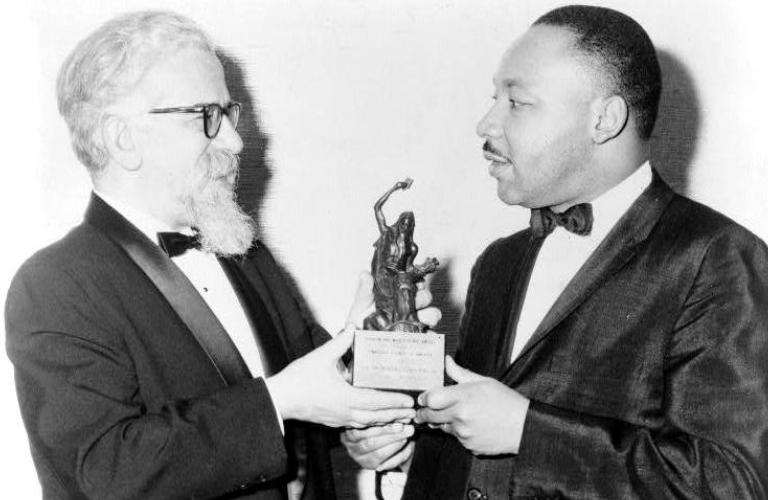
Dr. Martin Luther King Jr. warned us about this long ago. Not the tempered words we quote once a year, but the demanding man who insisted justice requires sustained commitment and the willingness to stay after the march is over. King understood that public declarations mean very little without the slow, unglamorous work of building trust, power and shared responsibility.
As the African-American Alliance Manager for the Combat Antisemitism Movement (CAM), I carry that legacy into rooms where it would be easier to stay vague or quiet. With CAM, I have supported work led by community partners, including Leap Forward and the Jews of Color Mishpacha Project, who have been at the forefront of convening unity dinners, film screenings, and cross-cultural gatherings where Black and Jewish neighbors sit together, argue honestly, eat together, and stay in relationship beyond the event. We have done this during moments of celebration and tension, especially during holidays, when history, identity and memory are already close to the surface.
This work has reshaped my home life, too. My son is growing up with Jewish friends for whom Hanukkah is not a lesson but a lived tradition, just as Kwanzaa is for him. He experiences these holidays as lived expressions of shared values at tables where curiosity is welcomed and respect is practiced. My child learns Jewish history through friendship, and his friends learn Black history through proximity. It is through these relationships that make identity human, not theoretical, and teaches the next generation that shared values are not diluted by difference — they are strengthened by it.
This work has taught me that solidarity built through shared experience, discomfort and repetition, holds. So, when houses of worship are burned like Beth Israel Congregation in Jackson, Mississippi, conspiracy theories spill from screens into classrooms and hate graffiti appears on a family’s home, we do not have the luxury of abstraction.
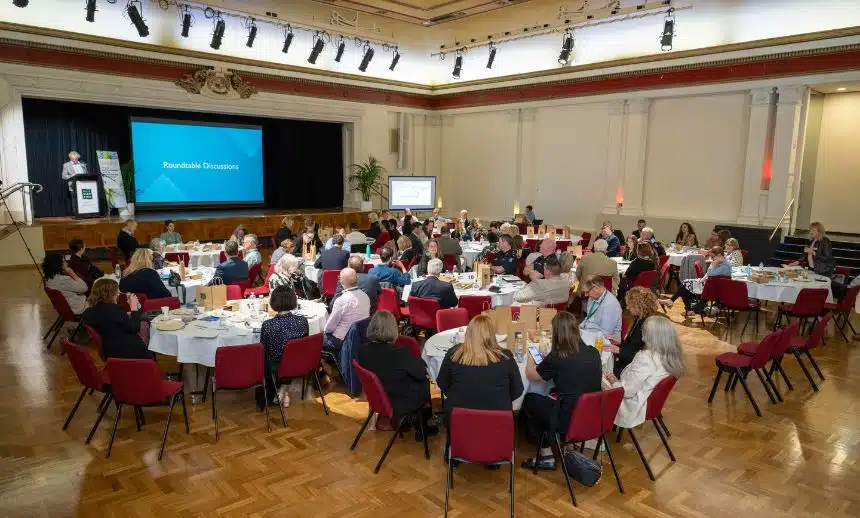
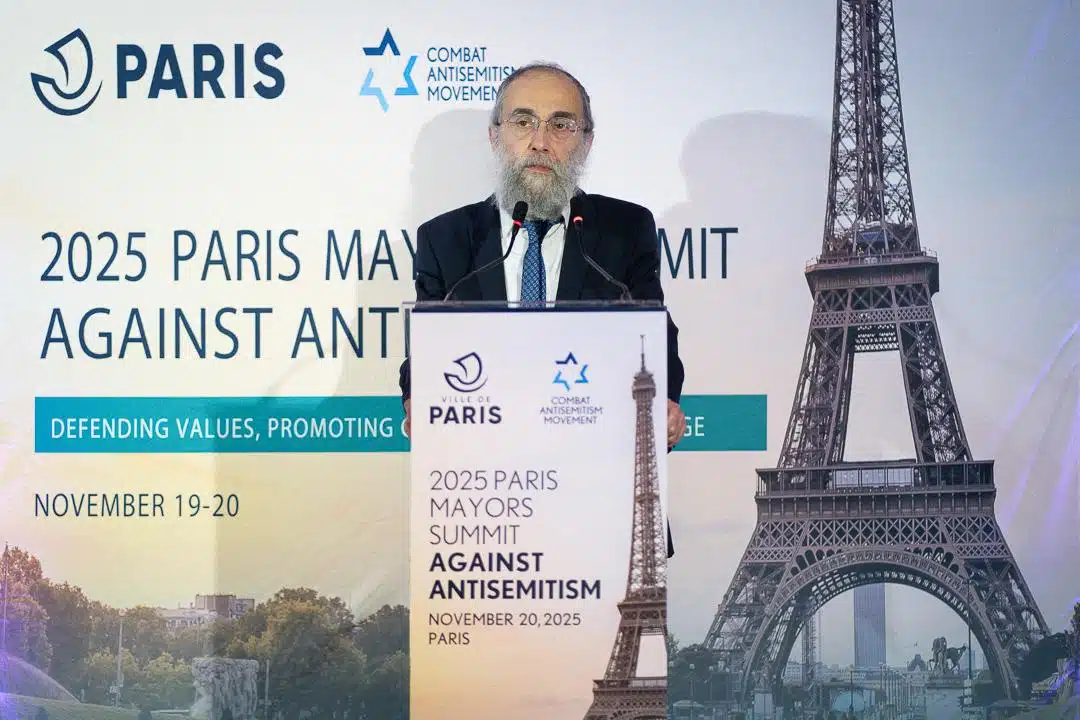
That reality was undeniable at the North American Mayors Summit Against Antisemitism in December. The event began with a march, powered by music and solidarity, echoing the moral tradition King helped shape. What stayed with me was the urgency of what followed.
The question hanging in the air was simple: What tools are needed when antisemitism, racism and hate are on the rise?
Josh and Julia Zuckerman, a Jewish couple whose New Orleans home was targeted and vandalized in an antisemitic incident, spoke plainly about what it feels like when leaders hesitate, minimize, or delay.
Simply put, Black and Jewish partnership cannot survive as an idea. It must live in civic infrastructure, in shared work and in relationships durable enough to hold under stress. Partnership does not mean agreement on every issue. It means refusing to let any community’s safety become negotiable. It means understanding that a society willing to tolerate the dehumanization of one group is rehearsing for the next.
Antisemitism and racism thrive on distance. Both depend on abstraction, fear replacing relationships and myths standing in for neighbors. Relationship is where accountability returns. You cannot hide behind a talking point when the person across from you is someone you have broken bread with, organized alongside and shown up for when it mattered.
Shared work creates mutual stake. It forces coordination and follow-through. It turns moral clarity into something usable in schools, neighborhoods and city halls.
North Miami Mayor Alix Desulme named this reality at the summit when he said this fight “requires more than just statements.” He is right. Statements do not keep people safe; relationships, infrastructure and repeated, disciplined presence do.
Rebuilding a Black-Jewish alliance that can withstand pressure requires humility and stamina. It requires acknowledging moments when we have failed each other through silence, misunderstanding, or allowing others to define our relationship for us. King understood that reconciliation without truth is fragile and unity without justice is hollow.
Again, as a mother, I cannot experience this work as symbolic. I am invested in whether our civic leaders and institutions are building something strong enough to protect the next generation. I am invested in whether moral leadership shows up even when it is costly, and, most importantly, in neighbors recognizing shared humanity before crisis forces the lesson.
I am determined to walk with Dr. King’s vision for freedom as my own. Not as nostalgia, nor performance. But, in practice. I invite anyone serious about justice to show up when it is inconvenient, stay when it gets complicated and build something that can hold when the pressure comes.
That is how freedom moves forward.