|
Getting your Trinity Audio player ready...
|
The following is an op-ed authored by Combat Antisemitism Movement (CAM) Chief Government Affairs Officer Lisa Katz, who leads CAM’s municipal initiatives with North American mayors:
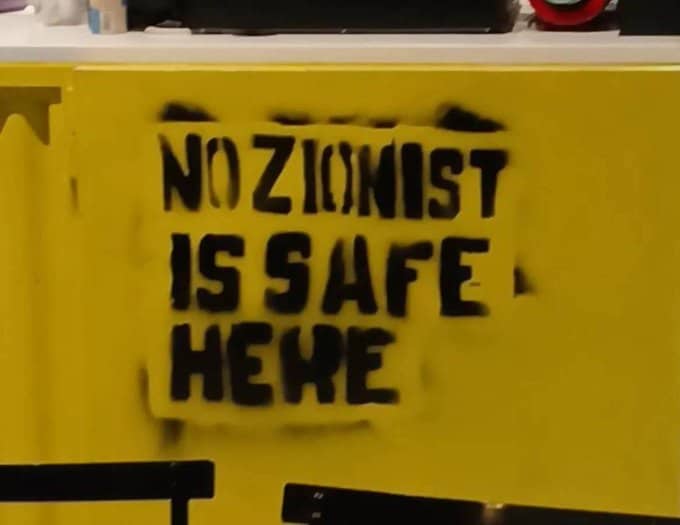
“Zionists not welcome here.” I first saw those words spray-painted on a wall in Athens, Greece, during a recent a trip I took with my mother to celebrate her 85th birthday.
Neither of us had ever been to Greece before, and we were filled with anticipation. My mom had wanted to go for 30 years, and my sister and I finally made it happen. The trip was supposed to be pure joy, a milestone experience, and in many ways, it was exactly that. The pristine waters of Corfu, blue domes of Santorini, and historical sites of Athens, the birthplace of democracy — all were extraordinary.
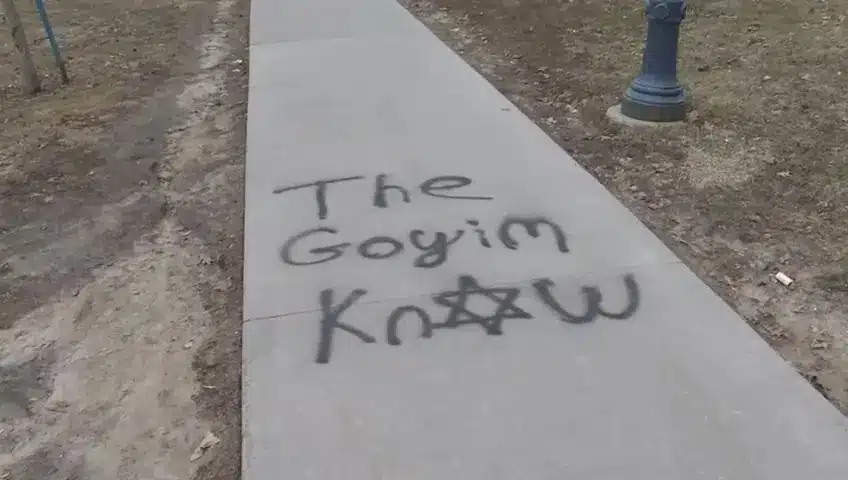
But this beauty was repeatedly marred by something just as ancient as any of the ruins we toured. The graffiti kept appearing. “Zionists not welcome here.” Simple words, easy to write, impossible to unsee.
A moment that has stayed with me occurred at Corfu’s Scuola Greca Synagogue. The congregation was decimated during the Holocaust and what remains is not only a house of worship, but also a monument to a community that was almost entirely erased by the Nazis.
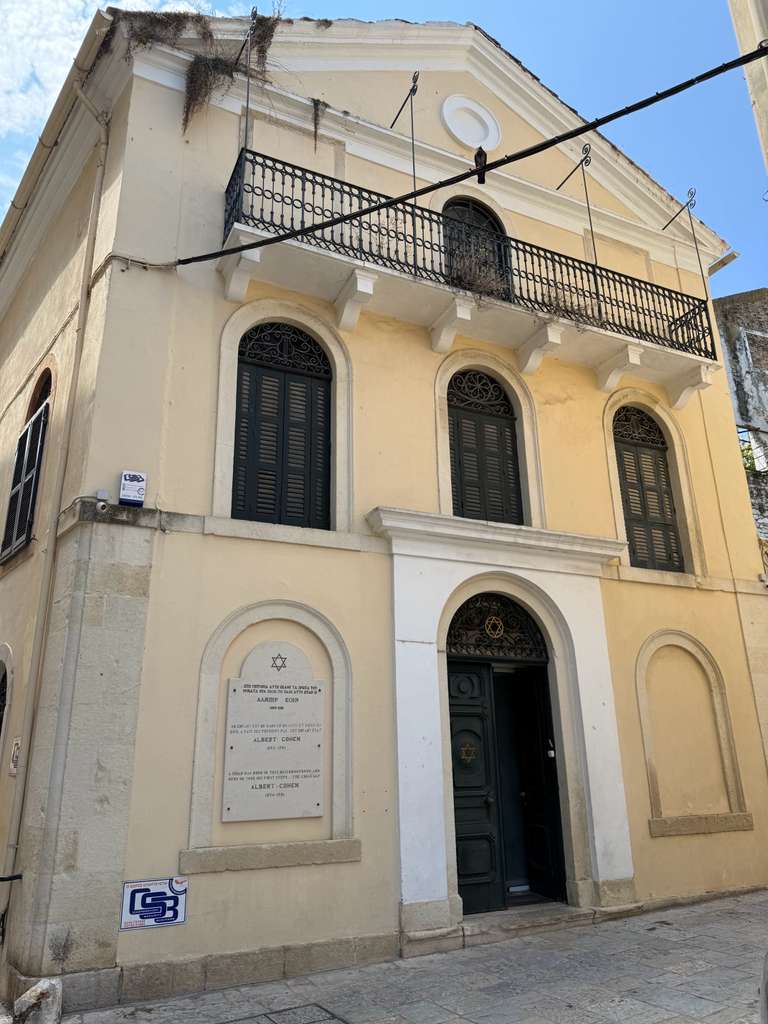
I walked in expecting reverence. Instead, I met a guard who could not have cared less. He wasn’t hostile. Just indifferent. I politely asked him how many Jews still lived on the island and how many visitors the synagogue received each week. He shrugged and said he didn’t know. It seemed he felt the questions were not worth knowing the answers to.
That indifference frightened me more than the graffiti did. Graffiti is loud and it announces itself. Indifference is quiet, and it is the thing that enables hateful words on a wall to become policy and policy to become violence.
I returned home from Greece both deeply concerned about the future of European Jewry and with a renewed motivation to prevent the United States from going down a similar path.
The numbers explain the urgency. CAM’s Antisemitism Research Center (ARC) tracked 6,819 antisemitic incidents across globe in 2025, a third straight annual record high. The data shows not an isolated spike, but an escalating and terrifying trend.
I have spent years working with mayors across America, and as a former municipal leader myself I know exactly how far a single local relationship can carry a community. Safety is built at the city level before it is achieved nationally. A synagogue is not protected by a treaty, but by a police chief who educates his officers to identify hate crimes, a mayor who shows up on a Friday night, and a city council that recognizes the IHRA working definition of antisemitism as a vital tool to protect Jewish residents.
The same day I returned to the United States, a mob in San Francisco’s Dolores Park surrounded and harassed a sitting California state senator just for being Jewish. Not in Corfu. Not in some distant capital I could tell myself was somebody else’s problem. In a major American city, in a public park, in broad daylight. The Greek guard’s shrug and the San Francisco mob’s assault are not identical events, but they originate from the same place. One is quiet permission. The other is what that permission eventually allows.
So, what do we do? I can tell you where I am putting my energy — toward mayors who adopt the IHRA definition not because it polls well but because it is true and effective; toward city councils that pass resolutions before, not after, the next crisis; and toward the work of quiet relationship building that determines, in moments of peril, whether a Jewish community has allies or excuses.
If you are a mayor or a city council member reading this, do not wait for your own Dolores Park. Adopt the IHRA definition now, while it is a proactive policy decision and not a response. Train your police department to recognize antisemitic hate crimes before you need them to. Spend time at a synagogue when nothing is wrong, rather that as an act of solidarity after something is.
If you are not an elected official, ask those who represent you where they stand, and demand accountability.
I think about that guard in Corfu more than I expected to. He was not cruel. He did not have to be.
The distance from a shrug to a mob, and from a mob to something worse, is far shorter than any of us want to admit. Mayors and city councils stand closest to that line. Their responsibility now is to make sure we never cross it — one city, one leader, and one relationship at a time.