|
Getting your Trinity Audio player ready...
|
The following article was authored by CAM Director of Engagement and Outreach for Central Asia and the Balkans Yana Naftalieva:
A dispute over school uniforms in Azerbaijan has escalated into a broader debate over religious freedom, secular education, and foreign influence.
On September 21, the Azerbaijani government amended public school uniform rules to prohibit clothing deemed inconsistent with the dress code or the secular nature of education. Similar rules for teachers followed on October 6. Although neither measure explicitly mentioned the hijab, some schools reportedly barred students and teachers wearing headscarves from entering classrooms.
Protests and class boycotts followed. On October 12, the Interior Ministry announced 37 arrests after confrontations at schools and alleged attempts to disrupt public order.
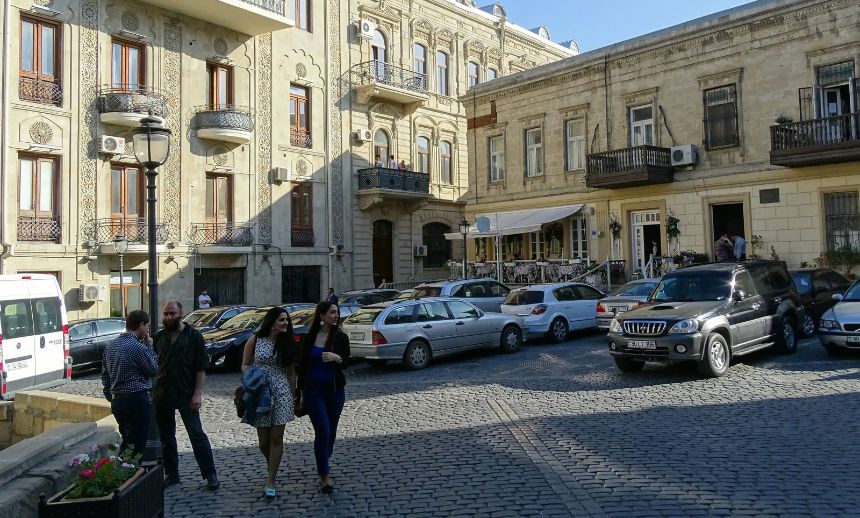
The dispute touches on a defining feature of Azerbaijan — a Muslim-majority country with a secular system and longstanding ties with Israel. Azerbaijan has maintained a tradition of Jewish life and interfaith coexistence while resisting efforts to impose religious authority on its political institutions.
That model has also put Baku at odds with neighboring Iran. The two countries have clashed over security, alleged espionage, and Tehran’s efforts to expand its influence among Azerbaijan’s Shiite Muslim population. Iranian media and other foreign outlets have amplified the school controversy, prompting concerns that outside actors could exploit it to undermine Azerbaijan’s secular character. There is, however, no publicly verified evidence that Iran organized the protests.
The distinction between religious freedom and religious extremism is critical. Azerbaijan has legitimate reasons to guard against foreign interference and the politicization of education. But wearing a hijab is not, in itself, evidence of extremism. Regulations that leave schools to interpret what violates secular principles risk excluding students from education without clearly establishing what they have done wrong.
For Azerbaijan, the challenge is to defend secular institutions without undermining the rights of religious citizens. Secularism should ensure that no religious authority controls public life — not that religious observance automatically disqualifies someone from participating in it.
This matters to Azerbaijan’s relationship with Israel and to the country’s broader record of Jewish-Muslim coexistence. Both depend on the principle that people of different faiths can live and participate in public life without religious coercion.
Azerbaijan’s response to this dispute will test whether it can protect its secular identity, resist foreign meddling, and uphold religious freedom at the same time. These goals need not conflict. A secular state is strongest when it protects both its institutions and the rights of its citizens.