
|
Getting your Trinity Audio player ready...
|
The Iran-orchestrated bombing of the AMIA Jewish community center in the Argentine capital of Buenos Aires in July 1994 remains the deadliest act of antisemitic terror outside Israel since the Holocaust.
More than three decades later, justice remains elusive, but a new path forward was opened in 2025 with Argentina’s enactment of Law 27784 — legislation allowing criminal trials and judicial proceedings against fugitives outside the country who refuse to appear in court or for whom extradition requests have been denied or ignored.
Dr. Franco M. Fiumara is an Argentine criminal court judge and leading legal scholar who served as an academic consultant to the Justice and Criminal Legislation Committees of the Argentina’s Chamber of Deputies during work on Law 27784.
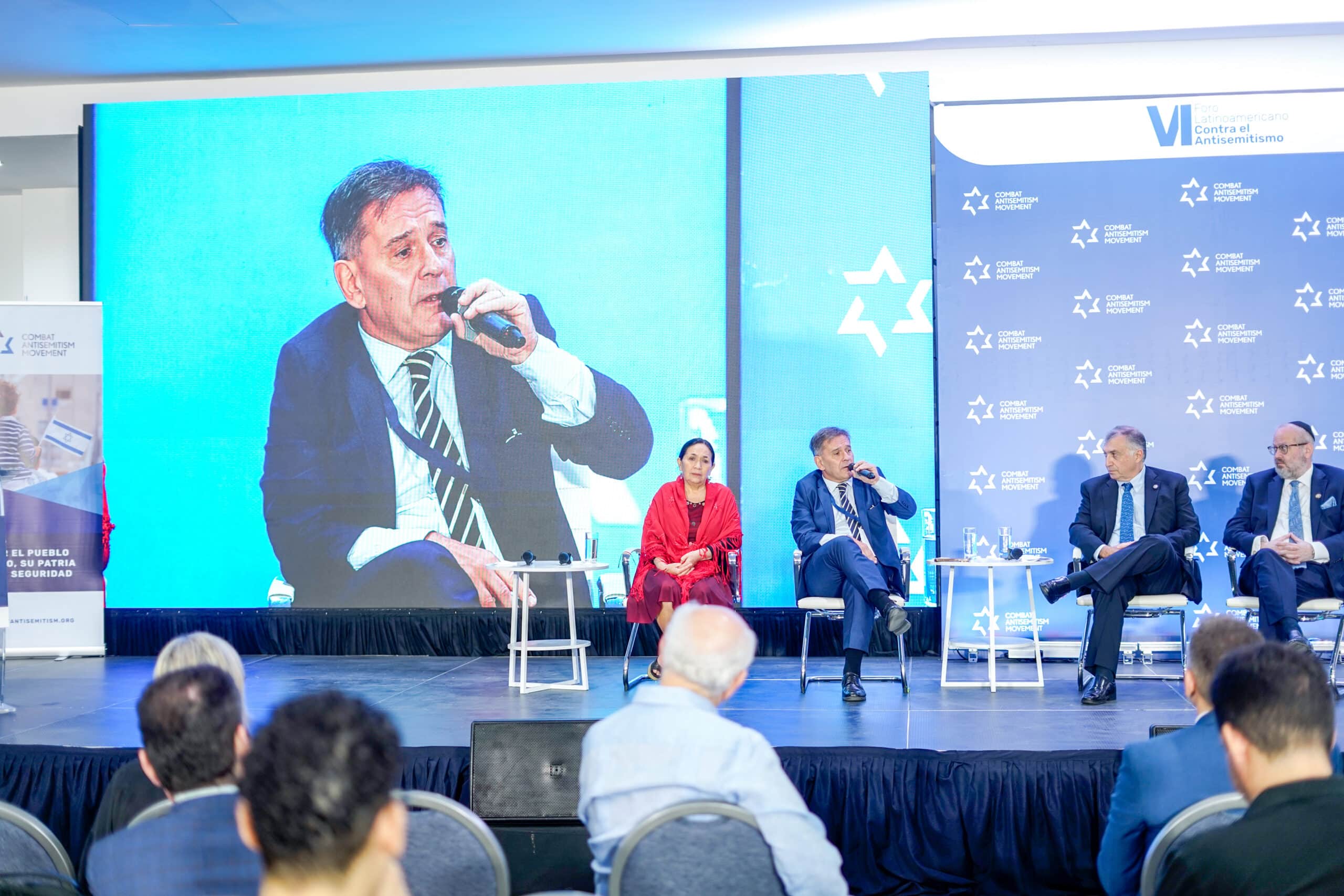
In an exclusive interview with the Combat Antisemitism Movement (CAM), Fiumara discussed what the law means for the families of AMIA victims, why other countries should consider similar measures, and how trials in absentia could help overcoming address longstanding barriers to prosecuting terror suspects.
More than 30 years after the AMIA bombing, what does it mean for the pursuit of justice that Argentina can now move forward with trials in absentia of suspects who remain fugitives abroad?
“It means providing answers to the victims and moving closer to understanding what really happened. Ultimately, it means getting closer to the truth.”
What makes Argentina’s trial in absentia model unique, and why could it become an important example for other countries dealing with terrorism cases?
“Law 27784 on trials in absentia offers an important lesson, both for Argentina and for other countries that may seek to replicate it. It is one of the few ways to address impunity for terrorist crimes.”
“That is why it is so important for Mercosur (Southern Common Market) countries and other nations to consider adopting legislation similar to ours.”
What lessons can other Latin American countries draw from Argentina’s approach to overcoming failures of international cooperation in terrorism cases?
“This is fundamental because the failures of international cooperation have already been demonstrated in numerous cases — Nazis who escaped justice, terrorist groups in the Balkans, state-sponsored terrorism, criminal organizations, and many other attacks.”
“Ultimately, this law addresses two important areas — the fight against crimes covered by the Rome Statute and the Inter-American Convention Against Terrorism, which seeks to address the flow of funds to terrorist organizations.”
“There is no terrorism without money.”
What can other countries, including the United States and European nations, learn from Argentina’s experience in confronting terrorist impunity?
“No legal system is perfect. In fact, it took Argentina more than 30 years to enact legislation allowing trials in absentia.”
“Both the United States and European countries are also constantly updating their laws because terrorism is always one step ahead of national legislation.”
“Italy, for example, convicted members of the Egyptian intelligence services in absentia this year, 2026, in an effort to provide answers to the victims. This is a clear example of what can be achieved.”
Watch the full CAM interview with Judge Fiumara (in Spanish) HERE:
CAM’s outreach in Latin America began more than five years ago, and since then it has worked diligently to build meaningful partnerships and friendships with influential leaders, legislators, diplomats, community organizations, and civil society activists from a diverse assortment of religious, political and cultural backgrounds in the region to combat antisemitism together.
During this time, CAM en Español has emerged as a key player in the battle against Jew-hatred in Latin America, with a growing coalition involved in impactful activities in countries including Uruguay, Brazil, Argentina, Peru, Colombia, Panama, Guatemala, Costa Rica, Mexico, Ecuador, Bolivia, Honduras, Paraguay, and the Dominican Republic, among others.
CAM en Español has organized regional summits in the Dominican Republic in 2026, Brazil in 2025, Costa Rica in 2024, Uruguay in 2023, Panama in 2022, and Guatemala in 2021.
Read more:
Op-Ed: 32 Years Later, Iran Must Still Be Held to Account for AMIA Bombing