|
Getting your Trinity Audio player ready...
|
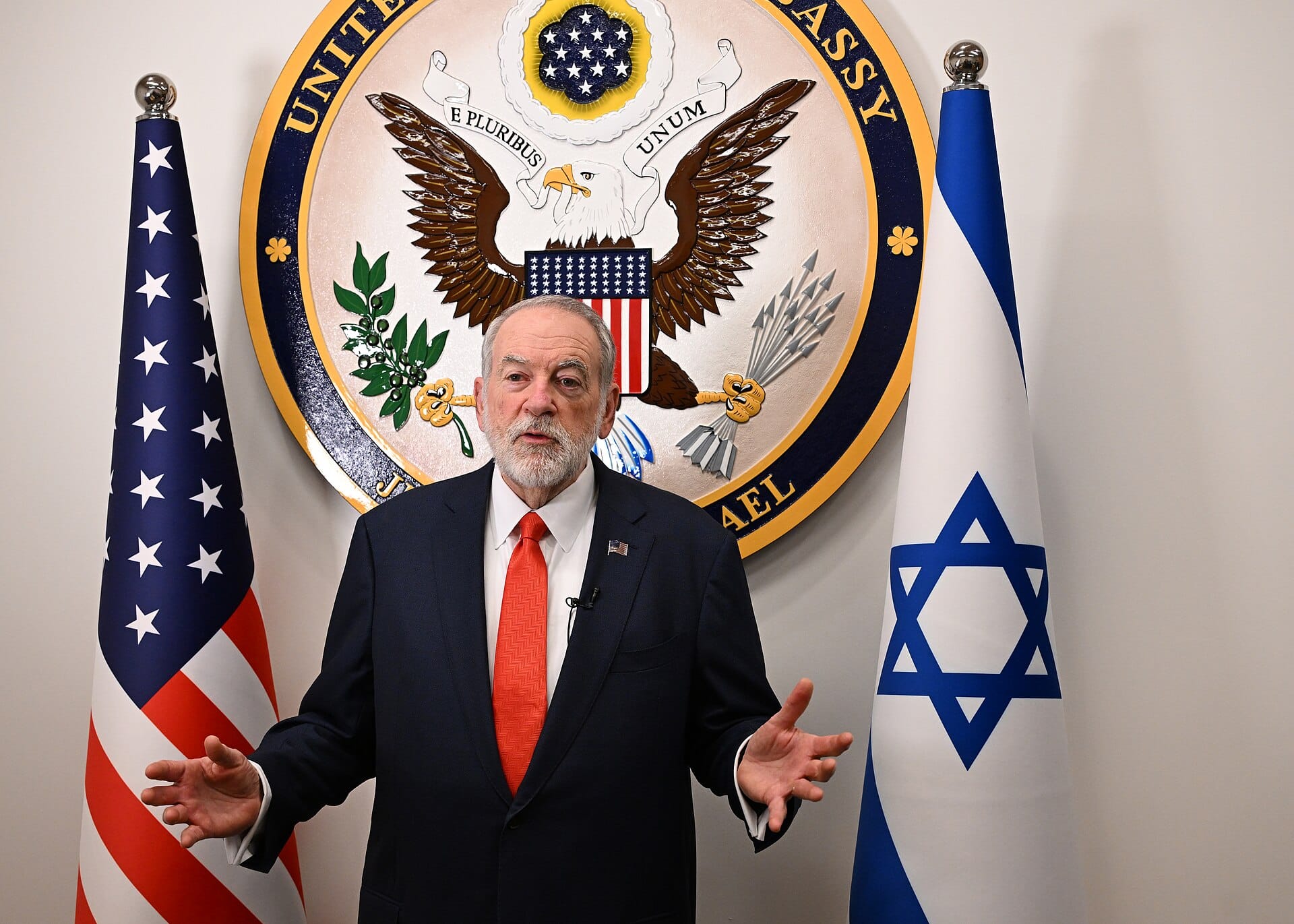
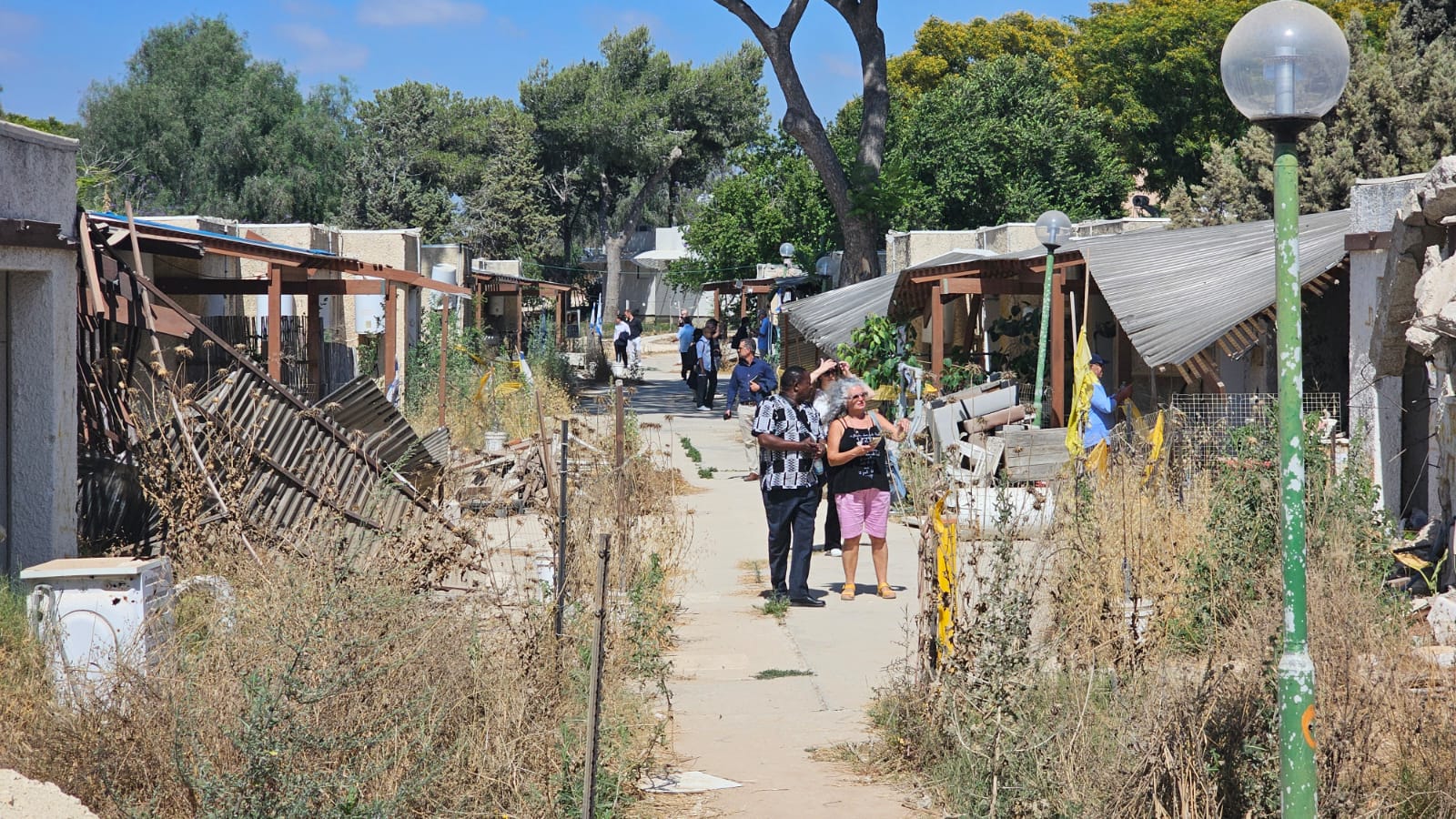
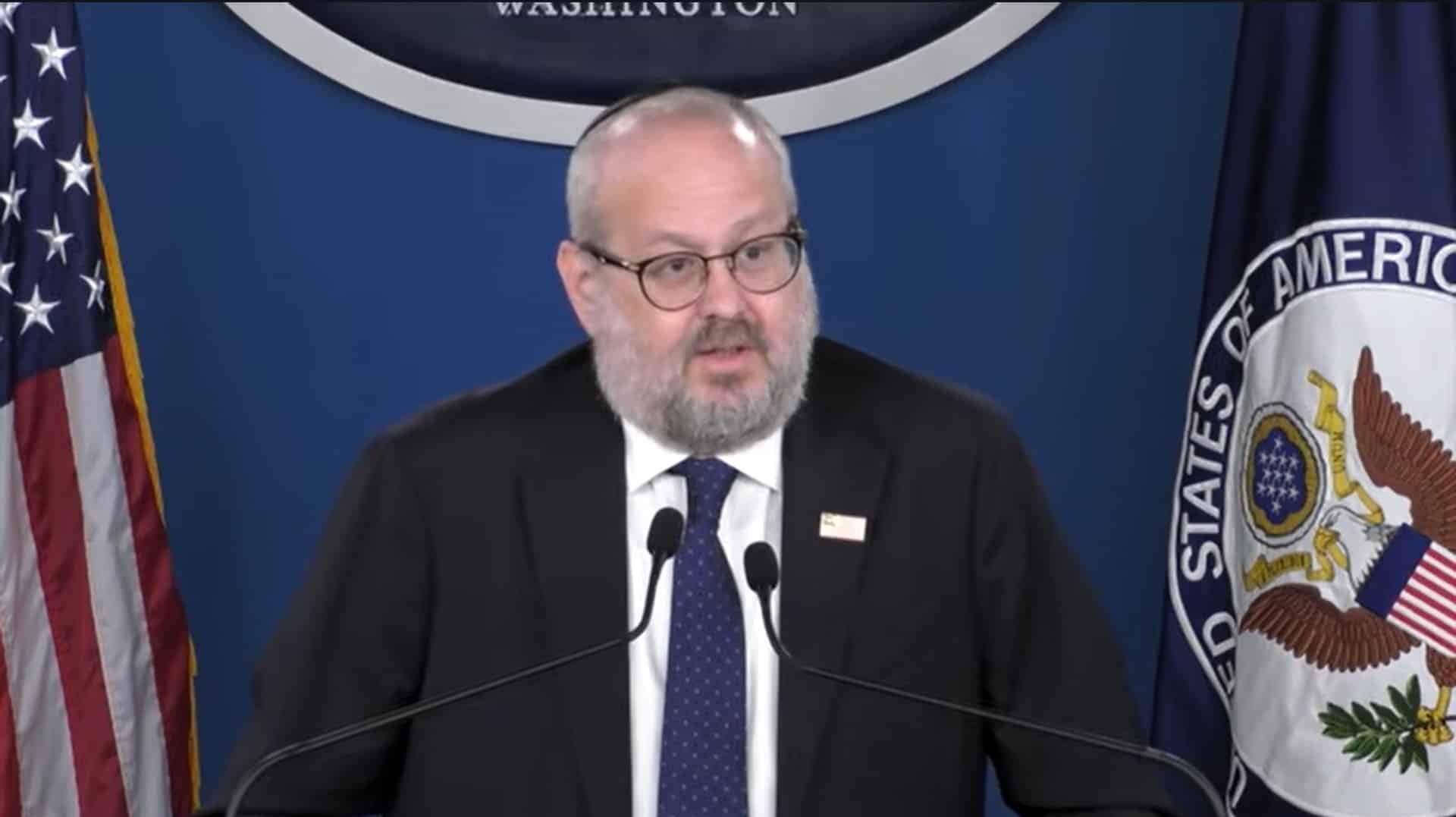
Ahead of the third anniversary of the October 7th massacre, U.S. Special Envoy to Monitor and Combat Antisemitism Ambassador Rabbi Yehuda Kaploun conducted a briefing on Tuesday on U.S. federal and community-level efforts to combat antisemitism and ongoing coordination with international partners to strengthen Jewish community security worldwide.
“The role of a special envoy to combat antisemitism is a role that I wish did not exist, not just in America but in the world,” Ambassador Kaploun noted in his opening remarks. “Antisemitism is all over the world. It’s virtually in every country, and the role requires that State Department be actively involved in protecting the religious liberty not just of American citizens but religious liberty that we believe is a belief in freedom of speech, freedom of action, freedom of religion for everywhere, for everybody.”
Watch the briefing HERE:
A full transcript is available HERE:
MODERATOR: Good morning, and welcome to Washington Foreign Press Center. My name is Zafar Hashemi and I’ll moderate today’s session and briefing. Thank you for joining us, both here in Washington, D.C., online from across the United States. A special welcome to the 20 visiting journalists at FPC’s International Reporting Tour on Combating Global Antisemitism. You’ll spend one week in Washington and Florida reporting on U.S. efforts to fight antisemitism.
It’s a pleasure and honor to introduce Ambassador Rabbi Yehuda Kaploun, U.S. Special Envoy to Monitor and Combat Antisemitism. Ambassador Kaploun will discuss U.S. leadership in combating antisemitism, the Trump Administration’s unprecedented commitment to protecting Jewish communities, and our work with international partners to strengthen security of Jewish communities worldwide. This briefing is on the record and is streaming live on FPC’s website. We will post a transcript of the briefing at fpc.state.gov later today.
And with that, I’ll turn it over to Ambassador Kaploun for his opening remarks.
AMBASSADOR RABBI KAPLOUN: Thank you. The role of a special envoy to combat antisemitism is a role that I wish did not exist, not just in America but in the world. It’s humbling because the next two days we’re going to be talking about virulent antisemitism at a memorial on October 7th for those people that were killed in Israel. But antisemitism is all over the world. It’s virtually in every country, and the role requires that State Department be actively involved in protecting the religious liberty not just of American citizens but religious liberty that we believe is a belief in freedom of speech, freedom of action, freedom of religion for everywhere, for everybody.
As antisemitism surges globally, the President took unprecedented measures. On day one of the administration he signed an executive order and protected students on college campuses. That antisemitism is something cabinet officials can deal with. We’ve implemented a rigorous visa vetting process. Over 250,000 visas have been revoked. We have worked with countries to educate in a curriculum to not hate. We have withdrawn from international bodies, and we have reinvigorated hate crime prosecutions. And we have worked in an unprecedented manner, working to combat terrorism with counterterrorism groups that the State Department is involved with various agencies. Our office was involved in working with all the government agencies to bring al-Saadi to justice. We have been involved with the Saudi Government to have their curriculum changed to remove unprecedented levels of antisemitic questions, and that is a priority of this office.
This office believes that most people who hate are ignorant, and if educated properly with respect and dignity for all of humanity, we can all reduce the levels of not just antisemitism but all levels of crime against all religions. Our office works closely with the Department of Religious Liberty not just on Jewish issues, but on humanity issues. And we have brought up in numerous occasions not just levels of antisemitism but hate crimes, churches being burned, synagogues being burned, women being tortured, women being raped across the globe, and also the fact that 42,000 Iranian citizens were killed, and the world was very silent.
With that, we’ll take questions.
MODERATOR: Thank you for those remarks. And we’ll now turn over to your questions. Please introduce yourself, your outlet, and country before asking your question.
Yes, please.
QUESTION: Hi, Noa Hoffman from the Spectator Magazine in London. Yesterday the Green Party of England and Wales passed a motion at their party conference that Zionism is racism, and the motion — and there were amendments to try and protect Jewish members of the party that did not pass. The motion basically says that anyone who attends a synagogue that believes in a state of Israel is a racist and it effectively cuts out Jewish people from the party entirely. This is a mainstream party in the UK, and the motion passed off the back of an alliance between far-left members and Islamists. What is your response to this, and given the special relationship between the U.S. and the United Kingdom, will you be making any representations on this issue?
AMBASSADOR RABBI KAPLOUN: First of all, we will be making some representations on the issue. But the fact that people are still equating Zionism with racism because of a Durbin conference — you saw that through the work of our UN office and Ambassador Mike Waltz — 45 or 48 countries, I believe, withdrew from any type of mention of the Durbin conference that Zionism is racism.
Again, I go back to, I think, a lot of countries are being hypocritical in the sense of they will only focus on Israel; they will not focus on other countries. If you look at the definition of the IHRA accords, which Britain signed, that the same condemnation that you want to use about Israel has to be used across the board on every country, and I don’t think they’re living up to that standard of what they signed in their agreement.
MODERATOR: Thank you. Go ahead, please. Wait for a mike. Yeah.
QUESTION: Hi, my name is (inaudible) adopt the IHRA definition of antisemitism and critics fear it could restrict legitimate criticism of Israeli Government. So do you think the concern is justified, and what do you think about this?
AMBASSADOR RABBI KAPLOUN: The concern isn’t justified if you live up to the IHRA definition. The IHRA definition doesn’t say that you can’t criticize Israel. The IHRA definition says that if you’re criticizing Israel you have to hold that same standard across the board. So that’s what we would expect countries who joined the IHRA accords, and all civilized countries should be a part of the IHRA accords. It’s a very, very clear definition that hatred should not be.
So again, I would hope that Italy will take that step. I think it’s a very positive step in this trying times in Europe and I think that it would be a very, very positive measure. It does not restrict you from criticizing Israel. What it does is hold you accountable that you can’t only criticize Israel.
MODERATOR: Thank you. We’ll sit on this side of room, please. State your name. Yeah.
QUESTION: Hi, I’m Henrik Beckheim from the Henrik Beckheim Podcast. And I’m wondering, in Norway the government is considering implementing a trade ban with Israeli settlements in Judea and Samaria. What do you think about, for example, Norway’s government proposing this kind of trade ban?
AMBASSADOR RABBI KAPLOUN: I will tell you that we met with officials from Norway during UNGA and we will have continuing discussions on that. So I’m not going to get into those discussions that we’ve had. But it is something that we’ve raised, that we feel it’s inappropriate right now.
MODERATOR: Thank you. And we’ll go to the third row, please.
QUESTION: Hi, Rabbi. Nice to meet you. I’m Nicola Miltz from South Africa. South Africa has made the ICJ genocide case its centerpiece for its foreign policy, and I just want to know from where you stand, the impact this has had on global antisemitism. And also, tying in with that –
MODERATOR: If you don’t mind speaking to the mike, please. Thank you.
QUESTION: Oh, sorry. Tying in with that, do you feel that this ICJ case is also linked to the deteriorating relationships between the United States and South Africa?
AMBASSADOR RABBI KAPLOUN: I do think that it is linked, but I also think that there’s a very, very interesting case to be made about statistics that people talk about genocide. Israel, before World War II, had 16 million Jews total in the whole Jewish community. To date, they have 16 million Jews. In Gaza in 1948 there were 650,000 Palestinians; to date, there’s 2.5 million Palestinians, according to some numbers. So I don’t see how that is a genocide.
The term “genocide” is being thrown around here by a lot of uneducated people who are left-wing or right-wing radicals where people who are literally antisemitic trying to tar and feather the Jewish community and Israel with the level of genocide. If someone would like to explain to me why a six-year-old child going to school anywhere in the United States and is called a baby killer or is being called that you’re responsible for a genocide, I think people have to take a very strong look at how that term is being used. And our government has made it very clear that the ICC case has no merit whatsoever, and many countries have withdrawn from the ICC lately.
MODERATOR: Thank you.
QUESTION: Hi, good morning from Argentina, from Clarin newspaper. I would like — and good morning again. I would like you to describe, analyze how Argentina is seen, and how have the Milei policies close to Israel and the Judaism and the community has been in a region that maybe South America has been not so close to the cause during this time until the change of government we have seen now, or from one year ago to now?
AMBASSADOR RABBI KAPLOUN: So I think that you’re seeing an indication of when Latin America is transforming in front of our eyes in many aspects. When you see a country like Argentina that, 32 years ago, had bombings that were done by Iranian terrorists of the Israeli embassy and a Jewish community center. And now you see Jews have no fear in the street, and people are walking with respect and dignity. You see how a country can transform itself to positive actions. You see how a country, with the right leadership, is able to stand up and confront hatred.
Latin America is transforming right before our eyes. If you take a look at Colombia just two months ago changed their leadership; at the same time they’ve restored relations with Israel. They’ve restored relations, much better relations, within the Jewish community there in Colombia. They’ve made it very, very clear that Colombian Jewish community members are welcome, which wasn’t always the case in the previous administration. And the government, which is what the Secretary and the President have always asked people to do, is lead, to be leaders.
So in Colombia, when people were saying that the Jews were responsible for forest fires, or that the American and Israeli rescue workers were there to bury Colombian citizens, not to help Colombian citizens, the leadership of Colombia stood up. The interior minister, the foreign minister, the president, that’s when leadership can stand up and stop hate. And that was a very, very welcome sign to see, and it’s happening throughout Latin America on many, many different levels, and it’s a transformation of a region that we’re very, very happy.
Regarding President Milei, he’s a leader. He’s working on the Isaac Accords. It’s historic that the IHRA Accords right now are under the presidency of Argentina. There’s a conference in November where we expect to add more Latin American countries to join the IHRA Accords, and Dominican Republic just announced that they’re joining the IHRA Accords. Colombia is revisiting that. Guatemala, Paraguay, Costa Rica, Chile are all in discussions. This is a chance to have a transformative region where people are united against hate.
We’ve seen the damage that happens when people hate. What we get to do is see damage that — the strength and the ability and the growth that countries can have when citizens are welcome, all citizens. And as we say in our office, and we say this often, a country is judged by how it makes its citizens feel welcome, how it protects its citizens. That’s the first and foremost duty of every single country: protect your own citizens. That includes the Jewish community, and some countries are failing miserably at that.
MODERATOR: Thank you. Third row, please.
QUESTION: Hi, I’m — my name is James Dowling. I’m a reporter for The Australian newspaper based out of Sydney. In 2024, Australia appointed a counterpart to yourself, a special envoy on antisemitism. Her recommendations to government were quite wide-spanning, they were quite robust but they were effectively shelved for quite a long while until the Bondi Hanukkah attack sort of spurred government into action. We saw a lot of those adopted quite soon after, but since — in the midst of an inquiry of royal commission into — about that attack and to the state of antisemitism in Australia. It has attracted some degree of criticism of what’s seen as a narrow scope or quite a pragmatic reach. I wanted your view essentially, in relation to Australia, if you can, on how government reticence can sort of act as a handbrake to offices and inquiries with the sole goal of addressing antisemitism.
AMBASSADOR RABBI KAPLOUN: Well, I think, for starters, in many of the countries that have Holocaust envoys or antisemitism envoys, you have to empower them to be able to do something to be effective. You can’t neuter them or you have to respect their suggestions. The envoy in Australia, Jillian Segal, has had numerous recommendations for years leading up to this attack in Bondi about how to protect students on campus, how to do things that — how to educate people against hate. They fell on deaf ears.
Unfortunately, it took a tragedy where 15 people were killed on the night of Hanukkah for the government to take action, and it took a tremendous amount of worldwide effort to even agree to have a royal commission. Now, in practicality, we would love to see the royal commission’s report out before the first anniversary of Bondi, but I think they’re waiting till after the Bondi memorial to release their findings. I think it’s very, very important that people who allowed that behavior to happen and occur be held accountable. There’s a question is how they didn’t follow — how you allow someone that’s on a watch list to acquire weapons is a problem, and I think they have taken a blanket role in accepting all of her recommendations now. Imagine if they would have done that two years before Bondi.
MODERATOR: Thank you. Second row, please. Yeah.
QUESTION: Yeah. Hello. My name is Mariana. I am coming from Moldova. In our country, Russian information operations are very, very tangible issue for us. Two years ago, as a journalist, I worked with a group of French journalists from Arte who were investigating the case of Moldovan citizens who painted Stars of David on buildings in Paris. What initially look like an antisemitic act eventually became part of a much larger investigation into a possible Russian destabilization operation. That case stayed with me a long – for a long time, because it showed how antisemitism can be used not necessarily because the people behind the operation care about antisemitic ideology, but because it is an extremely powerful way to provoke fear, to provoke anger and social conflict.
So I wanted to ask you: How does Russia use antisemitism today as an instrument of disinformation, propaganda, and influence operations?
AMBASSADOR RABBI KAPLOUN: Well, I don’t think it’s just Russia. You have a lot of countries that use bots – that use bots. You have China, you have Indonesia, you have countries that are out there that are sowing discord. It’s amazing to me that you can have a false picture in an article and have 49 million views, but the apology or the retraction only has 100,000 views. So what does that tell you? We have to do a better job of correcting the misinformation and stopping it earlier on.
But it’s so important. It’s every – there’s almost every country that has – as the Secretary of State has said numerous times, the left-wing ideology of hate or the right-wing ideology of hate, the fact that there are links between the left and the Muslim Brotherhood to use misinformation to create and sow discord in countries, it’s a terrible thing. And it has to be attacked and we’re working on that, and that’s a priority of the Secretary and this – and the President. This administration has taken a very strong stand on dealing with left-wing terrorism and right-wing terrorism.
MODERATOR: Thank you.
QUESTION: Good morning. This is Pablo Quiroz of Diario Judio, Mexico. And you were speaking about Latin American countries. Sadly, my country is in the opposite way. And my question is: Is there a particular concern in the U.S. in relation with some antisemitic actions done by the society targeting Israeli musicians, and also people chanting “Jews go out” outside one of the biggest synagogues in Mexico City during Rosh Hashana, including a variety of generations of participants at this movement? Thank you very much for your answer.
AMBASSADOR RABBI KAPLOUN: So when I spoke about Latin America, you are correct; Mexico still leaves a lot to be desired in its fight on how they want to combat antisemitism. As I said before, countries are judged by how they protect their citizens, and Mexico has to do a better job in making certain that the Jewish community feels welcome, that the Jewish community is protected, and that those people who are doing acts of violence against the Jewish community are held accountable.
By the same token, Canada is no different right now. The Jewish community in Canada is under sieged. People within the Mexican Jewish community feel under siege. That’s not a way of how you can respect a religion or how you respect your citizens. Citizens have a right to – to worship freely. It’s – kids don’t have to be assaulted going to a school. Something is very, very wrong as a whole, and that brings us back to how do governments educate their citizens to not hate, okay? We are at unprecedented levels. I don’t think levels have ever been seen like this since the – pre-World War II – of hate, of antisemitism. And it takes real leaders to stand up and say this behavior is not going to be tolerated or it’s not acceptable. And that’s when you have leaders like President Milei and you have leaders like in Colombia and you have leaders in Dominican Republic who get up and say every Jewish citizen is welcome here the same way any other citizen is welcome here.
And I think we haven’t done a good enough job in educating children to not hate. One of the priorities of our office has been, from day one, we have worked quietly behind the scenes with numerous governments to work on their curriculums to change. And because of that, we’re seeing in certain countries unprecedented changes to the tune of – some governments have – there were textbooks that had questions were like this: If someone killed 127 Israelis in one day, how many Israelis would be killed if they did that for nine days?
Now those questions are being taken out of the textbooks due to the efforts of our Secretary and our President and the team at the State Department and our ambassadors – every ambassador I have worked with. It’s really an incredible experience to work with people united to try and stop this onslaught – not, by the way, just against Jews; against Catholics in some countries, against women in other countries, against Uyghurs. You talk about it; we are actually doing the work behind the scenes effectively to have meaningful changes, and educating youth.
Because guess what? The job that I have, my successes are the attacks that we’re able to educate people to not hate that they don’t do. If I can teach a seven-year-old child to not hate, so that when he’s 18 or 19 he’s not influenced to go take a gun and go shoot up something because he’s now informed, he’s not an ignorant person – that’s our successes. That’s the goal that we have every single day in our office.
MODERATOR: Thank you. Let’s go to Mike.
QUESTION: Thank you very much. Mike Wagenheim, i24 News. Ambassador, you mentioned those behind-the-scenes interactions with ambassadors at their local post a moment ago. We’ve seen Bill White in Belgium, Charles Kushner in France, speak out – I mean, loudly, to the point where they were summoned by their counterparts – on antisemitism. How, or under what method is it decided to work below the radar as opposed to cranking up the volume and saying this issue needs to be dealt with now?
AMBASSADOR RABBI KAPLOUN: I think it’s each case as an individual case is looked at by the State Department on how we want to pursue, what levels we want to talk about it. Bill White has taken a stand not just on antisemitism but also on the infringement of religious rights for circumcision, and also slaughtering of animals, which also affects the Muslim community.
I will share with you that when I went to Belgium for my first diplomatic visit, I went to see a synagogue that had been firebombed. And I met with a hundred Jewish citizens of Belgium who were scared, they were shook. And between Ambassador White and myself, we met with Belgium officials and we were able to have that the military would protect the Jewish community in Brussels and in Antwerp and in Liege. Three days later, they caught three teenagers who were being hired by the Iranian Government to firebomb a synagogue. And as a result, they designated the IRGC as a terrorist organization.
Little things matter in this job. The ability to talk to leaders, the ability to challenge people, the ability to ask them to do better – that’s – it can’t be measured. The State Department sent out a request to every government to protect its citizens and explain to them what the High Holidays were, what the Jewish holidays were, that the expectation was to make certain that American citizens were free to worship anywhere they went to the holiday season, to be protected.
MODERATOR: Thank you. And third row, please. Yeah.
QUESTION: Hello. My name is Sarah Carey. I write for the Irish Independent in Ireland. What I’ve noticed, and even before October 7th, is social media – it’s just drowning in antisemitic material. Like, and it’s really proving to be very effective in making people hate Jews. Certainly it’s what I’ve seen; I’m in Ireland. But given that the social media titans like Elon Musk and Mark Zuckerberg, for example, are so close to the administration, could they be doing more to try and suppress that material?
AMBASSADOR RABBI KAPLOUN: I would say in relation to Elon Musk, in particular X, I’ll share with you a story that you can see that little things matter. There was a post that was put out that someone said, “I’m coming back from the funeral of a child in Gaza, my neighbor. His family is starving, his son was killed.”
And when – the next day when Elon Musk and X decided to start putting out locations, that person was coming out of Poland, okay? I think that we’ve seen a very large reduction in antisemitic posts be from – now that people are having to put their location. I think it’s a positive step. More can be done, and we’ll be working with those groups. I think people are taking – we believe very strongly in freedom of speech. You have the right to say what you want to say. But by the same token, we also have the right to say that it’s not true, it can be disproven, that it’s not true.
And I also think that when you said people are being educated by X, and you’ve seen this rise in Ireland of people who are hating Jews because of what they see, where is the leadership in Ireland and where is the leadership in these countries to stand up and say you’re being educated by ignorant people who are trying to preach hate, and that you’re ignorant if you believe it? It takes real leaders to stand up against hate.
One of the things that I’ll share with you is that during the campaign with President Trump, in the summer he did an event about combatting antisemitism with 300 Jewish leaders from all walks of life – orthodox, conservative, reformed. And it was probably unprecedented. And the President then laid out an agenda where he said, I am going to be the president that’s going to be known for preventing and stopping antisemitism to the best of my ability.
And on day one, he set forth his agenda. He has kept everything that he said at that moment. That is leadership. Those are the reasons when I work with Secretary Rubio and I work with the President: These are people that don’t want to see hate. They want people to feel safe worldwide and American citizens should be able to be – worship freely worldwide and there is no excuse. No excuse. We’re talking 82 years after the Holocaust and you have people that are denying that it ever happened, okay? What does that tell you about society?
General Eisenhower said, when he documented the Holocaust, he said, there will come a time that people are going to say this did not occur. I don’t believe that he thought, okay, it would occur within 100 years, but it is, okay? And I tell people for those of you who want to say the Holocaust doesn’t occur, here in the United States or anywhere in the world, go to Normandy. Go take a look at all those people that met brave American soldiers that fought tyranny. They fought the axis of evil. They are the heroes and people are forgetting it.
People are forgetting that 9/11 happened. It’s only 25 years after 9/11, okay? So why would I expect a teenager who lives on his Instagram to know about the Holocaust if he’s – all he’s seeing is people denying it?
MODERATOR: Thank you. George.
QUESTION: Thank you so much, Ambassador Rabbi, for the opportunity. It’s Faisal Ali Shah from the Pakistan Daily. Two-part question. First one is: It’s been three years now and still there is no October 7th commission in Israel. So as State Department official, U.S. Government is assisting Israel for establishing independent commission to inquire the October 7th incident?
And then secondly on the Abrahamic Accords, the previous administration we did see they have a stated policy on two-state solution. So now with the United States and Saudi Arabia, has the United States offered Saudi Arabia defense deals in the exchange of recognition of Israel? And we are aware of the fact that before October 7th Saudi Arabia was on the edge of recognize Israel. So what is the administration policy now on two-state solution? The second one. Thank you so much.
AMBASSADOR RABBI KAPLOUN: I think for a second the one thing that separates this administration from other administrations is that we have a very good dose of realism and a very good dose of reality. If you want to talk about a two-state solution, you can’t be talking with one of those states calling for the eradication of another state, first and foremost. So when you’re educating people in one state that we must get rid of the other state, that’s not a way to have a two-state solution.
I think what the President has done is being extremely practical. We have a Gaza Board of Peace. Let’s work on giving people economic opportunity. Let’s work on education that doesn’t teach people to hate. And I’ll share with you a story. I visited numerous hostage families, okay? One of the families that I visited was a wife where she and her husband, every day for close to 30 years, went to the Gaza border to drive people for medical in the Israeli hospitals. Her house was the first one – first or second targeted in her village. They killed her husband and she was a hostage, okay? She said, I don’t want to hear talk about two-state solution right now; I want to see people living in peace first.
Let’s get the Hamas disarmament. We – there’s benchmarks here in the Gaza Peace Accords. Let’s see. Let’s see where we go. Nothing is off the table with this administration, but we expect people to live up to their agreements that they have about disarming, food coming in, rebuilding, education. Those are all extremely important items that have to be dealt with. Let’s not put the cart in front of the horse right now.
MODERATOR: Thank you. All right, let’s go to – yeah, let’s go to Idan and then we’ll go to you.
QUESTION: Ambassador Rabbi Kaploun, thank you very much. Idan Kweller, Walla News and Jerusalem Post, Israel. Do you also take action of what seems to be a misconception of nations and citizens around the world that vow the term Zionism? Because it seems that it lose track, right?
AMBASSADOR RABBI KAPLOUN: So I think people have to have an understanding of history to know what Zionism is also, okay? In 1939 – there’s always been Zionism, and Jews are Zionistic because we prayed for the last 3,000 years, and we say we lift up our eyes and we pray to Zion. That is something that people have said for 3,000 years, okay? That is not anything new. So step one. Step two, Zionism is where Jewish – the community has a state now. I would venture to say that as you look through history, okay, all these countries that are now trying to equate Zionist with racism, who didn’t allow Jews in before World War II, before you equate that realize that there was no homeland, okay? One has to take a very interesting look at history to determine that Zionism is racism.
In Israel, you will see – it’s one of the few countries you will see black Jews, white Jews, Middle Eastern Jews, from all walks of life, people who were thrown out of their lands who came to Israel and found a home. I don’t think that it’s racism. You go to universities, you see Arabs, Druze, Jews all learning hand in hand in schools. They all serve – many of them in the Israeli military. You go to hospitals, and you can have just as easily a Jewish nurse, an Arab nurse, or a Druze nurse. That’s an amazing success story about a society that’s only 70 – 70 years old.
So I think there’s a huge difference for people who want to use that term. I think people should understand the term and understand – and know about it and not be ignorant about it.
MODERATOR: Let’s do one more question.
AMBASSADOR RABBI KAPLOUN: Yes, thank you.
MODERATOR: Yeah, right here. Yeah.
QUESTION: Thank you. Thank you for being here. My name is George Gilea. I am from a Jewish reality magazine and national public radio in Romania. So it is clear that for Trump Administration, fighting antisemitism is a priority. At the same time, President Trump and other important figures in the administration shows support for extremist – far-extremist party in Europe, like Alternative für Deutschland, a party accused of antisemitism in Europe. How do you reconcile those position? And does this support, I don’t know, a risk to undermine the effort for fighting antisemitism in Europe? Thank you.
AMBASSADOR RABBI KAPLOUN: So I’m not that familiar with the parties that are running in other countries. I do know that we have a strict vetting process within the State Department before we meet with elected officials or those who are running for election. I do know that there have been instances where leaders were involved, but their staff who made incendiary comments were not allowed into the State Department building. But more than that, right now, I can’t give you an answer without actual specifics. And —
MODERATOR: All right, all right. Last question.
AMBASSADOR RABBI KAPLOUN: Last question. Thank you.
MODERATOR: Yes, please. Third row, yes.
QUESTION: Hi, Mr. Ambassador. Thomas Vieregge from Die Presse in Vienna, which is the newspaper Theodor Herzl was working for. My question is: Do you notice a stark rise of antisemitism in the U.S.? How much of a problem is that? And how would you explain that? We had this incident last year, the attack on the – there were two deaths from – diplomats from the Israeli embassy, attacks on synagogues, and so on and so forth. How would you explain that? Is this only just the Gaza war? What is it?
MODERATOR: Thank you.
AMBASSADOR RABBI KAPLOUN: I think if you take a look at history, you see a rise in antisemitism; ynu see it from all sides. And the tragedy that happened in Washington – America is not immune. It’s not just in Washington. We had in Colorado a lady who was a Holocaust survivor was burned to death. What does that tell you when people are willing to believe what they read without any facts?
There’s this ignorance or misconception that whatever I read about the Jews, the Jews are controlling the world, the Jews are responsible for everything. When people are unhappy or people are not successful, they tend to want to blame somebody. So it starts with the Jews, but it doesn’t just end with the Jews, okay? Those same people that are busy chanting “Death to Israel, you know their second sentence is “Death to America”? That’s the reality of the society we’re living in. It’s not just about Israel. It’s Western values; it’s civilization. Our Secretary has made it very clear about the left-wing terrorism that’s tied into the Islamic terrorism. We’ve had events at the State Department where we’ve highlighted these links.
There is a major problem in the world today that people aren’t willing to look for the truth. What they’re willing to do is accept whatever they’re given by anybody, and the algorithms end up pushing this person to get another one, another one, another one, another one – never with any type of dissent. So I think it’s extremely important to verify the information, and you’re seeing people who are really disenfranchised looking to lash out, okay? And it’s across the board.
And antisemitism is in America? Yes, it’s in America. The difference is other countries should learn from what we’re trying to do. We’re tackling the problem head on. We’re dealing with it on campus. We’re dealing with it in our schools. We’re dealing with it in our police departments. Whatever can be done, our Justice Department has been absolutely incredible with what they have done. Every single agency that I work with – the FBI – one after the other are aggressive in combating antisemitism.
What we would love to see is all the countries of the world join us with that same level of dedication that we have here in America to combat a problem. The problem exists. It’s not going away, but it can be fought. And every person that you’re able to change their mind, one person at a time, to not hate, God willing, is one attack or less. And if we make the world better every day by teaching people to not hate, that’s the goal of this administration. Thank you.
MODERATOR: And with that, I would like to conclude today’s briefing. Thank you so much, and thank you for being here, Ambassador.
AMBASSADOR RABBI KAPLOUN: Thank you.
Read more:
CAM Welcomes Senate Confirmation of Rabbi Yehuda Kaploun as Next US Antisemitism Special Envoy