|
Getting your Trinity Audio player ready...
|
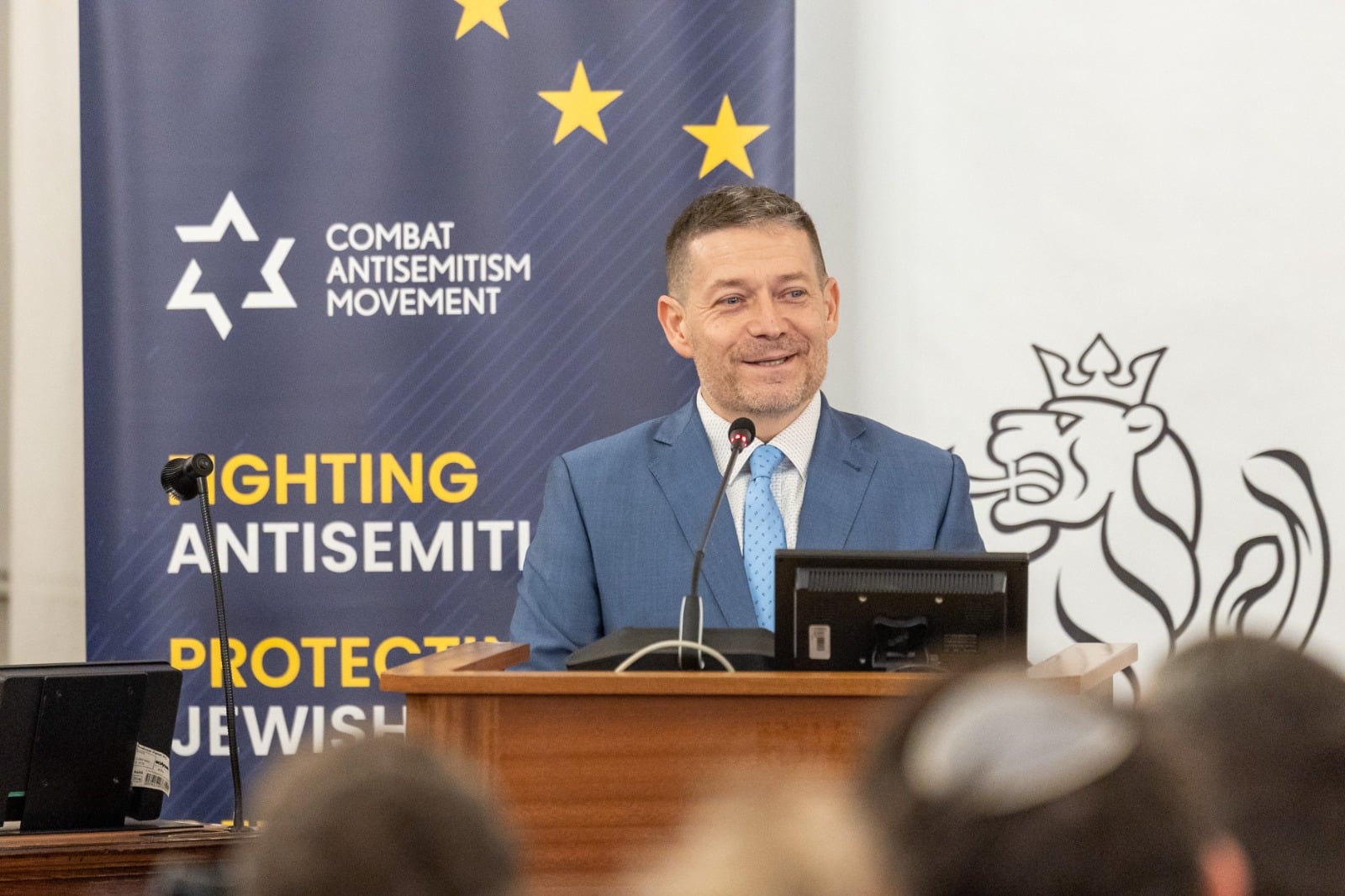
Earlier this month, First Deputy Speaker of the Czech Chamber of Deputies Patrik Nacher hosted a historic ceremony in Prague honoring the 129 Czech citizens recognized by Yad Vashem as “Righteous Among the Nations” for risking their lives to save Jews during the Holocaust.
The gathering, organized by the Combat Antisemitism Movement (CAM) and Federation of Jewish Communities in the Czech Republic (FJC), coincided with the 88th anniversary of Kristallnacht (“Night of Broken Glass”), the violent state-sponsored pogrom across Nazi Germany that presaged the Holocaust.
Guests included Czech lawmakers and government officials, diplomats, and Jewish community representatives.
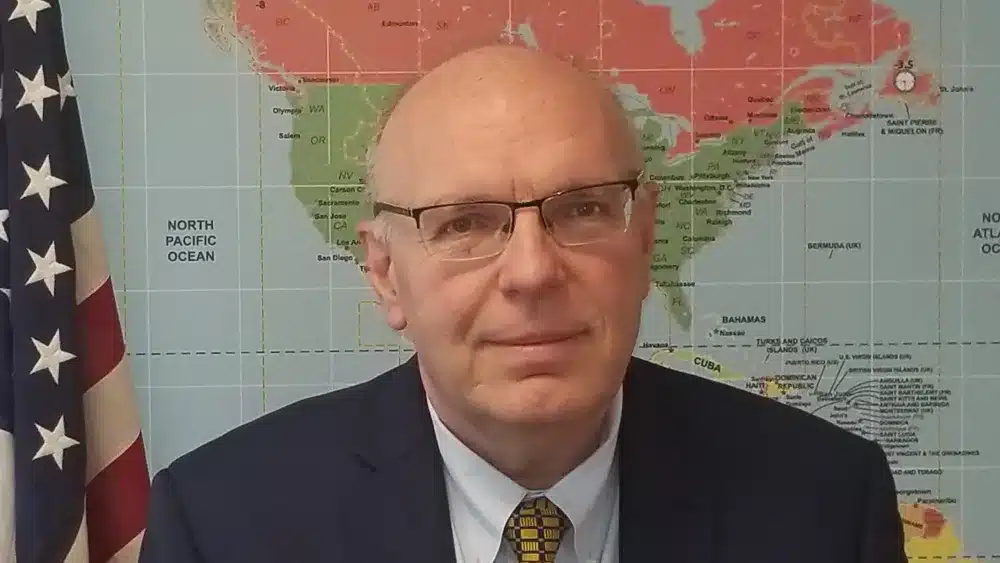
In an exclusive interview with CAM this week, Nacher discussed his family’s Holocaust history, the importance of honoring those who protected Jews from the Nazis, and why the Czech Republic has remained a relative safe haven amid rising antisemitism elsewhere in Europe.
At the parliamentary tribute, you shared that a significant portion of your family was murdered at Treblinka. How has your family’s Holocaust history shaped your understanding of antisemitism and your sense of responsibility as a public official?
“A significant part of my family — everyone except my grandmother and grandfather — perished in Treblinka. When you know that something like this happened to your own family, you no longer see the Holocaust as a distant historical event. Behind every number and every name are real people and their fates. That makes me all the more sensitive to expressions of antisemitism, and to how easily prejudice and hatred can spread in society if no one confronts them.”
“As a Member of Parliament, I cannot, of course, change the past. But I can influence how we respond to such manifestations today. In my view, a public official should not remain silent when someone is targeted with hatred because of their origin or faith. For me, this is both a personal matter and a question of fundamental democratic principles.”
You hosted the Czech Parliament’s first official tribute to the country’s 129 “Righteous Among the Nations.” What inspired you to champion this recognition, and what impact do you hope it will have beyond the ceremony itself?
“What has always moved me about the stories of the ‘Righteous’ is that their heroism often began with a quite ordinary decision: to hide someone, open a door, share food, or help in some other simple way. In those days, however, such help was anything but ordinary. A person risked their own life and frequently the safety of their family as well.”
“It was important to me that this tribute should also take place in the Chamber of Deputies. Parliament, in my view, should commemorate not only political events but also the people and deeds we must never forget. I did not want it to be merely one ceremonial day. I hope the stories of the ‘Righteous’ reach schools and younger generations. They show that even in the darkest times a person can still choose to help another.”
“I regard this as my duty and responsibility. If my time in politics were to end tomorrow, I would be proud that two things remain from my work in this area: the permanent installation of a Torah scroll in the Chamber of Deputies, and this tribute to the 129 Czech ‘Righteous Among the Nations.’ I believe the ceremony itself will continue to resonate and inspire further activities.”
Despite the global surge in antisemitism following the October 7th Hamas attacks, the Czech Republic has remained comparatively safe for Jewish communities. What do you believe has helped the country resist some of the more alarming developments seen elsewhere in Europe, and where do you see the greatest risks to that relative security?
“Compared with a number of Western European countries, the Czech Republic remains a relatively safe environment for the Jewish community. This is linked to our historical experience, a broad cross-party consensus that antisemitism is unacceptable, and our long-standing support for Israel. That does not mean the problem does not concern us.”
“Antisemitism can appear in different settings and under different pretexts, so it makes little sense to associate it exclusively with one nationality, religion or political current. We must judge specific statements and actions on their own merits, regardless of who is behind them.”
“The greatest risks, in my view, lie in the spread of hatred and conspiracy theories online, in the polarization of society, and in the trivialization of antisemitism. It is essential to distinguish between antisemitism and legitimate criticism of the Israeli government: criticizing specific political decisions of Israel is legitimate; transferring collective blame onto Jews as a whole or employing anti-Jewish stereotypes is not. The history of Kristallnacht remains a warning that hatred and intimidation must never be ignored.”
“I am proud of our country for this relative safety — I also spoke about it in my speech. At the same time, it is a sad reflection on the rest of Europe, particularly west of our borders.”
In 2024, you championed an initiative to prevent Prague’s public funds from supporting events involving groups that promote antisemitism. What motivated you to pursue this approach, and what consequences should organizations face when publicly funded events provide a platform for antisemitism?
“I started from a simple principle: public money should not be used to spread hatred. When a city or the state grants a subsidy for an event, it is legitimate to require the organizers to respect the basic values of a democratic society. Anyone who knowingly provides a platform for the promotion of antisemitism, racism or violence should face consequences — for example the return of the subsidy or restricted access to future public funding. The conditions must, of course, be clear in advance and any breach must be demonstrable.”
“A distinction is necessary: it is one thing when the organizer promotes or deliberately supports hatred; it is another when an individual makes an unexpected remark and the organizer responds appropriately. My aim is not to ban discussion, but to ensure that public funds are not used to promote hatred against Jews or any other group.”
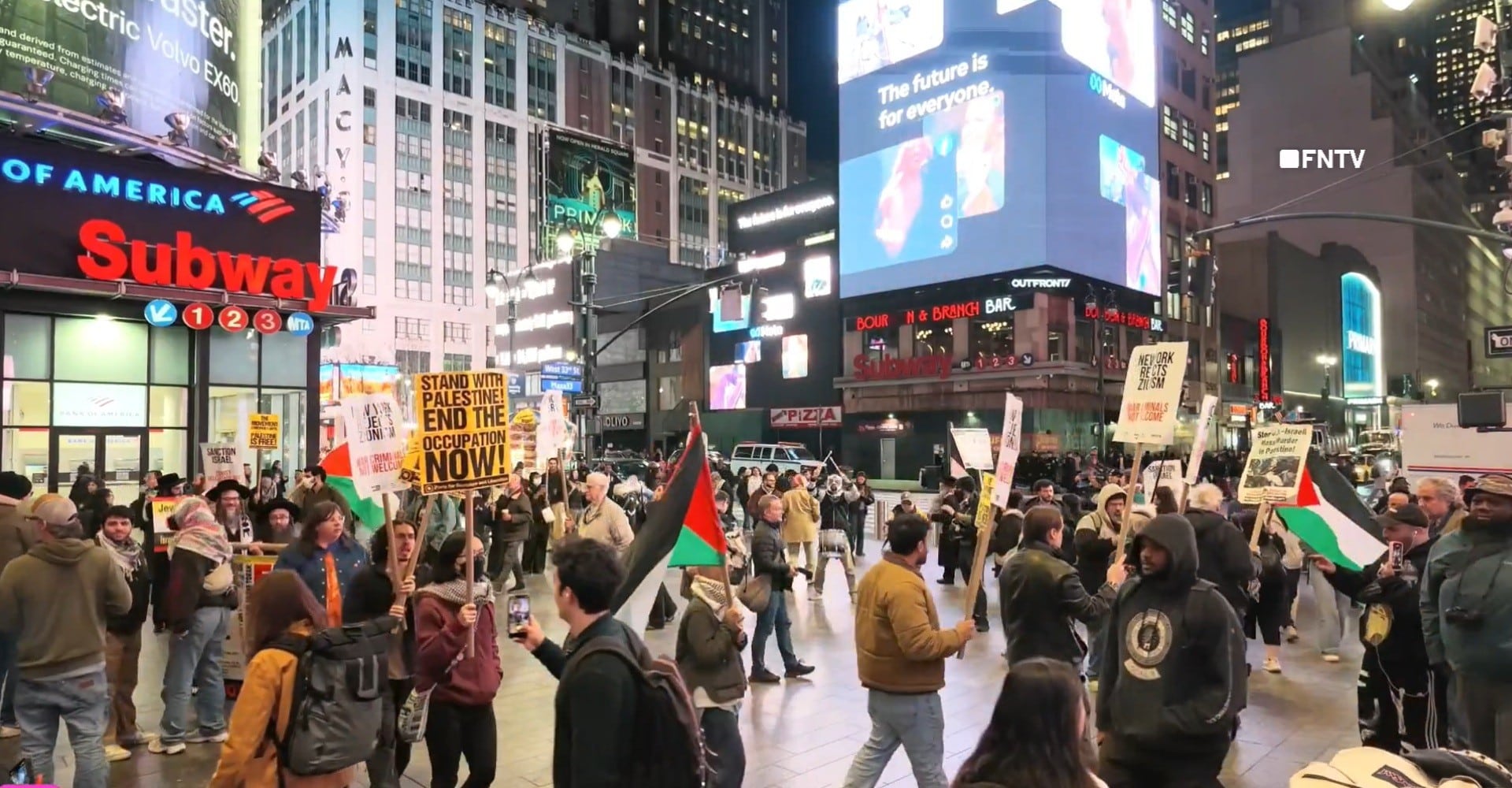
“The initial impulse came from the events of October 7, 2023 and the fact that even afterwards certain groups continued to display antisemitic tendencies while still seeking funding from Prague — that is, from taxpayers’ money. That struck me as unacceptable. Hence the draft resolution. At the subsequent council meeting, pro-Palestinian activists protested against me. That is fine — it is part of democracy.”
The Czech Republic adopted a national strategy to combat antisemitism for 2025-2030. From your position in Parliament, what concrete measures do you believe should take priority, and what would meaningful progress in combating antisemitism look like to you?
“I regard three areas as the most important. First, education — not only teaching about the Holocaust, but also about Jewish history, culture and contemporary community life, across all types of schools. Second, the internet — we need to respond more effectively to illegal content and cooperate with digital platforms, while fully respecting freedom of expression and distinguishing between unlawful hate speech and opinions with which we simply disagree. Third, security — antisemitic crimes must be thoroughly investigated, and Jewish schools, synagogues, and other institutions must receive appropriate protection.”
“It is also essential to monitor whether the adopted strategy is actually being implemented. Progress will be measured by results: whether young people gain a better understanding of both Jewish history and the present day, whether victims feel confident turning to the authorities, and whether expressions of antisemitism are addressed consistently, regardless of their source.”
“In short — education, awareness, and the courage to speak about these issues openly. As I have said before, in this respect we can serve as a model for other developed countries, not only in Europe.”
A 2025 Czech study found that 77% of secondary-school students primarily associated Judaism with the Holocaust, yet only about one-third cited lessons for the present as a reason to study the Holocaust. What do these findings suggest about the challenges facing Holocaust education, and how can we better equip young people to recognize antisemitism today?
“I regard these figures as an important warning. If the majority of students associate Judaism mainly with the Holocaust and know little about contemporary Jewish life, then we still have work to do in education. This does not mean teaching less about the Holocaust; it means complementing that education with a fuller picture of Jewish culture, traditions and community life today. Meetings with members of the Jewish community, visits to cultural and educational institutions, and discussions with survivors would help — and not just in Prague or at grammar schools, but also at schools throughout the country.”
“What also concerns me is that only one-third of students consider Holocaust education important for the present day. That must change. It is not merely a matter of historical dates; it is about understanding where prejudice, the dehumanization of others and the indifference of bystanders can lead. Young people should know the past and, at the same time, understand that the Jewish community is a natural and living part of today’s Czech society. In my view this is the best way to prevent stereotypes and to strengthen mutual understanding.”
“Unfortunately, these findings are not limited to the subject of Judaism. More generally, knowledge of recent historical events — and especially of their context and interconnections — is often weaker than knowledge of ancient Greece and Rome. It is paradoxical, but it is the reality.”
Read more —