|
Getting your Trinity Audio player ready...
|
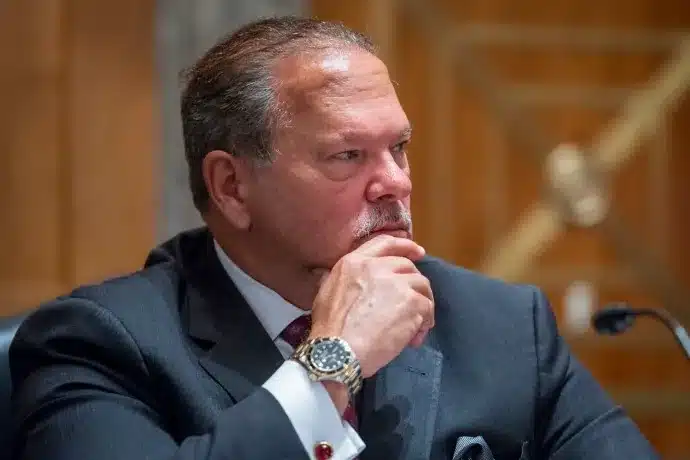
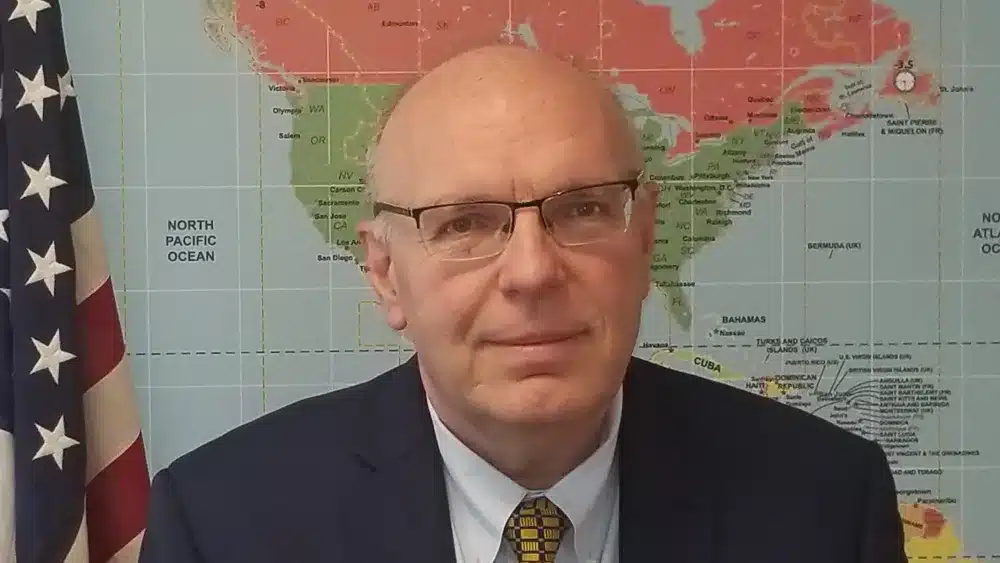
David Wurmser served as senior advisor in several Republican administrations at the Department of Defense, Department of State, and White House.
He is an expert in U.S.-Israel affairs who holds senior positions at the Center for Security Policy (CSP) in Washington, D.C, and at the Jerusalem Center for Foreign and Security Affairs (JCFA) in Israel.
In the aftermath of Israel’s Knesset elections and the American midterms, CAM spoke with Wurmser about the impact of the results on the alliance between the two nations.
What’s the most important thing Israel learned from the U.S. midterm elections?
Israelis were mostly focused on the unsettled state of politics emerging from their own elections, so the issue seized far less attention than would ordinarily be the case. That said, there are two themes that have emerged. The first is to gauge how much latitude, both legally and politically, the president still has to address Iran versus how much the window has shut or will soon shut to act.”
“There was a sense of frustration that the constant diplomatic fits and starts, which Israelis universally believe will lead nowhere, have left them with a closed, or very narrow, opening to address the Iran problem. They broadly believe there are only three paths: finish the regime and thus eliminate the problem; whittle down the nuclear program, but are required to do so periodically (every few months) in a ‘mow the lawn’ strategy, which is unsustainable in their mind; or walk away from the problem, which would effectively terminate the U.S. position in the region and leave Israel alone to address this and other problems.”
“The U.S. elections have raised great concerns about the continued viability of the first option, raised grave concerns that the second is sustainable very long given political realities in the U.S., have Israelis looking at the third with anxiety. The possibility that third option will prevail is what is driving a strong trend in Israel to contemplate defense from a far more independent and autonomous basis.”
Are Israelis surprised by the antisemitism manifested during and after the campaign, not only by Democrats but also increasingly by a faction of Republican officials and their media?
“Israelis are only now beginning to wake up to the rise of antisemitism on the Right, so there is surprise, some sense of confusion, and certainly strong curiosity. There already was a deep understanding that the American Left has turned on Israel rather than any particular policy or prime minister. Nonetheless, the Israeli Left has sought to capitalize on this by promising it would have better relations with the U.S. than the current prime minister. But most Israelis understand the issue is not Israel, but the decline of self-confidence and belief in Western civilization in Western countries, which is something Israelis have no control over.”
“As such, there was already before the elections a deep understanding that half of the U.S. political spectrum, at least for the foreseeable future, had turned as hostile to Israel as the European Left has, and that there is little Israel can practically do to reverse that.”
“After October 7th, Israelis have far less patience for contemplating public acceptance of Israel in Western countries. They strongly believe they are fighting for survival, have their backs against the wall, and that whatever is required to survive is far more important than appeasing foreign public opinion.”
“There was also a sense that the American Right, and even the European Right, might be a counterweight, both in terms of the immediacy of restraining anti-Israeli sentiment and repairing the declining confidence in Western civilization. The midterm elections in this regard was a shock, the implications of which are only now beginning to be digested.”
Were Israelis concerned when President Trump announced that he and Prime Minister Netanyahu had agreed to end military aid at the end of this year, two years before the agreement is set to expire?
The Left in Israel feigned surprise for internal political reasons, arguing it was avoidable (and of course undesirable) and more evidence of the failure of the current government. And yet, the public debate in Israel already for the last several years revolved around surviving more independently after October 7th, because of the unpleasant and deadly restrictions Israel faced during the war from the Biden administration, and also because of the belief that U.S. politics were leading toward a far less sympathetic policy toward Israel. In other words, Israelis were expecting this from observing circumstances alone.”
“Moreover, Prime Minister Netanyahu has been discussing ending this aid for years, and in the last months has warned bluntly that this is where it is likely to go and should go. His statements have been reinforced by several reports from Israeli research institutes arguing that the military relationship with the U.S. must transform from assistance and dependency toward partnership. Perhaps some were surprised that the aid might be ended as soon as January, but the general fact that it will end soon had already become a broadly held assumption over the last few years.”
Do Israelis believe if they need to strike Iran again that the US will be part of the military campaign?
“At this point, they hope the U.S. will be part of the campaign, but it is no longer assumed nor seen as a sine qua non for action. After the last several years, Israelis have become increasingly confident in their ability to act alone to the level necessary to address even their most difficult and distant problems. In fact, with the several ceasefires, starting already in the summer of 2025, Israelis began to believe that U.S. involvement carries with it complexities and restraints that impair strategic victory.”
“Since October 7th, Israelis believe in ending wars with victory, not negotiated conflict management. This is a great cultural divide that is emerging with the rest of the West on this issue. As such, there is a feeling that Israel lives on ‘October 8th,’ while the rest of the world, even the United States, lives still on ‘October 6th.’ This is understood as a fundamental strategic misalignment, and given the increased confidence of succeeding alone, Israelis are ever more willing to act even without U.S. support, and in some quarter even advocating against involving the U.S. other than to get a green light, diplomatic cover, and logistic and resupply support. In other words, to act alone but not against the will of the U.S.”
Read more:
Why Antisemitism Is Gaining Ground in America Today: A Q&A With Author James Lindsay