|
Getting your Trinity Audio player ready...
|
The following is an op-ed authored by Combat Antisemitism Movement (CAM) CEO Sacha Roytman:
Ideas taught in a university classroom can one day guide a government, shape a newsroom, or reach another generation through a teacher. Whoever influences that education can leave a mark on a society for decades.
Long before diplomats had a name for it, Western universities exercised influence that governments could rarely achieve on their own. Their laboratories helped shape modern medicine and industry. Their faculties gave scholars the freedom to debate how societies should govern themselves. Ideas developed there earned a hearing around the world because others could test, dispute, and build on them. That intellectual freedom drew students from across the globe who wanted to help shape what came next.
When those students returned home to train physicians, advise policymakers, or establish universities of their own, the relationships they formed abroad often endured. That form of Western soft power became one of the United States’ greatest international strengths.
The Soviet Union made higher education an instrument of its ideological struggle against the West. As countries across Africa and Asia gained independence, the Kremlin offered scholarships to students it hoped would become political leaders, civil servants, and teachers. Its aim was to spread Marxist ideology, build opposition to Western influence, and cultivate allies who saw Soviet socialism as the path to national liberation.
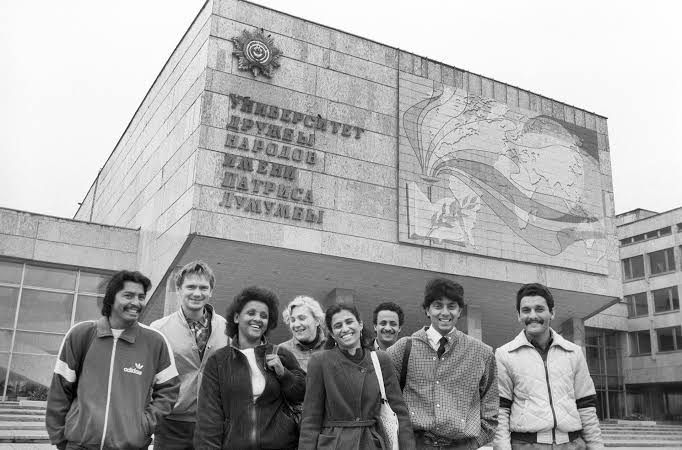
Moscow put that strategy into practice in 1960 when it founded the Peoples’ Friendship University for students from Africa, Asia, and Latin America. A year later, it named the university after Patrice Lumumba, the first prime minister of independent Congo, who had been assassinated. The name signaled that Moscow wanted newly independent nations to see it as an ally.
Over the next three decades, more than 5,000 African students studied there at Soviet expense. The university’s reach extended well beyond Africa. Bharrat Jagdeo earned a master’s degree in economics there and later became president of Guyana. Rohana Wijeweera came from Sri Lanka to study medicine, organized a Marxist study circle in Moscow, and later founded Sri Lankas People’s Liberation Front. Mahmoud Abbas, the future Palestinian Authority president, also studied at Lumumba.
In 1972, the Soviet Communist Party identified international Zionism as a threat. The Soviet Academy of Sciences then established a commission at its Institute of Oriental Studies to coordinate scholarly criticism of Zionism. Ten years later, Abbas defended a dissertation there alleging collaboration between Zionist leaders and Nazi Germany. In 1984, he published a book in Arabic based on his thesis. By then, an accusation that served the Kremlin’s political agenda could reach an entirely new audience under the name of a Palestinian author whose doctorate gave it scholarly standing.
When the Soviet Union collapsed in 1991, Moscow lost one of its most powerful instruments for spreading Marxist ideology around the world. For decades, the Communist Party had used scholarships, universities, and research institutes to cultivate future leaders who could carry a Soviet interpretation of capitalism, imperialism, and Zionism into political life at home.
Moscow found another way to reach future leaders by funding academic programs at the Western universities they had already chosen. In 2007, the Russian government established the Russkiy Mir Foundation to promote Russian language and culture abroad. By 2010, it had helped establish a center at the University of Edinburgh. In 2012, it launched a program at St Antony’s College, Oxford. A year later, Durham University accepted £85,000 from the foundation to equip a Russian cultural center and help pay its director. Durham retained control over programming, but the grant secured something valuable for Moscow. Students who had come to Britain for a British education could now encounter Russian culture through an institution they already trusted.
Beijing and Doha shared Moscow’s insight that a foreign government could reach future leaders through the very institutions that gave the West much of its influence. The attraction was the openness of a democratic university. British, French, and American scholars welcomed ideas from abroad because they believed their students should encounter competing views of the world. That openness is worth defending. It is also what makes Western universities attractive to governments with very different political traditions.
The scale in the United States alone is striking. Across four decades of federal disclosures through October 2026, American universities reported $14.32 billion in gifts and contracts from Qatari and Chinese sources. Qatari sources accounted for $8.98 billion across 67 institutions. Chinese sources accounted for $5.34 billion across 260. Those totals include both public and private sources.
Qatar’s academic partnerships also extended to France and Britain. In 2010, the Qatar Foundation signed an agreement covering five years with HEC Paris, one of France’s leading business schools, to offer executive education in Doha. The foundation wanted students in Qatar to study with the same professors, meet the same academic standards, and earn the same degrees as students in Paris.
In Britain, Qatari funding supported both professors and students at Oxford. Gifts from the Qatar Foundation established two professorships, one in contemporary Islamic studies and the other in Islamic art and architecture. A separate Qatari institution, the Qatar Fund for Development, donated £3 million in 2016 to the Margaret Thatcher Scholarship Trust at Oxford’s Somerville College to create at least four additional scholarships. The Oxford Qatar Thatcher Graduate Scholarship covers course fees and provides a living allowance for eligible students from the Middle East and North Africa.
Academic exchange moved in both directions. HEC brought French professors and degrees to Doha, while Qatari funding helped bring graduate students to Oxford.
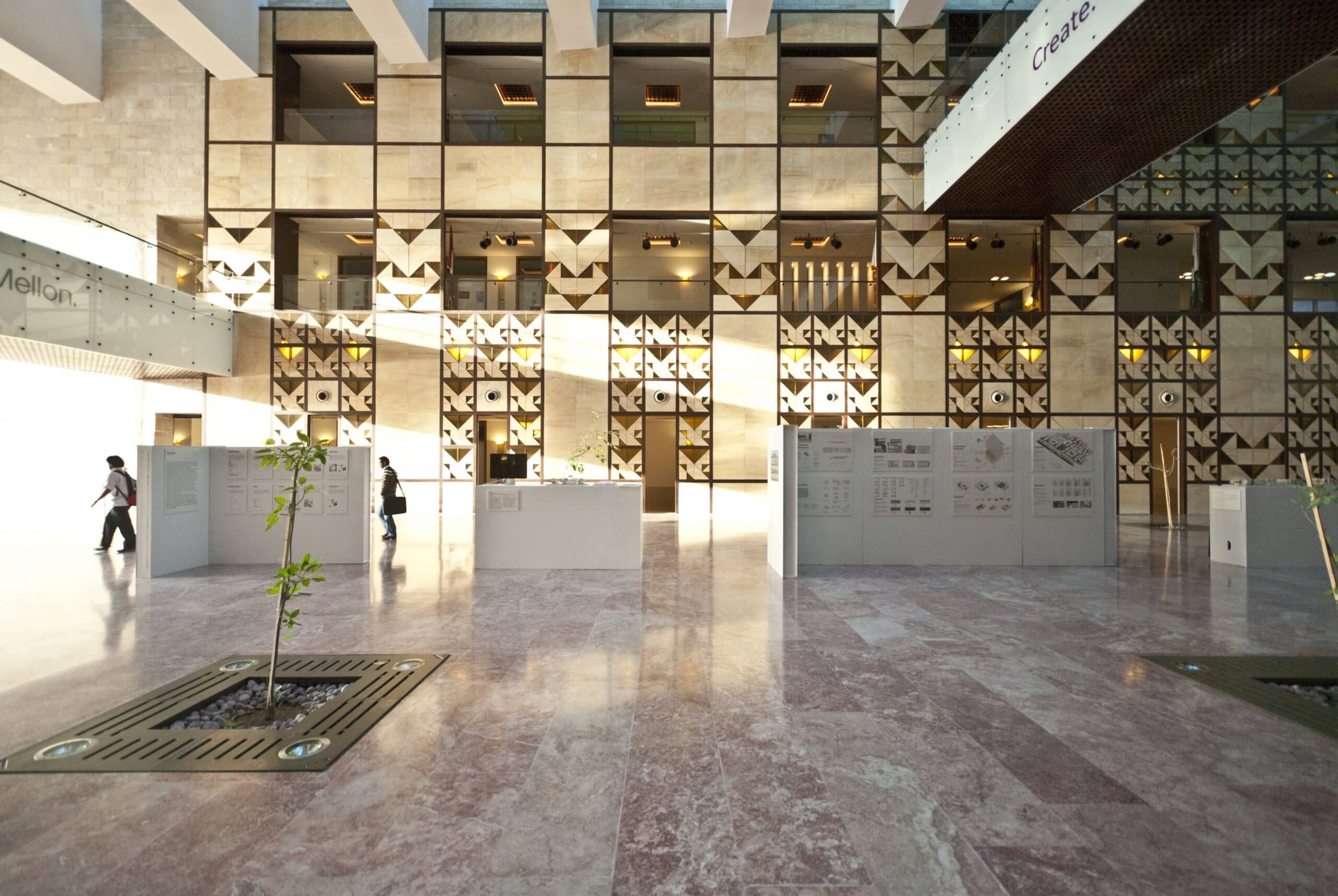
Over time, Qatar developed a strategy with two parts. At home, the Qatar Foundation brought six American universities to the country to establish campuses of their own. They were Georgetown, Northwestern, Carnegie Mellon, Cornell (through Weill Cornell Medicine), Texas A&M, and Virginia Commonwealth University. France’s HEC Paris established a campus in Doha as well. A future diplomat could study at Georgetown, a journalist at Northwestern, and a physician at Weill Cornell, all earning American credentials while building professional relationships in Qatar. Abroad, Qatari institutions funded professorships and graduate scholarships at universities such as Oxford.
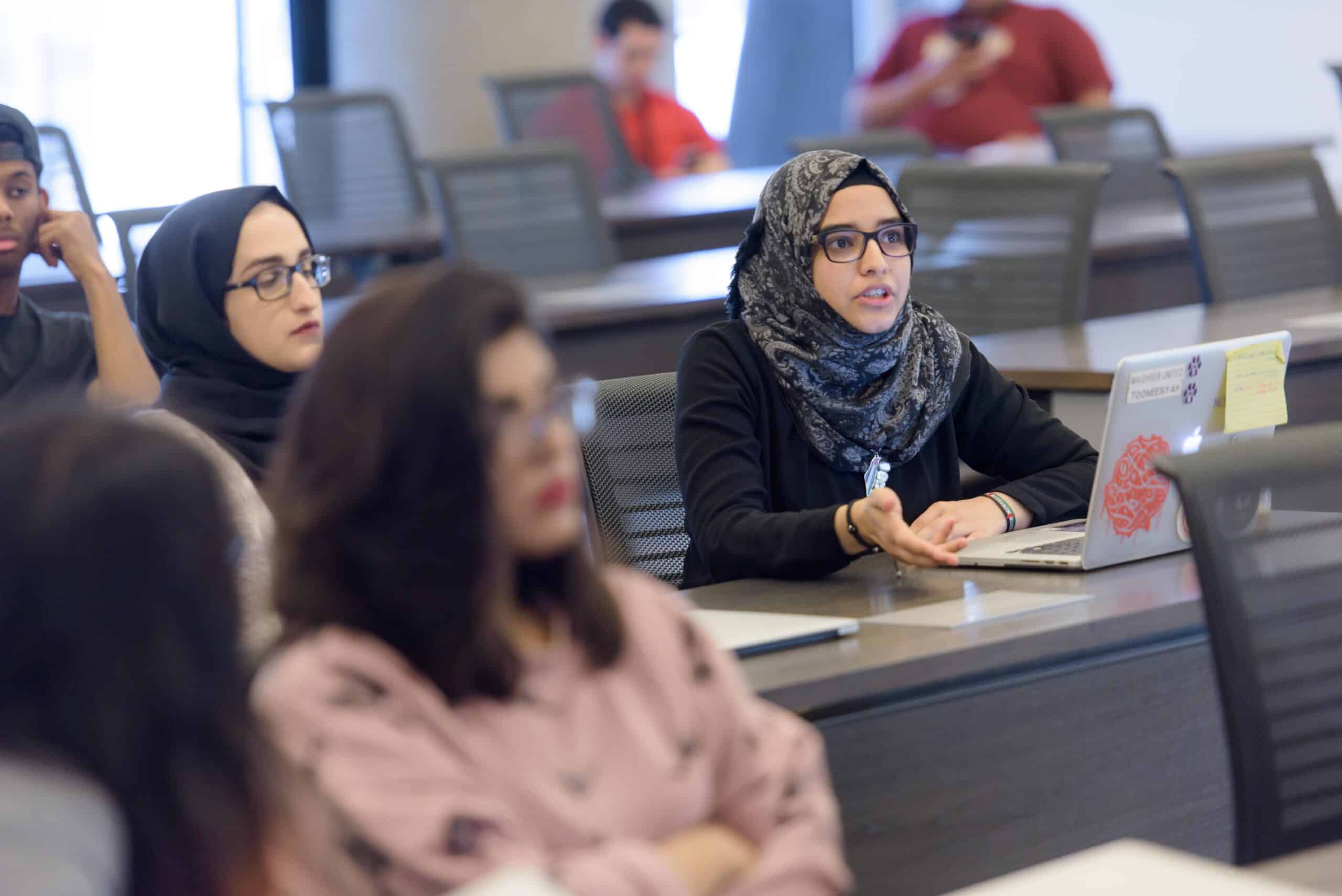
Western universities should be clear about who their partner is. Qatar is not a democracy. Its hereditary emir exercises executive power, appoints the prime minister, and governs without having to win an election. Beginning in the 1950s, Qatar offered refuge to prominent Muslim Brotherhood figures fleeing repression in Egypt. In 2012, it allowed Hamas, which the United States designates a terrorist organization, to establish its political bureau in Doha. The same state that welcomed Georgetown and Northwestern into its capital also gave Hamas leaders a political base there.
The West can no longer afford to be naïve about what its adversaries see in its universities. The Soviet Union understood that the struggle over ideas unfolds across generations. A student who learns to see Western democracy chiefly as an instrument of oppression may one day teach that view, write it into a textbook, or carry it into government.
Moscow cultivated that opportunity by bringing students to its campuses and giving Marxist arguments against the West the authority of academic scholarship. Today, foreign states can reach future leaders both by drawing students to campuses on their own soil and by financing academic programs at universities across the West.