|
Getting your Trinity Audio player ready...
|
Israel’s naval blockade of Gaza is legal under international law, militarily necessary, and continuously vindicated by evidence.
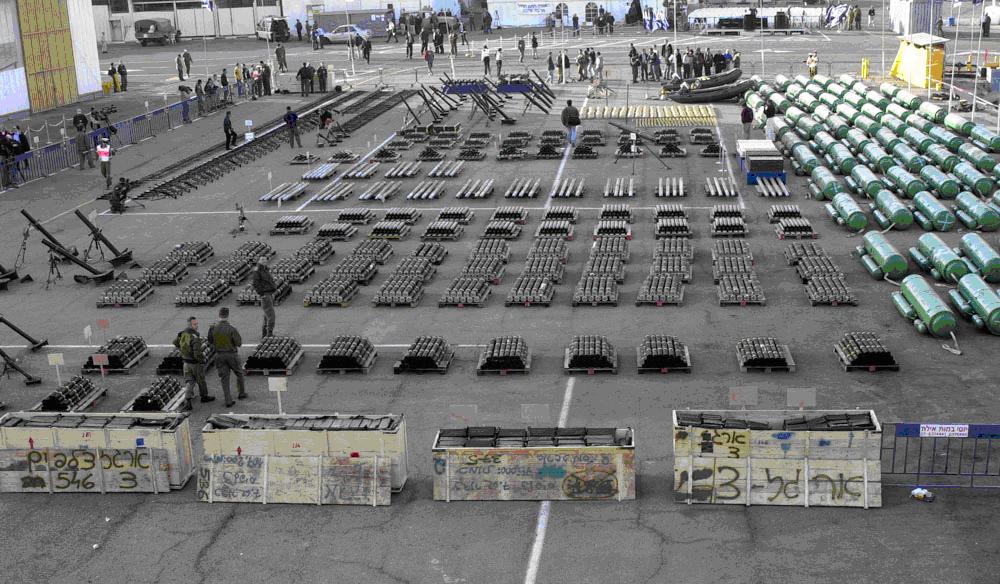
Since 2001, Israeli naval forces have intercepted a succession of vessels carrying Iranian-supplied weapons destined for Gaza, including anti-ship missiles, long-range rockets, mortars, and ammunition concealed behind civilian cargo. Documented smuggling attempts continued through 2016, 2020, and 2022. By mid-2025, Hamas terrorists had adapted to deploying drift containers from the Sinai Peninsula carrying rocket fuel components.
The blockade, imposed in January 2009 in response to sustained rocket fire from Gaza and years of documented maritime weapons smuggling, restricts uninspected maritime access to a territory governed by Hamas, while permitting humanitarian aid through approved inspection channels.
Critics have framed the blockade as illegal collective punishment. The 2011 UN Palmer Report reached the opposite conclusion, determining that Israel’s naval blockade was a legitimate security measure consistent with international law.
The historical record explains why. For more than two decades, Israeli naval forces have intercepted repeated attempts to smuggle Iranian-supplied rockets, missiles, explosives, and military materiel into Gaza by sea.
Legal Framework for Naval Blockades
International law governing naval blockades during armed conflicts is primarily outlined in the San Remo Manual on International Law Applicable to Armed Conflicts at Sea (1994), a widely accepted restatement of customary international law developed by experts from the International Institute of Humanitarian Law. The document defines a blockade as a method of warfare that involves preventing vessels from entering or exiting specified ports or coastal areas under enemy control, provided it meets strict conditions to ensure legality and proportionality. Key requirements include:
- Declaration and Notification: The blockade must be formally declared and notified to all belligerents and neutral states, specifying its commencement, duration, location, and extent.
- Effectiveness and Impartiality: It must be effectively enforced by naval forces and applied without discrimination to all vessels, regardless of flag.
- Proportionality and Humanitarian Considerations: The blockade must not cause disproportionate harm to civilians, such as starvation, and provisions must be made for the passage of essential humanitarian aid, subject to inspection. Under Rule 103 of the manual, if the civilian population is inadequately supplied, the blockading party must allow relief consignments — but this does not invalidate the blockade itself if security inspections are permitted.
The rules described above derive from historical instruments, including the 1909 London Declaration, and are applicable in both international and non-international armed conflicts, though the Gaza situation is treated as international due to Hamas’s control of the coastal enclave. The San Remo Manual explicitly allows blockades as acts of war when imposed for legitimate military objectives, such as denying the enemy access to war-sustaining resources. Violations of these conditions could render a blockade unlawful, but compliance upholds its validity.
Additionally, Article 51 of the UN Charter affirms the inherent right of self-defense, which justifies blockades in response to armed attacks, including from non-state actors like Hamas.
The Fourth Geneva Convention prohibits collective punishment (Article 33), but a blockade aimed at military targets, with allowances for civilian needs, does not inherently violate this principle if it is not intended to punish the population collectively.
A critical and frequently misunderstood point is that under the San Remo Manual, blockade enforcement may take place on the high seas, not merely at the blockaded coastline. A vessel’s declared intention to breach a blockade is itself sufficient legal basis for the enforcing party to act, regardless of how far from the coast that vessel currently sits. This is the legal foundation for Israel’s interceptions of flotillas hundreds of miles from Gaza’s shore.
A second critical distinction, frequently obscured in media coverage, is that Israel’s blockade does not prohibit humanitarian aid from reaching Gaza. It prohibits uninspected maritime entry. Aid is permitted and actively facilitated through approved channels. What is not permitted is bypassing the inspection process that prevents weapons from entering alongside civilian goods.
Application to Israel’s Naval Blockade of Gaza
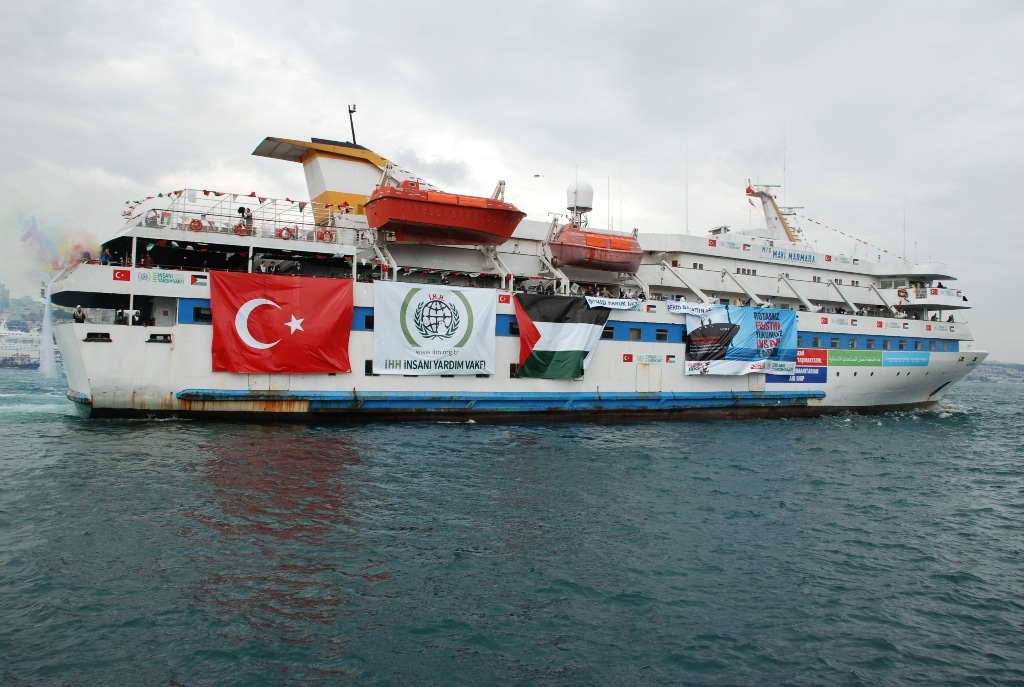
Israel’s blockade complies with the San Remo Manual’s criteria, as confirmed by the 2011 UN Secretary-General’s Panel of Inquiry (Palmer Report) on the 2010 Gaza flotilla incident. The panel, chaired by former New Zealand Prime Minister Sir Geoffrey Palmer, explicitly found the naval blockade legal under international law, determining it was imposed as a legitimate security measure to prevent weapons from entering Gaza by sea. Key findings included:
- Legitimate Security Objective: Israel faced a real threat from terrorist groups in Gaza, with more than 5,000 rockets fired into Israeli territory between 2005 and 2009, causing civilian casualties and injuries. The blockade addressed this by controlling maritime access, predating Hamas’s 2007 takeover and focusing on arms interdiction rather than collective punishment.
- International Armed Conflict Classification: The Panel treated the Israel-Hamas conflict as international for blockade purposes, given Hamas’s de facto authority in Gaza, enabling application of naval warfare rules.
- Declaration and Notification: Declared on January 3, 2009, after prior restrictions proved inadequate, and notified via Notices to Mariners, radio broadcasts, and diplomatic channels, ensuring transparency.
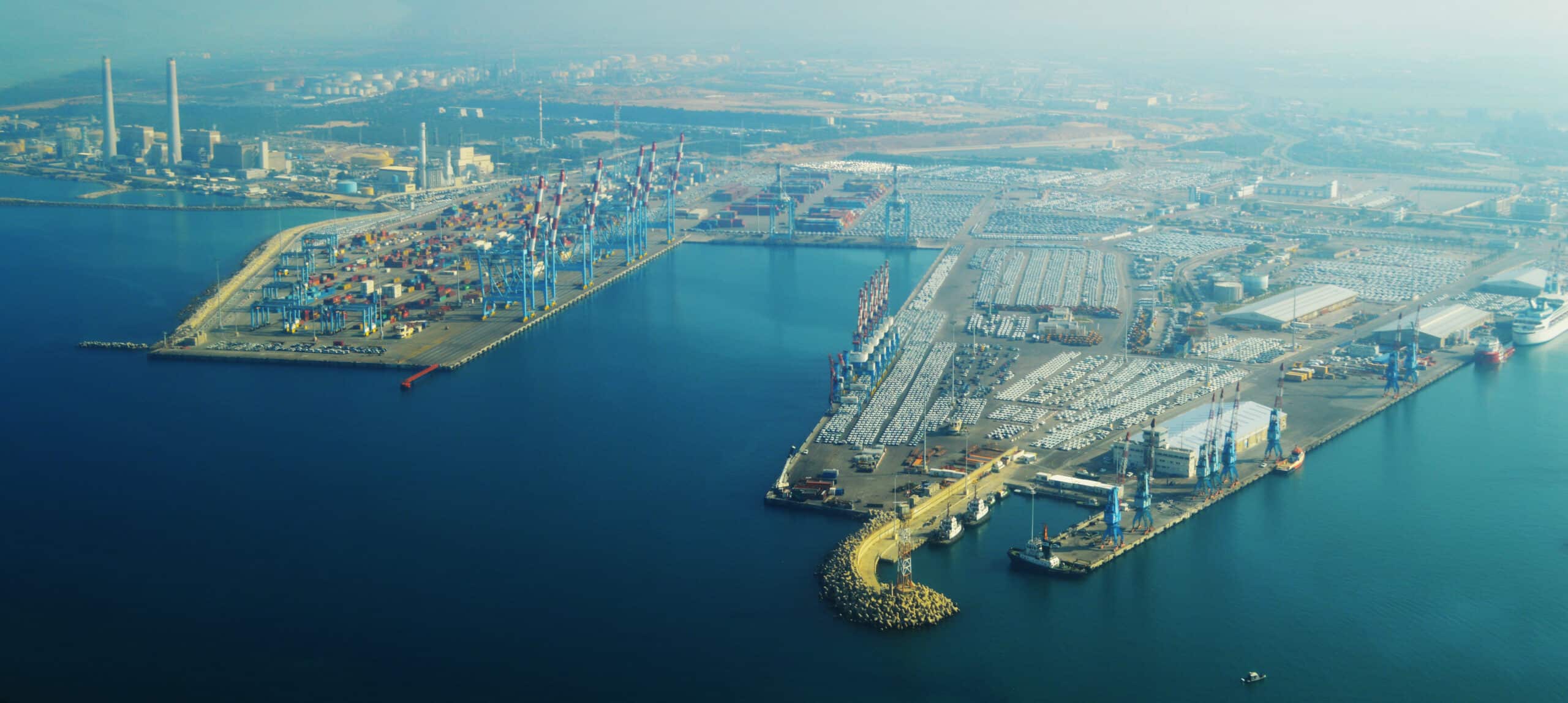
- Proportionality and Effectiveness: The blockade was proportionate, as Gaza lacked major ports for large shipments, with most goods entering via land crossings. The blockade was enforced impartially and effectively by Israeli naval forces, without intent to starve civilians. Israel allowed essential supplies and humanitarian aid through inspections at the Port of Ashdod.
IDF’s Maritime Humanitarian Aid Inspection and Delivery Process for Gaza
The process for humanitarian aid entering Gaza by sea, as managed by the Israel Defense Forces (IDF) and the Coordinator of Government Activities in the Territories (COGAT), typically involves shipments arriving at Israel’s Port of Ashdod rather than docking directly in Gaza, to ensure thorough security vetting and coordination.
Aid vessels, such as the UAE’s “MIRA” ship carrying more than 2,000 pallets of water, medical equipment, shelter supplies, and hygiene products, dock at Ashdod where the cargo undergoes comprehensive inspection by Israeli officials to confirm it contains only approved humanitarian items and no prohibited materials. Once cleared, the aid is unloaded, loaded onto trucks often numbering in the hundreds per shipment and transferred into Gaza via land crossings, including Kerem Shalom or Erez West, with IDF forces providing security and COGAT facilitating logistics in collaboration with international partners.
The maritime route supplements land and air deliveries. There are no caps on aid volumes; distribution inside Gaza relies on UN agencies and other organizations to collect and disperse supplies. Israel’s Foreign Ministry stated in May 2026 that since October 2025, more than 1.58 million tons of humanitarian assistance had entered Gaza through approved channels.
The Anti-Blockade Campaign and the Battle Over Legitimacy
In recent years, flotilla campaigns promoted by activists such as Greta Thunberg and groups aligned with the “Global Sumud Flotilla” have attempted to transform Israel’s naval blockade of Gaza from a security measure into a symbol of alleged Israeli illegitimacy and criminality.
These campaigns are part of a broader international effort to delegitimize Israel’s sovereignty, undermine its right to self-defense, and portray the Jewish state as uniquely unlawful among nations confronting terrorist threats.
The campaign relies on a deliberately distorted narrative. The blockade is described as “illegal,” “collective punishment,” or an act of “starvation.” Activists claim Israel has no right to intercept vessels in international waters or restrict maritime access to Gaza.
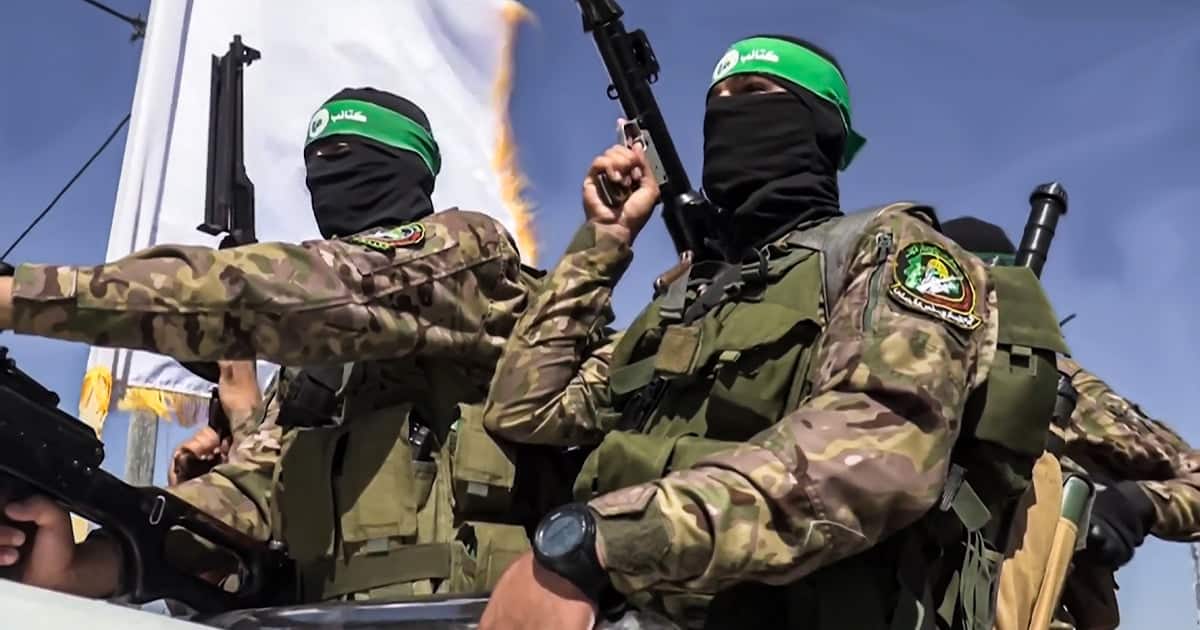
Those narratives ignore the central reality that led to the blockade in the first place. Gaza is controlled by Hamas, an Iranian-backed terrorist organization openly committed to Israel’s destruction and heavily involved in weapons smuggling operations. The blockade was imposed to prevent rockets, missiles, explosives, and dual-use military materials from reaching terrorist groups by sea.
Many flotilla campaigns carry only symbolic quantities of aid while generating enormous international media coverage. Their primary function is not humanitarian relief, but political theater designed to provoke confrontation with Israel, manufacture global headlines, and advance the broader campaign to portray the Jewish state as inherently illegitimate.
The central question is not whether humanitarian aid should reach Palestinian civilians. The main issue is whether a sovereign state facing an internationally-recognized terrorist organization has the right to prevent maritime weapons smuggling during an armed conflict. That is the essential reality anti-blockade activists routinely attempt to erase from the international conversation.
Military Arguments Supporting the Blockade
From a military perspective, the blockade is a necessary and effective tool for Israel’s defense against asymmetric threats from Hamas and other Gaza-based terrorist organizations. The primary objective is to interdict the flow of weapons, terrorists, and funds that sustain attacks on Israeli civilians. Military necessity under international humanitarian law permits such measures when they provide a definite military advantage, as outlined in the San Remo Manual.
- Prevention of Arms Smuggling: Gaza’s coastline offers potential routes for Iran-supplied weapons via sea tunnels or vessels, which the blockade has successfully curtailed. Post-blockade data shows a sharp reduction in rocket attacks, demonstrating its effectiveness in degrading Hamas’s military capabilities.
- Response to Ongoing Threats: Since 2001, terrorist organizations in Gaza have launched thousands of rockets, mortars, and other projectiles against Israeli civilian communities, justifying sustained naval restrictions as part of Israel’s right to self-defense under Article 51 of the UN Charter. The blockade complements land and air measures without requiring reoccupation.
- Proportionality in Military Terms: Enforcement is calibrated to minimize civilian harm. Vessels are diverted to Ashdod for inspection, and approved aid is transferred onward via land crossings. Israel has continued to facilitate humanitarian delivery throughout the conflict.
- Continued Rearmament Attempts: Hamas has not ceased maritime smuggling efforts. Since at least mid-2025, Israeli intelligence has documented terrorists deploying drift containers — packages designed to travel just below the surface — from the Sinai Peninsula toward Gaza’s southern coast, carrying rocket fuel components including hydroxyl-terminated polybutadiene (HTPB). Concurrent drone flights over the Egyptian border have been used as diversions. This ongoing adaptation demonstrates that the blockade remains as militarily necessary today as when first imposed.
All these arguments underscore that the blockade is not punitive but a targeted military operation, essential for protecting Israeli sovereignty and civilians from an enemy that uses Gaza as a launchpad for aggression.
Known Instances of Sea Smuggling Attempts and Blockade Enforcement Actions
Below is a chronological record of major documented maritime incidents involving Gaza, based on IDF statements, Israeli government sources, and contemporaneous reporting from credible news organizations. The table records two related categories: documented weapons smuggling attempts interdicted by the Israeli Navy, and enforcement actions against vessels that declared intent to breach the blockade. Many of the weapons smuggling attempts involve Iranian-supplied arms and reflect a multi-decade effort to circumvent Israel’s maritime security measures. Some incidents predate Hamas’s 2007 takeover of Gaza.
| Date | Incident Details | Ship / Vessel Name | Origin / Destination | Cargo |
|---|---|---|---|---|
| May 7, 2001 | The Israeli Navy intercepted a fishing boat on its fourth arms-smuggling mission. The vessel was backed by Hezbollah and the PFLP, both designated terrorist organizations, and had been acquired off Syria. Three crew members were convicted by an Israeli military tribunal in December 2002. | Santorini | Northern Beirut, Lebanon / Egyptian Sinai coast (en route to Gaza) | 40 tons of weapons, including Strela anti-aircraft missiles, 107mm rockets, mortars, rifles, grenades, mines, RPG-7 launchers, and artillery rockets. |
| January 3, 2002 | The Israeli Navy intercepted a Gaza-bound freighter in the Red Sea in an operation codenamed “Noah’s Ark.” The ship had been purchased in Lebanon, stopped in Sudan and Yemen, then loaded with weapons off the Iranian island of Kish. The operation was a joint undertaking of the Palestinian Authority (PA) and Iran, facilitated by Hezbollah. PA finance official Fuad Shubaki, described as Yasser Arafat’s chief financial advisor, was later convicted of organizing the operation and sentenced to 20 years in prison (later reduced to 17). | Karine A | Lebanon / Sudan / Yemen / Iran (Kish Island) / Gaza Strip | 50 tons of weapons in 80 submersible waterproof containers, including Katyusha rockets, anti-tank missiles, mortar shells, Sagger missiles, rifles, grenades, and explosives. Disguised with civilian goods including rice and toys. |
| May 21, 2003 | Israeli naval forces intercepted a fishing boat west of Haifa carrying Hezbollah-supplied explosives bound for Gaza. The smuggling attempt was connected to Yasser Arafat’s Palestinian Authority and Hezbollah. | Abu Hasan | Lebanon / Egypt (en route to Gaza) | Radio-activation systems for remotely detonating bombs, CDs containing directives on carrying out suicide bomb attacks, rocket fuses, and Katyusha detonators. |
| November 3, 2009 | Israeli elite naval commandos (Shayetet 13) intercepted an Antigua-flagged cargo ship approximately 100 miles off Israel’s coast in Operation Four Species. The arms shipment, the largest ever seized by Israel at the time, was loaded in Iran and bound for Syria. The IDF assessed the cargo was intended for Hezbollah. | Francop | Iran (Bandar Abbas) / Egypt (Damietta) / Syria (Latakia, Hezbollah-bound) | 500 tons of weapons in 36 containers, including 9,000 mortar shells, 2,125 107mm Katyusha rockets, 690 122mm rockets, 685 rocket fuses, 21,100 fragmentation grenades, and approximately 566,000 rounds of 7.62mm ammunition. Containers bore Iranian shipping codes. |
| March 15, 2011 | Israeli naval commandos intercepted a Liberian-flagged cargo vessel approximately 200 nautical miles off Israel’s coast. The weapons were concealed behind civilian goods and assessed by the IDF as intended for Hamas in Gaza. It was the first time Iranian-made anti-ship missiles were captured en route to Gaza. | Victoria | Syria (Port of Latakia) / Egypt / Gaza (assessed destination) | Approximately 50 tons of weapons, including six C-704 Iranian-made anti-ship missiles (35 km range), two radar systems, two launchers, two hydraulic mounting cranes, 2,270 60mm mortar shells, 230 120mm mortar shells, and 66,960 rounds of 7.62mm Kalashnikov ammunition. Instruction manuals in Farsi bore Iranian Revolutionary Guards markings. |
| March 5, 2014 | Shayetet 13 commandos intercepted an Iranian-owned, Panamanian-registered cargo ship in the Red Sea in Operation Full Disclosure. The weapons were concealed inside cement bags. Israel assessed the cargo was intended for Hamas in Gaza via Sudan and Sinai. | Klos C | Iran (Bandar Abbas) / Iraq (Umm Qasr) / Sudan / Gaza (Israel’s stated assessed destination) | 40 Syrian-made M-302 long-range rockets (range 90–160 km, manufactured with Iranian components), 181 120mm mortar shells, and approximately 400,000 rounds of 7.62mm ammunition. All concealed inside cement bags bearing Iranian markings and customs seals. |
| November 22, 2016 | Israeli naval forces intercepted a Palestinian fishing boat that had departed from Gaza toward Sinai and returned visibly laden with cargo. Naval forces fired warning shots; the crew swam ashore and forces then fired on the vessel’s motor, triggering secondary explosions that destroyed it. The IDF stated this was the third such smuggling interception in a year and a half. | Unnamed fishing vessel | Southern Gaza / Sinai Peninsula / Southern Gaza (return route) | Suspected weapons or weapon-related materials intended for Hamas. Specific cargo inventory not publicly disclosed. |
| February 4, 2020 | The Israeli Navy and Shin Bet internal security service thwarted an attempt to smuggle weapons from Sinai into Gaza via the sea. Two terrorists were arrested and during interrogation revealed the weapons were intended for Hamas’s naval commando unit. | Unnamed vessel | Sinai Peninsula / Gaza Strip | Suspected weapons intended for Hamas naval commandos. Specific cargo inventory not publicly disclosed. |
| April 8, 2022 | A joint Israeli Navy and Shin Bet operation halted a vessel attempting to cross into Egyptian territorial waters from Gaza. Three terrorists were arrested, including Mahmoud Bakr, a senior smuggler previously jailed for a similar attempt. The Shin Bet established the terrorists were acting in full coordination with Hamas officials in Gaza. | Unnamed vessel | Gaza / Egypt (Sinai) — return route | Suspected weapon manufacturing components intended for Hamas. Specific materials classified by Israeli authorities. |
| July 24, 2022 | The Israeli Navy sank a vessel after it entered a prohibited maritime zone off southern Gaza, having sailed overnight from Sinai. Naval forces issued loudspeaker warnings. When the vessel did not respond, forces opened fire. The crew swam ashore. | Unnamed vessel | Egypt (Sinai) / Southern Gaza coast | Suspected equipment assessed by the IDF as intended for Hamas. Specific inventory not publicly disclosed. |
| May 2, 2025 | The Freedom Flotilla Coalition’s (FFC) vessel Conscience was struck by two drones in international waters approximately 17 nautical miles off Malta, disabling its generators, causing a hull breach and a fire. Four people sustained minor injuries. The FFC attributed the attack to Israel; the IDF declined to comment. Malta offered assistance on condition of inspection; the captain declined. | Conscience | International waters off Malta (en route to Gaza) | Claimed humanitarian aid, including food and medicine. No weapons cargo. |
| June 9, 2025 | Israeli Shayetet 13 naval commandos boarded and seized the UK-flagged vessel Madleen in international waters approximately 100 nautical miles from Gaza, towing it to the Port of Ashdod. The IDF stated the vessel had been ordered to turn back before the boarding. Among the 12 activists detained were Greta Thunberg and French MEP Rima Hassan. All were subsequently deported. | Madleen | Catania, Sicily / Gaza (intercepted en route) | Baby formula, flour, rice, diapers, medical kits, and crutches. No weapons cargo. |
| July 26, 2025 | Israeli naval forces boarded and seized the Handala, a former Norwegian trawler, in international waters after it passed the point at which the Madleen had been intercepted the previous month. An Israeli military drone had been circling the vessel prior to the interception. The ship was towed to Ashdod and all activists were deported. | Handala | Syracuse, Italy / Gaza (intercepted en route) | Claimed humanitarian supplies, including food and medicine. No weapons cargo. |
| Mid-2025 onward | IDF intelligence documented Hamas terrorists deploying drift containers from the Sinai Peninsula toward the southern Gaza coast. The materials included rocket fuel components prohibited under the blockade. The Foundation for Defense of Democracies assessed this as a post-ceasefire adaptation by Hamas to continue maritime rearmament. | Drift containers (multiple) | Sinai Peninsula / Southern Gaza coast | Rocket fuel components including hydroxyl-terminated polybutadiene (HTPB), a key ingredient in advanced solid propellants. Materials prohibited under the blockade. |
| October 1–3, 2025 | In Operation Horizon Shield, Israeli naval forces intercepted all 42 vessels of the Global Sumud Flotilla over approximately 12 hours spanning the Yom Kippur holiday, 43–70 nautical miles from Gaza. More than 400 activists from over 40 countries were detained and subsequently deported. Israel’s Foreign Ministry published documents it said were recovered by the IDF in Gaza, alleging direct organizational and financial ties between flotilla leadership and Hamas’s overseas body, the Popular Conference for Palestinians Abroad (PCPA); the flotilla rejected the claims. The US State Department condemned the flotilla as a “deliberate and unnecessary provocation.” | Global Sumud Flotilla (42 vessels) | Mediterranean ports / Gaza (intercepted 43–70 nautical miles offshore) | Symbolic humanitarian aid. No weapons cargo confirmed. |
| April 30, 2026 | Israeli naval forces intercepted 22 vessels from a reconstituted Global Sumud Flotilla in international waters off the coast of Crete. Approximately 175 activists were detained and most were subsequently deported. | Global Sumud Flotilla, second wave (22 vessels) | Marseille / Naples / Barcelona / Gaza (intercepted off Crete) | Claimed humanitarian supplies. No weapons cargo confirmed. |
| May 18, 2026 | Israeli naval commandos began intercepting a third Global Sumud Flotilla wave in international waters off the coast of Cyprus. More than 50 vessels had departed from Marmaris, Turkey. The fleet was led by the Turkish aid organization IHH (Foundation for Human Rights and Freedoms and Humanitarian Relief), which Israel has designated as a terrorist organization. Prime Minister Netanyahu stated the operation was proceeding with “great success.” Israel’s Foreign Ministry noted that more than 1.58 million tons of humanitarian aid had entered Gaza through approved channels since October 2025. | Global Sumud Flotilla, third wave (50+ vessels) | Marmaris, Turkey / Gaza (intercepted off Cyprus) | Claimed humanitarian supplies. No weapons cargo confirmed. |