|
Getting your Trinity Audio player ready...
|
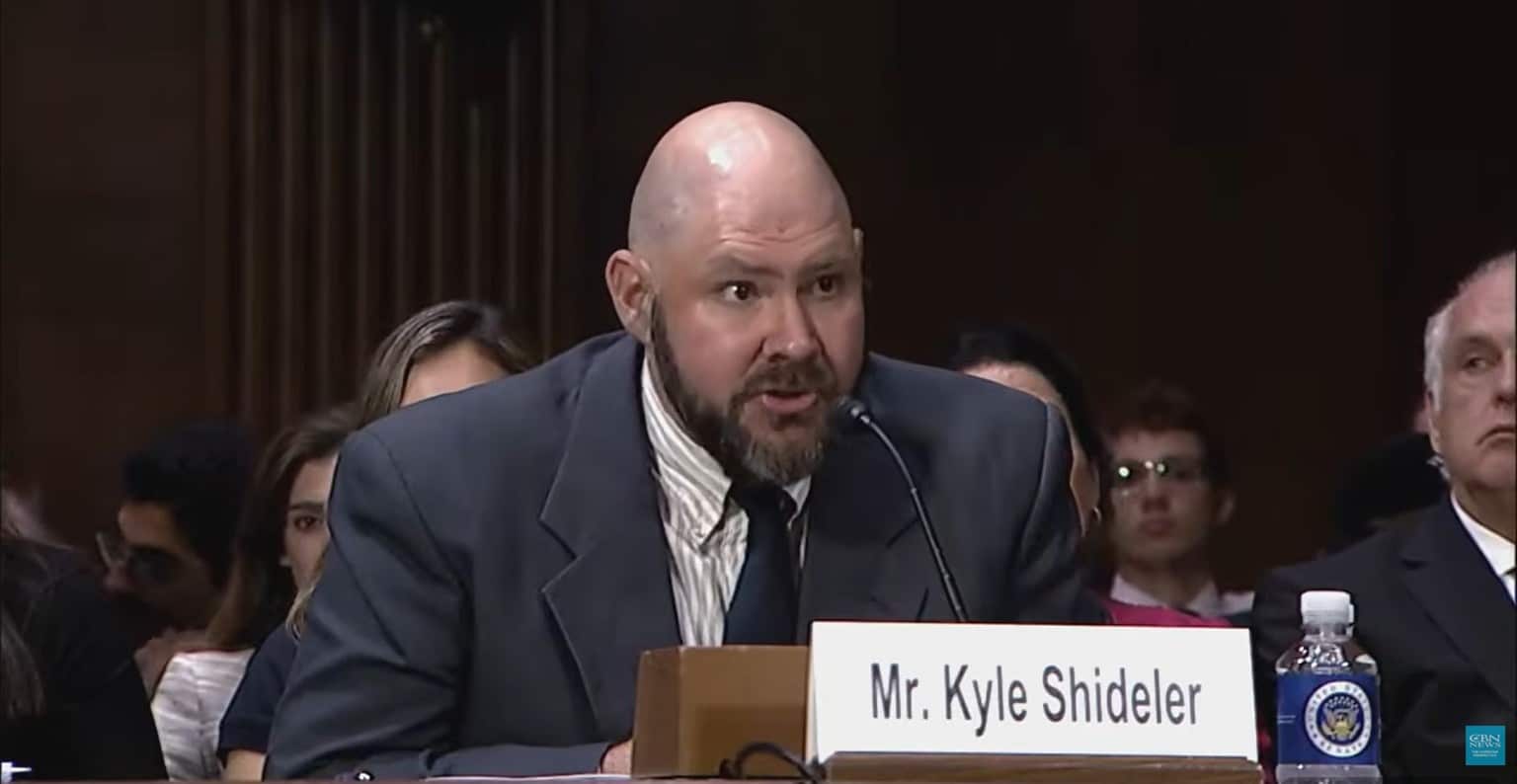
Kyle Shideler is senior analyst for homeland security and counterterrorism at the Center for Security Policy.
He recently testified at Senator Ted Cruz’s Capitol Hill hearing, “Hidden in Plain Sight: Confronting the Muslim Brotherhood Network in America,” about the Islamist organization’s longstanding infrastructure inside the United States supporting designated foreign terrorist organizations, including Hamas, through financing, indoctrination, and political influence.
CAM spoke with Shideler this week for more detail on why it’s crucial to American national security for federal law enforcement to renew scrutiny of Muslim Brotherhood networks.
How long has the Muslim Brotherhood been operating in the United States, and when did it first come to the attention of law enforcement?
“The Muslim Brotherhood has been operating in America as an organization since 1963, with the founding of the Muslim Students Association, which ultimately gave rise to most other Muslim Brotherhood organizations in America. It solidified its influence with the formation of the Islamic Society of North America (ISNA) starting in 1977, closer coordination and a merger with the Islamic Circle of North America in the 1990s, and the formation of Council on Islamic-American Relations (CAIR) in 1994.”
“While it’s hard to say exactly when law enforcement began tracking the Muslim Brotherhood in the U.S., they were certainly under surveillance by the 1990s, though their activities would not become publicly understood until the Holy Land Foundation Trial in 2008.”
What did you mean when you said in your Senate testimony that the “U.S. Muslim Brotherhood was and is not merely a counterterrorism issue, but also a systemic counterintelligence challenge”?
“The Muslim Brotherhood in the United States has historically engaged in the indoctrination, recruiting, training, and funding of terror groups. But its primary purpose is to exert influence over the U.S. political system and manipulate U.S. policies to its own advantage. Sami Al-Arian, who was subsequently convicted as an organizer for Palestinian Islamic Jihad, played a leading role lobbying the 2000 George W. Bush presidential campaign to oppose the use of classified evidence in immigration hearings. When Al-Arian’s house was raided by law enforcement, they found plans for the creation of a sophisticated intelligence organization known as the ‘Charter of the Center of Studies, Intelligence and Information.'”
According to your testimony, at one time one in every four American mosques was under the influence of the Hamas-linked organizations. What do we know about Muslim Brotherhood networks operating in the U.S. today?
“That number is derived from the number of mosques whose property was under the control of the Hamas-linked North American Islamic Trust. In a separate survey issued by Muslim Brotherhood-linked ISNA in 2011, the percentage of mosques affiliated with a national organization known to be affiliated with the Muslim Brotherhood was approximately 32%. That number has probably decreased, not because of a reduction in the number of Brotherhood mosques but because of the dramatic increase in mosque-building, many of which are listed as unaffiliated by ISNA. Where the Brotherhood has not decreased is in the proliferation of political organizations, most of which have been spun off from CAIR, including political action committees, candidate recruitment organizations, and the like.”
The Holy Land Foundation, you explain, was the last domestic Muslim Brotherhood charity designated by the U.S. Treasury Department. That was nearly twenty years ago. Why hasn’t the U.S. government acted to designate Muslim Brotherhood-linked organizations, especially since it has acknowledged the organization threatens our national security by designating Muslim Brotherhood branches in Egypt, Jordan, Lebanon, and Sudan?
“Partially it’s due to the false choice of viewing Muslim Brotherhood branches as separate organizations, rather than as sub-units of one international organization. So, while the U.S. Muslim Brotherhood doesn’t overtly engage in terrorism in the way the Lebanese branch does, for example, they are all operating in concert in accordance with the policy of the international Muslim Brotherhood. My sense is that no administration, not even the Trump administration, wants to deal with the political headache of designating an organization that has significant sway over Muslim American political and religious life.”
Jukaku Tayeb, father-in-law of the Democratic Party’s candidate for the U.S. Senate seat from Michigan Abdul El-Sayed, is reportedly a major donor to his campaign, and is or has previously been a top official in Muslim Brotherhood-linked organizations, including CAIR and ISNA. Does that make El-Sayyed’s candidacy a concern for worry?
“Yes. El-Sayed has through his father-in-law familial ties to CAIR, a group explicitly created to support Hamas, as well as his own institutional ties. He’s received campaign funding from numerous individuals tied to CAIR and has spoken at CAIR events. El-Sayed has also received support from Emgage, the CAIR-linked candidate recruitment and fundraising political action committee. The concern is obviously that as one of 100 senators, he would be in position to exert influence on behalf of Muslim Brotherhood allies, in ways that are detrimental to U.S. national security.”
“We know, for example, that El-Sayed publicly spoke in support of the Muslim Brotherhood takeover of Egypt; and, together with numerous known Muslim Brotherhood members, he reportedly signed a 2012 statement in support of Mohamed Morsi, a senior Muslim Brotherhood official who became president of Egypt in 2012 and was deposed a year later in a military coup.”
Read Shideler’s full Senate testimony HERE.
Watch a recording of the “Hidden in Plain Sight: Confronting the Muslim Brotherhood Network in America” hearing HERE: