|
Getting your Trinity Audio player ready...
|
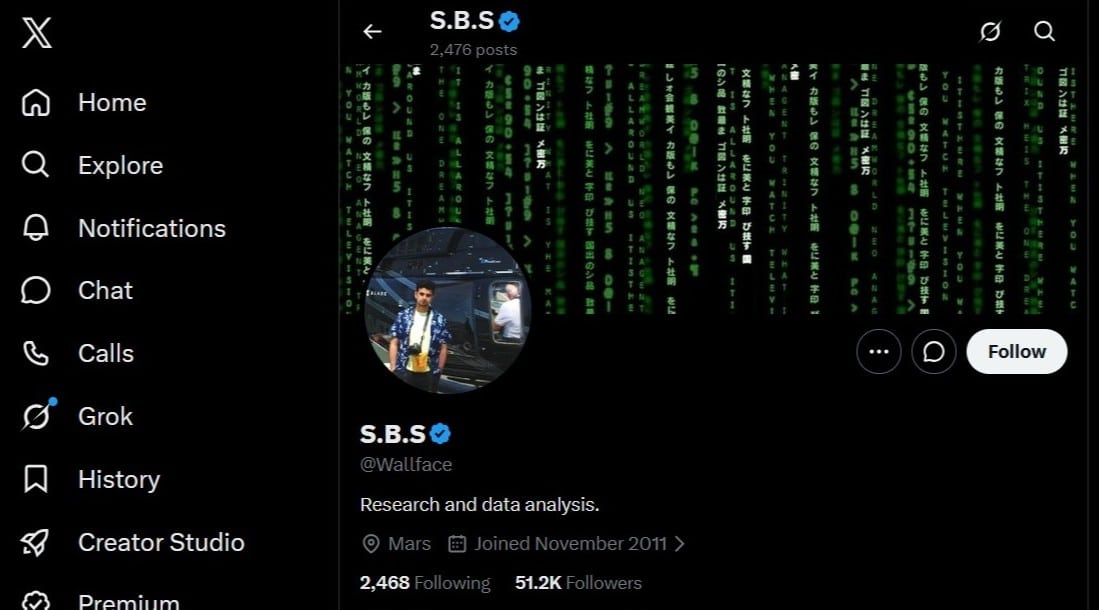
Nearly one in four accounts engaging with the X account @Wallface are inauthentic, according to a new study by CAM’s Antisemitism Research Center (ARC).
On Oct. 19-20, the ARC analyzed 10,709 unique accounts that follow @Wallface or reposted, replied to, or quoted his posts. The sample covered his 7,276 newest followers, about 14% of his roughly 51,000 followers, and the accounts that amplified 139 of his posts, including 2,198 reposters, 1,202 commenters, and 463 quoters.
Working from public, read-only X API data, the ARC’s detection model identified 2,597 of these accounts (24.3%) as likely bots or fake profiles.
The flagged share was 27.2% among newest followers, 23.7% among reposters, 13.9% among commenters, and 8.0% among quoters, with some accounts appearing in more than one category.
Read the full report, “Bots, Fake Profiles, and Inauthentic Accounts Amplifying @Wallface on X,” HERE.
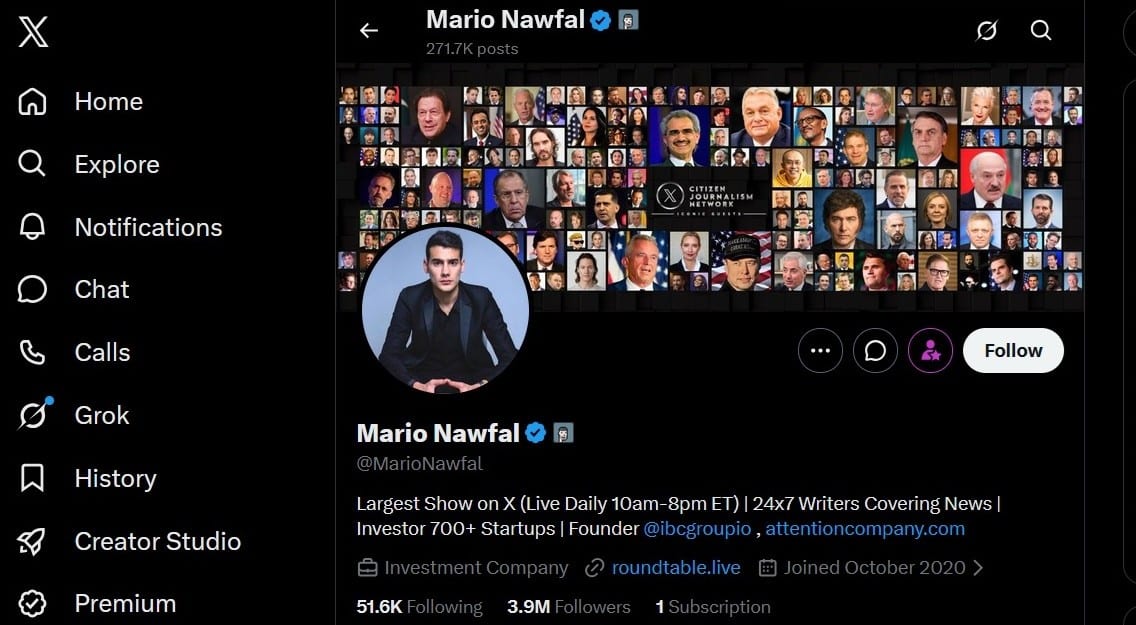
The analysis also revealed that hundreds of flagged accounts had appeared in previous CAM investigations. Of the 2,597 accounts flagged, 428 had surfaced in earlier studies, with 416 also flagged for signs of inauthenticity. The greatest overlap was with accounts amplifying @rogerwaters (237) and @jakeshields (162), followed by @AnaKasparian (88), @AbdulElSayed (70), @RabbiJeffx (48), and @MarioNawfal (32).
One account flagged in the analysis, @Rajdhani108306, has published approximately 171,000 posts since its creation in June 2026, averaging 1,233 per day. It received a score of 99.9 out of 100 on CAM’s bot-detection model.
The share of flagged amplifiers increased from July through September before declining slightly in October. Among accounts amplifying @Wallface’s July posts, 15.9% were flagged, compared with 19.1% in August, 23.2% in September, and 22.2% in October. The increase coincided with a sharp rise in his posting activity.
On Oct. 19, @Wallface wrote that some of his posts had been “mass-reported by bots” in “platform manipulation aimed at silencing me.” Yet 21 of the 68 accounts that amplified that very post (30.9%) showed strong signals of inauthenticity, one of the highest shares highlighted in the study. An Oct. 16 post had an even higher share, with 27 of 86 amplifiers (31.4%) flagged.
The findings raise concerns about how bot-like amplification can distort perceptions of online influence and public support. The recurrence of flagged accounts across multiple audiences suggests the problem extends beyond any single X account.
The research is part of CAM’s Bots Accountability Project, which documents and reports bots, fake profiles, and inauthentic accounts, and tracks platform responses.
How the ARC’s Bot Score Works
The score comes from CAM’s own model (X model v1.4.0), which detects bots, fake profiles, and inauthentic accounts. It is built on CAM’s framework of key signs that an account may be a bot, with each signal’s weight grounded in published research from DFRLab, Indiana University’s Observatory on Social Media, and the Cresci studies.
Each account is measured against 32 signals — posting rate and bursts, odd-hour activity, duplicate text, account age, default avatars and digit-suffixed handles, follower patterns, and generic or repetitive replies. No single signal counts on its own; only consistent combinations raise an account’s 0 to 100 score.
The model is built to undercount. Post content and ideology are not inputs, so an account is never scored as a bot for what it says. Any one measurable human behavior, such as original varied text, real conversations, or a daily sleep gap, pulls a borderline account out of the bot-like group. The 24.3% figure is what remains after those protections, which makes it a conservative measure rather than an inflated one.
Read more:
Bots, Fake Profiles, and Inauthentic Accounts Amplifying @Wallface on X