
|
Getting your Trinity Audio player ready...
|
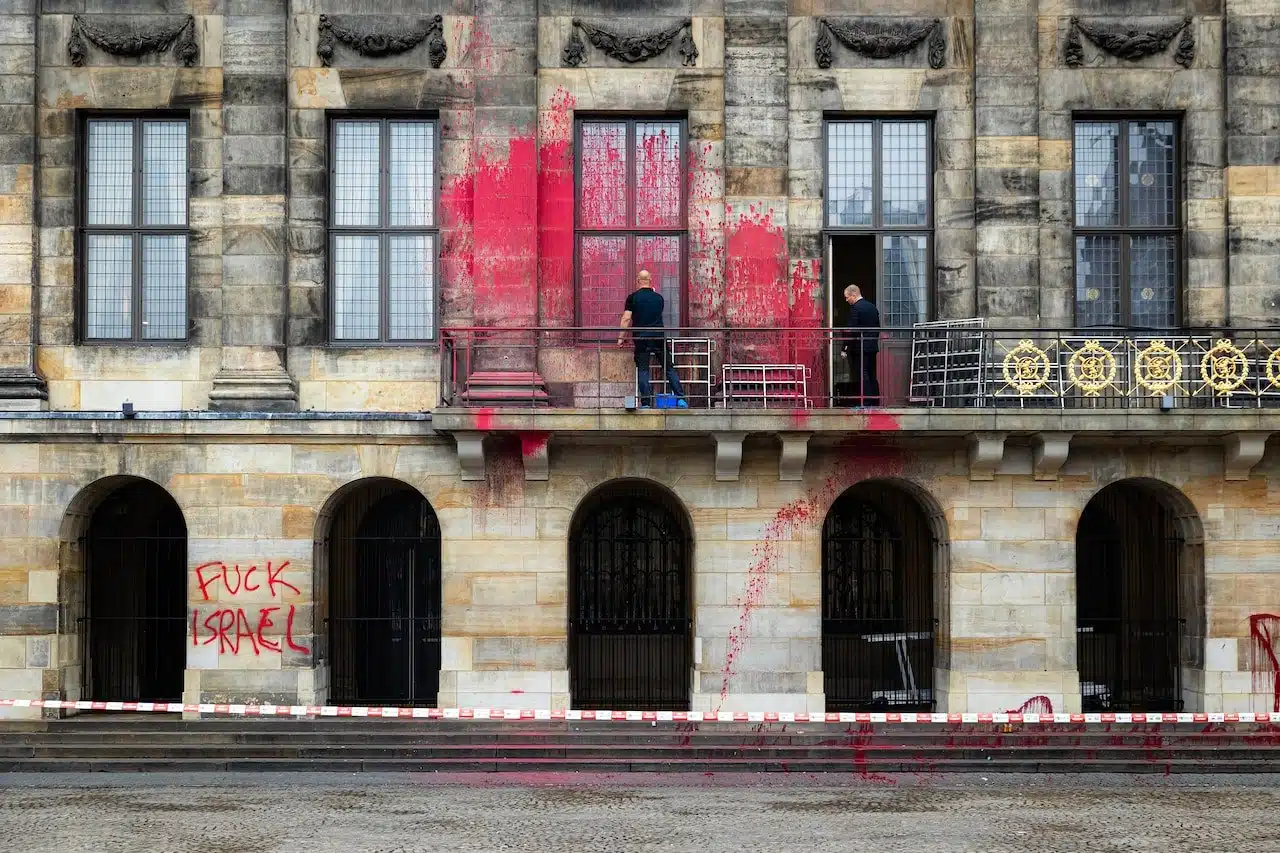
Last week, on October 7, Palestine Action Netherlands vandalized Amsterdam’s Royal Palace with red paint and anti-Israel graffiti.
The group said it acted in protest after a pro-Israel rally was scheduled on the second anniversary of Hamas’s October 7th massacre.
Police opened an investigation soon after the attack. However, no arrests have been made. Vandals sprayed “F*** Israel” across the building and splashed red paint, claiming it represented “the blood that the Dutch state has on its hands.”
Activists Accuse City of Bias
Palestine Action Netherlands described the palace as a symbol of “centuries-long Dutch colonialism.” The group accused city officials of favoring Israel by approving the pro-Israel event while limiting pro-Palestinian gatherings.
However, a spokesperson for Amsterdam Mayor Femke Halsema dismissed the accusation. She explained that no protest had been banned. Instead, officials avoided overlapping demonstrations to prevent potential clashes on an already tense day.
The Dutch Government Information Service also condemned the vandalism. It stressed that destruction of property is never acceptable and cannot serve as a legitimate form of political expression.
Calls to “Globalize the Intifada”
After the attack, the group issued statements praising “resistance fighters and martyrs.” It endorsed “emancipatory violence” against “occupying force” and posted the slogan “Globalize the Intifada” on Instagram.
The phrase “Globalize the Intifada” calls for spreading Palestinian-style violence against Jews worldwide. During the First Intifada (1987–1993), mobs carried out riots, stabbings, and lynchings that left Israeli civilians dead and wounded. The Second Intifada (2000–2005) was far bloodier: suicide bombers targeted buses, cafés, hotels, and religious sites, murdering more than a thousand Israelis — most of them civilians attacked solely for being Jewish. By urging others to “globalize” that campaign, activists seek to export the same ideology of hatred and terror worldwide. The slogan transforms two brutal uprisings into a rallying cry for antisemitic violence everywhere.
Let’s talk about the Intifada. pic.twitter.com/cW9ZkzgMKC
— Combat Antisemitism Movement (@CombatASemitism) June 5, 2025
Across its various chapters, Palestine Action has become notorious for anti-Israel graffiti, vandalism, and property destruction. In the United Kingdom, the group was recently banned under the Terrorism Act after its members infiltrated an RAF airbase and sabotaged military aircraft during violent anti-Israel protests. The UK government cited the group’s pattern of criminal damage and threats as justification for proscription, making membership or support for Palestine Action a criminal offense.
Although its Dutch branch still operates legally, this latest attack adds to growing pressure on European governments to take stronger action against extremist networks that glorify violence under the guise of activism.
Antisemitic Incitement Spreads Across Europe
The defacement of one of the Netherlands’ most recognizable landmarks on October 7 highlights the growing radicalization of anti-Israel movements in Europe. Such acts go far beyond political protest. They glorify violence and spread hatred toward Jewish people and the State of Israel.
The attack underscores the urgent need for decisive law enforcement, stronger deterrence, and firm public condemnation of those who disguise antisemitic hate as “protest.”
Take Action
CAM has launched Report It — a secure app to report antisemitic incidents anonymously and in real time. Don’t stay silent — download it today on the Apple Store or Google Play. See it. Report it. Stop it. Together, we can fight this hate.