|
Getting your Trinity Audio player ready...
|
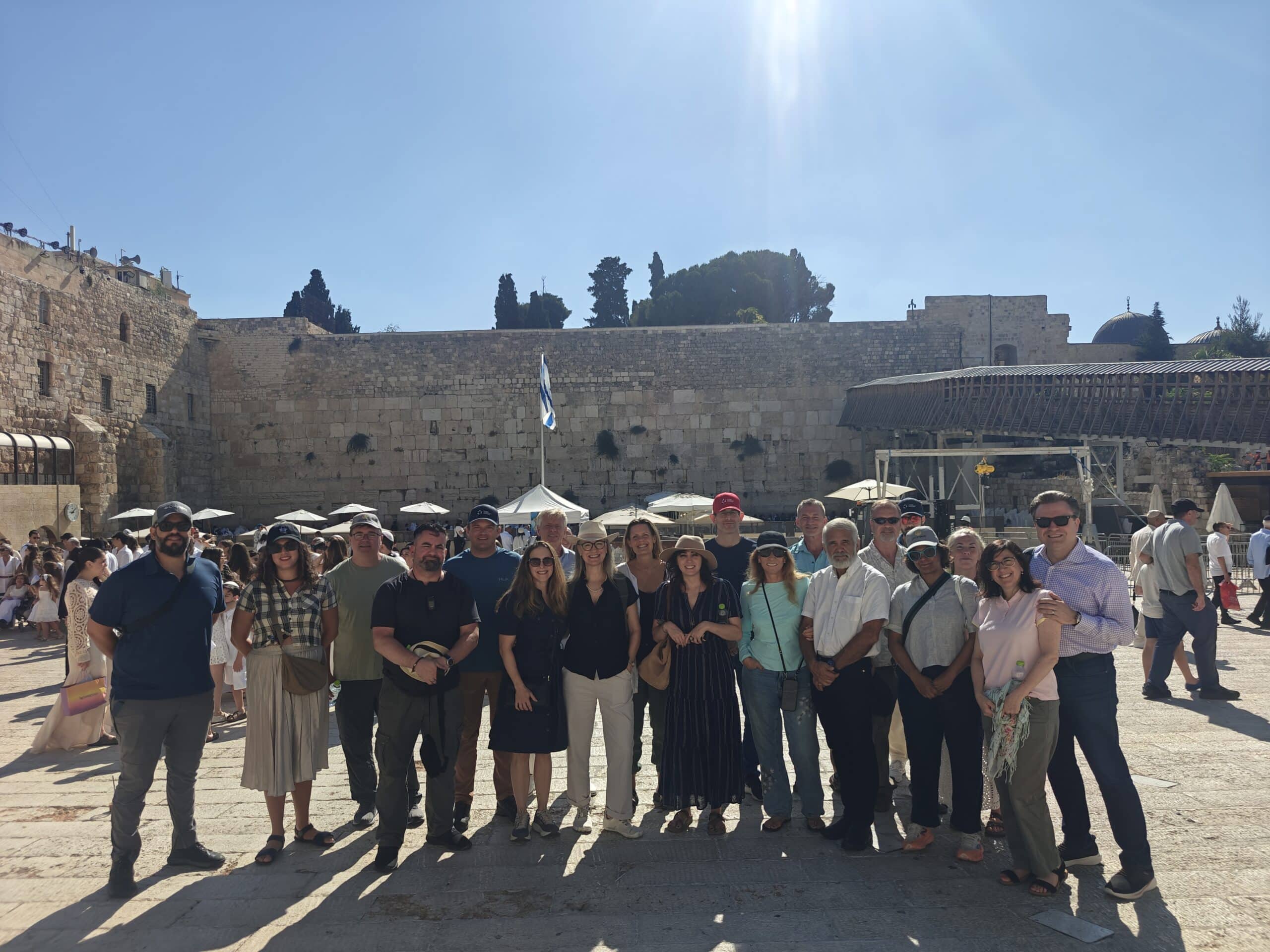
A delegation of physicians, scientists, journalists, and policy figures from the United States, Canada, United Kingdom, and the Netherlands traveled to Israel last week on a mission led by the Combat Antisemitism Movement (CAM).
The weeklong visit was designed to give participants an opportunity to explore Israeli innovation in person while offering insights on the realities Israelis have faced in the aftermath of October 7th and the war with Iran.
Participants included:
— Karys Rhea — delegation leader, U.S. political commentator and Middle East Forum writing fellow
— Robin Danek, PhD, MPH — health services researcher and Assistant Professor of Clinical Family Medicine, Indiana University School of Medicine
— Dr. Robert Gary Davidson — ER-trained physician
— Laura Dodsworth — author, filmmaker, and clinical hypnotherapist
— Dr. Jill Glasspool Malone — scientist, biotech co-founder, and vice president of the Malone Institute
— Sofia Karstens — Brownstone author and activist
— Retsef Levi — professor of Operations Management, MIT Sloan School of Management
— Dr. Robert W. Malone — physician-scientist and pioneer in mRNA and DNA vaccine technology
— Brian O’Shea — military and intelligence veteran
— Rob Roos — entrepreneur and former member of the European Parliament
— Rupa Subramanya — staff writer, The Free Press
— Steven Templeton, PhD — associate professor and fungal immunology researcher, Indiana University School of Medicine
— Dr. Jordan Vaughn — senior fellow specializing in microvascular disease
Meeting Israel’s Medical and Scientific Establishment
The delegation saw firsthand how Israel has become a global leader in medicine, agriculture, water technology, and scientific innovation despite operating under constant security challenges.
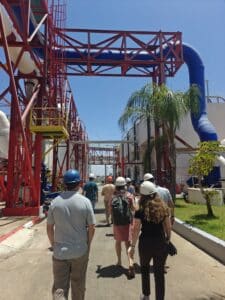
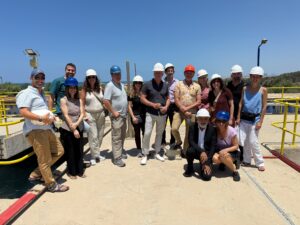
At Hebrew University’s Faculty of Agriculture, the delegation members met with Dr. Jonathan Bohbot before touring the Palmachim desalination plant, where they learned how Israeli technology has helped transform one of the world’s most water-scarce countries into a global leader in desalination.
At Shamir Medical Center, Prof. Shai Efrati presented his hyperbaric oxygen therapy work for traumatic brain injury and PTSD, while Sheba Medical Center offered a look at Israel’s trauma care and rehabilitation systems, including meetings with wounded IDF soldiers.
The delegation also visited United Hatzalah headquarters to learn how the volunteer emergency medical service achieves an average nationwide response time of just three minutes using GPS-dispatched ambucycles.
Lt. Col. (Res.) Eyal Dror, founder of the “Good Neighbor” project, briefed participants on the lifesaving medical care Israel provided to tens of thousands of Syrian civilians through the first field hospital to treat civilians of an enemy state.
At the Dead Sea, delegation members toured a specialized psoriasis clinic with Prof. Marko Harari. Later, they visited ADI Negev-Nahalat Eran, a rehabilitation center that narrowly escaped the October 7th attacks and rapidly expanded to support Israel’s recovery.
The medical program concluded in Tel Aviv with presentations from Israeli health-tech companies.
Experiencing Israel Beyond the Headlines
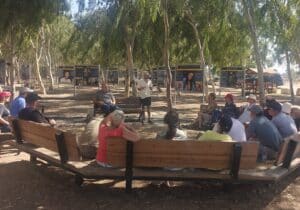
No part of the trip carried more weight for the participants than their encounter with the human impact of the October 7th massacre. At Kibbutz Nir Oz near the Gaza border, they walked through destroyed homes, met residents rebuilding their community, and had lunch at Pauker Winery, operated by 10/7 survivors. A visit to the Nova music festival memorial site included remarks from survivor Shalev Biton, who recounted his narrow escape from death, before stops at the Burnt Cars Memorial and the Observants Memorial.
The itinerary also highlighted Israel’s historical and religious significance, with visits to the City of David, Western Wall, Church of the Holy Sepulchre, Mount Zion, and Via Dolorosa in Jerusalem. A meeting with U.S. Ambassador to Israel Mike Huckabee focused on regional security and the Abraham Accords.
Delegation leader Karys Rhea, a U.S. political commentator, said the delegation was composed of people willing to challenge conventional thinking, qualities she believed made them especially receptive to Israel’s story. “The people on this delegation share an intellectual curiosity and a willingness to question conventional wisdom,” Rhea said. “Many have experienced firsthand what it means to be criticized or marginalized for challenging prevailing narratives.”
She said those shared experiences helped the delegation connect with Israel’s culture of innovation while gaining a deeper understanding of the false narratives directed at the State of Israel and the Jewish people globally.
CAM CEO Sacha Roytman said the purpose of the trip was to give participants direct access to the people, institutions, and ideas driving Israeli innovation. “The best way to understand Israel’s innovation ecosystem is to experience it personally,” Roytman said. “Throughout the week, our delegation met the researchers, physicians, entrepreneurs, and innovators developing solutions with global impact. We hope they return home not only with a deeper appreciation for what Israel has achieved, but also with practical ideas, new professional relationships, and opportunities to work together in the years ahead.”