|
Getting your Trinity Audio player ready...
|
The following analysis was authored by Tablet Magazine columnist and CAM editorial advisor Lee Smith:
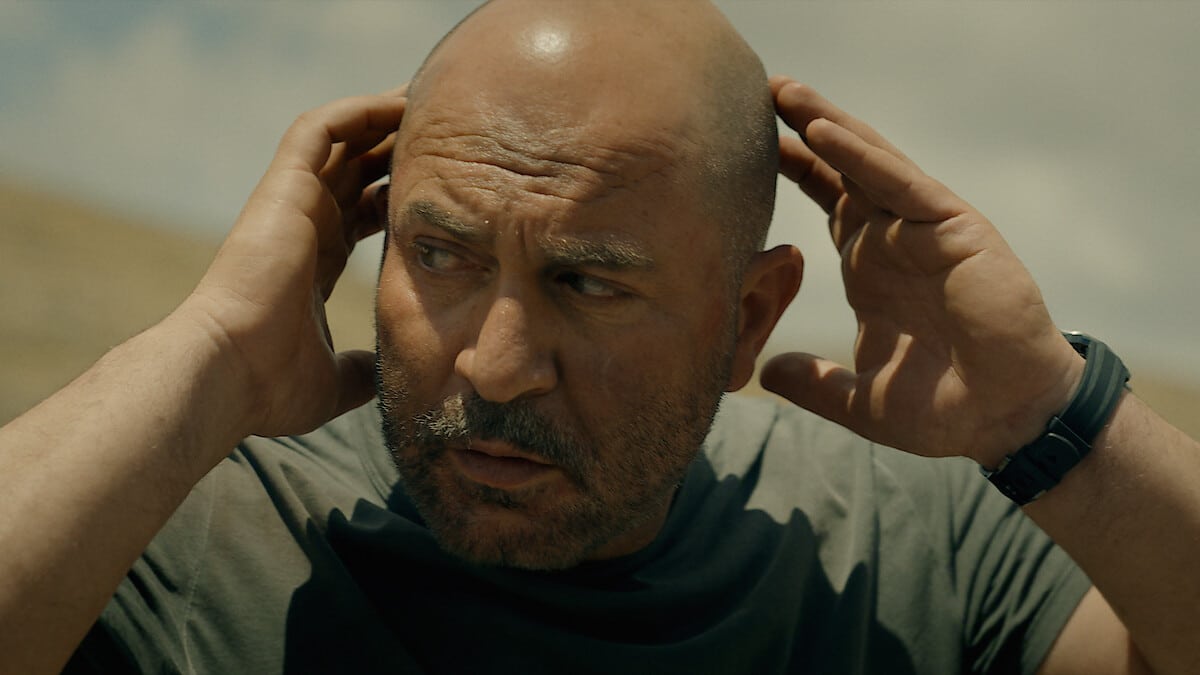
The widely positive response to the new season of the Israeli TV show Fauda has many asking if this represents a breakthrough in pro-Israel public relations. With two episodes from Season Five depicting the October 7th massacre and its aftermath, it seems that a drama featuring undercover Israeli intelligence operatives is finally exposing audiences around the world to the carnage it seems they were previously ignorant of.
And it raises hopes that Israel has finally found a way to break through the hostile communications environment that for decades has tilted world opinion against a country roughly the size of New Jersey. Finally, the world is getting to see Israelis as real people.
“I want [viewers] to look in my character’s eyes, and to see what we felt on those days,” said Lior Raz, Fauda‘s co-creator and star. “If it would happen in their countries, they would feel exactly like we felt and how we feel about the world. So I hope it would open people’s eyes to see what happened on October 7th.”
Raz’s efforts seem to have paid off. Last week’s premier of the new season finished with 2.1 million views worldwide, making it a top 10 show in 41 countries, including European nations such as France, Spain, and Norway that recognized Palestinian statehood in the wake of the October 7th attacks.
Israeli press accounts show that Fauda has penetrated the barriers set up by political and media elites preventing ordinary Europeans from understanding what really happened when Hamas led thousands of Gazans into Israel for a campaign of murder, rape, torture, and kidnapping. Viewers around the world are shaken by the show’s depiction of the massacre.
“This will stay with me forever,” a woman from the UK posted on social media. “What Israelis went through… and the world simply does not care.”
From Italy, one man posted: “I could barely keep my eyes open” Another woman wrote: “Yesterday, a friend called me and told me the same thing. She added, ‘Who knows, perhaps this series will help people understand the atrocities committed by Hamas on October 7th.”
The show is also must-see TV throughout the Middle East, in Egypt, Jordan, the UAE, and other Arab Gulf states — and in Lebanon, it reached number one. Many in the pro-Israel camp see that as a big win. After all, Hezbollah, the Iran-backed militia that controls the government in Beirut, has been making war on Israel for nearly half a century. If Fauda succeeds in Lebanon, maybe Israel’s neighbors are not only coming to understand the horrific nature of October 7th but also perhaps moving closer to wanting peace. Unfortunately, that’s probably not the case.
It’s true that many Lebanese, especially from the country’s Christian minority sect, don’t like the Palestinians, primarily because they blame them for bringing a 15-year conflict to Lebanon after Yasser Arafat and the PLO were forced out of Jordan in 1970. Arafat’s war with Israel across Lebanon’s border resulted in two major Israeli invasions, in 1978 and then again in 1982, leading to the eighteen-year occupation of southern Lebanon. And so to lots of Lebanese, even those who dislike the Palestinians, that’s reason enough to dislike Israel, too.
The Lebanese watch Fauda not to get Israel’s perspective but because they see the Israeli-Palestinian conflict as a part of their own history. And it’s unlikely the show’s representation of October 7th gives them a clearer lens through which to understand the massacres that they’ve already seen broadcast across social media for nearly three years. The Lebanese by and large aren’t honest about their own history of violence, even as it unfolded before their very eyes. As far as they’re concerned, for instance, the responsibility for the September 1982 massacre of hundreds of people in the Sabra and Shatila refugee camps lays solely with Israeli forces that controlled the surrounding area, and not the Christian militiamen who entered the camps to butcher their enemies.
Still, the fact that so many brainwashed against Israel are nonetheless glued to their screens for Fauda is a reminder that narrative is a powerful force, drawing on and amplifying the full range of human emotions. The stories humans tell about ourselves shape our understanding of the world.
For instance, the 1977 television miniseries Roots was enormously influential precisely because American audiences came to feel deeply about characters like Kunta Kinte, through whom they came to understand the inhuman realities of slavery. The same was so with Exodus, the 1958 Leon Uris novel and especially the 1960 Hollywood film starring Paul Newman and Eva Marie Saint, which gave audiences characters and a story through which to understand the righteousness of Israel’s founding.
But Exodus didn’t end the argument once and for all in Israel’s favor and neither will Fauda. And that’s in large part because of the enormous resources deployed against Israel.
Independent researcher Jeremy Musighi recently published a study showing the extraordinarily disproportionate and persistently negative international media coverage of Israel. He analyzed television reports and news articles finding that Israel consistently leads the world in per-capita attention, even in relatively peaceful times.
After October 7th, coverage surged. In 2024, one in every 50 news articles worldwide was primarily about Israel. On U.S. cable news, Israel was the most-mentioned foreign country, ahead of Iran, Russia, Ukraine, and China. On BBC News, Israel appeared in roughly 1 of every 17 broadcast minutes. And not surprisingly, that coverage was overwhelmingly negative, by 78%, according to the research.
Why the hate? Musighi argues that it’s due largely to decades of Soviet anti-Zionist propaganda. That’s true but to fathom the depths of anti-Israel reporting, you have to factor in more recent developments as well. Western governments already predisposed to go against Israel are now locked in due to the massive waves of Muslim immigration that now shape their policies, like the recognition of Palestinian statehood, even in the aftermath of October 7th.
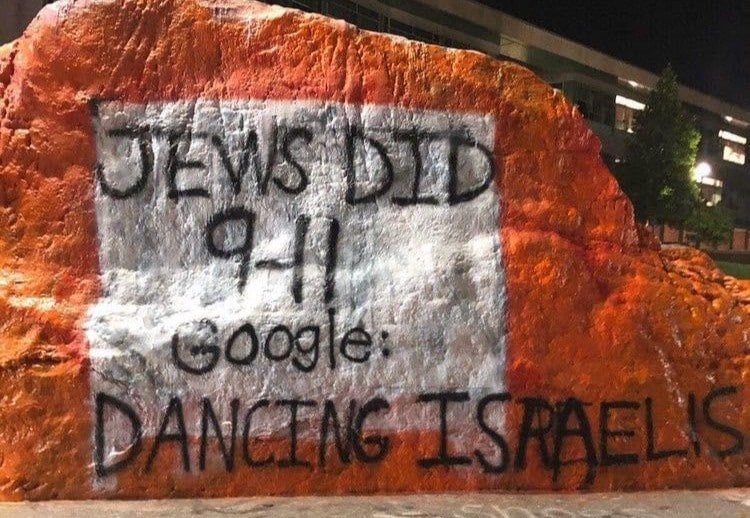
The dark truth is that the factor underlying the hatred of Jews is antisemitism, which has poisoned societies across the world for thousands of years now. If a narrative were able to dislodge this sickness for once and for all, you’d think it would be the foundational story of Western civilization — the story of God’s eternal love for the Jewish people.