|
Getting your Trinity Audio player ready...
|
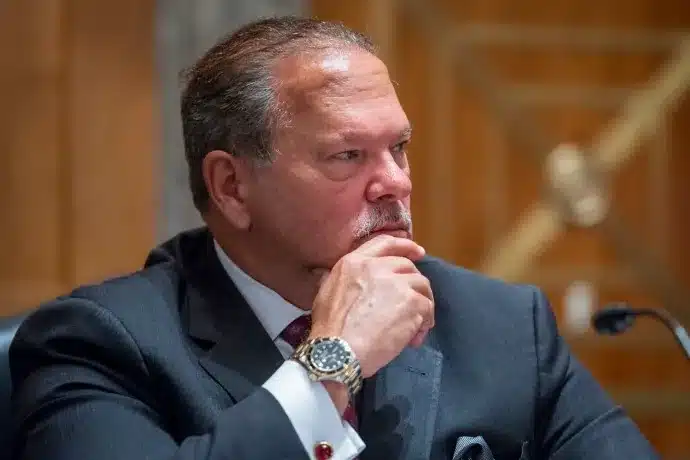
Paul Goldenberg spent nearly three decades in law enforcement, serving ten years as a senior advisor to the Secretary of Homeland Security. He is also Chair of the International Police Delegation for the International March of the Living.
This week, Goldenberg will deliver keynote remarks at Berlin’s historic Neue Synagoge, where senior police leaders and representatives from the United States, Canada, Germany, and elsewhere are gathering to commemorate the 88th anniversary of Kristallnacht (“Night of Broken Glass”), the violent state-orchestrated pogrom across Nazi Germany that presaged the Holocaust.
CAM recently spoke with Goldenberg about his work in law enforcement and the surge of antisemitism across Europe and the Americas.
Why do police from around the world believe Kristallnacht is relevant today?
“Because Kristallnacht confronts every police leader with a fundamental question: What happens when the institutions responsible for protecting people become instruments of persecution?”
“In November 1938, police were ordered to allow attacks on Jewish communities and participated in the mass arrest of Jewish men. That history carries a particular responsibility for our profession. It demonstrates how catastrophically police authority can be corrupted when political loyalty displaces the obligation to protect people.”
“I began my career walking a police beat in New Jersey and later led statewide hate-crime investigations. The responsibility remained the same: protect people, especially when they are vulnerable or unpopular.”
“That is why our international police initiative, ‘Not on Our Watch,’ matters. Remembrance must shape how we lead, train and respond today. We bring police leaders together to examine how institutions failed and what each of us must do to prevent those failures from happening again.
What do your European colleagues say about the pro-Palestinian riots erupting across the continent?
“I would let individual colleagues speak for themselves. My assessment, informed by years of working with European police leaders, is that foreign conflicts now create immediate responsibilities for local policing.”
“Police have a responsibility to protect peaceful demonstrations supporting Palestinians. They also have a responsibility to act when people are assaulted, threatened, or subjected to criminal intimidation.”
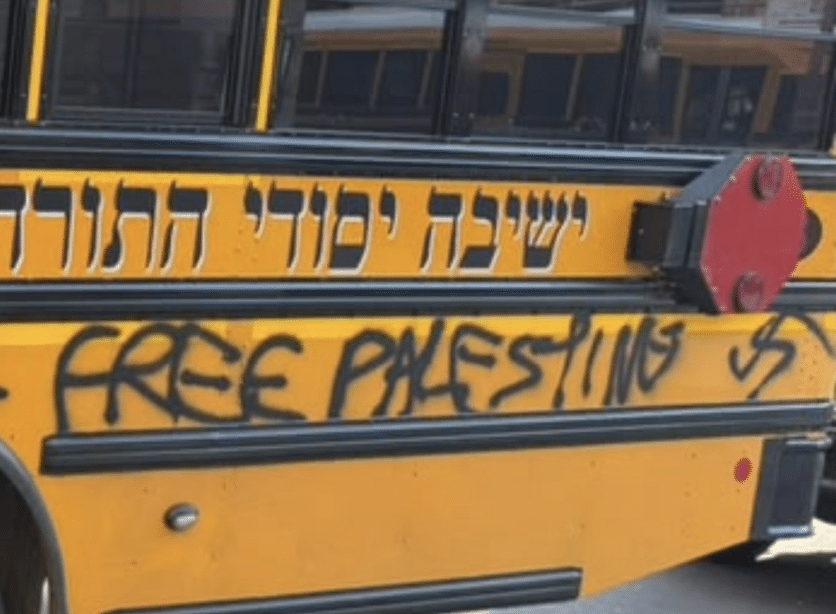
“When protesters choose synagogues, Jewish schools, or cultural centers unrelated to the government policies they oppose as targets for intimidation, that crosses a red line. Holding Jewish communities collectively responsible for the actions of the Israeli government is antisemitism. A synagogue in Berlin, Paris, or New Jersey is not a proxy for the Israeli government. Jewish children should never have to navigate intimidation to enter their school.”
“From my work on community policing, I believe engagement and enforcement belong together. Communication can reduce confrontation, but it must be accompanied by clear boundaries. Police must recognize when a demonstration becomes targeted harassment or criminal conduct and respond promptly, consistently and within the law.”
Is there enough political will to keep violent Islamist activists off the streets?
“I would not give a blanket answer for an entire continent. The test is what governments do: whether they provide resources, support lawful intervention and sustain prosecutions when the headlines move on.”
“Violent Islamist extremism must be confronted directly. The same standard must apply to violent extremists of every ideology. Police decisions must rest on conduct, credible threats and evidence — not someone’s religion or lawful political beliefs.”
“After a decade serving on the Homeland Security Advisory Council, including work on targeted violence, I judge political will by follow-through. Condemnation matters, but communities need protection, investigators need support and offenders must face consequences.”
“Political leaders should make the standard unmistakable: peaceful dissent is protected; violence and criminal intimidation will meet a consistent response. Police also need the resources and institutional support to carry out that responsibility lawfully and effectively.”
Do you see the same levels of antisemitic political violence coming to America?
“We have already experienced deadly antisemitic violence here. The attack in Boulder on people walking in support of Israeli hostages is a devastating example. We cannot treat this as a European problem that may eventually reach our shores.”
“I would be cautious about predicting identical levels or patterns across countries. But the conditions that allow targeted violence to grow — dehumanization, online radicalization, threats and the normalization of intimidation—demand our attention now.”
“My experience investigating hate crimes taught me to take threats seriously before they become casualties. That means trusted relationships with Jewish communities, timely reporting, coordinated investigations, and practical security planning. It also means recognizing that antisemitic violence can emerge from different ideological movements.”
“Jewish Americans must be able to worship, attend school, and participate in public life without fear. Protecting that freedom is a responsibility of democratic government — and a measure of whether our institutions are doing their job.”
Read more:
Why Antisemitism Is Gaining Ground in America Today: A Q&A With Author James Lindsay
The Kremlin’s Antisemitism Machine and Its War Against the West: A Q&A With Author David Reaboi