|
Getting your Trinity Audio player ready...
|
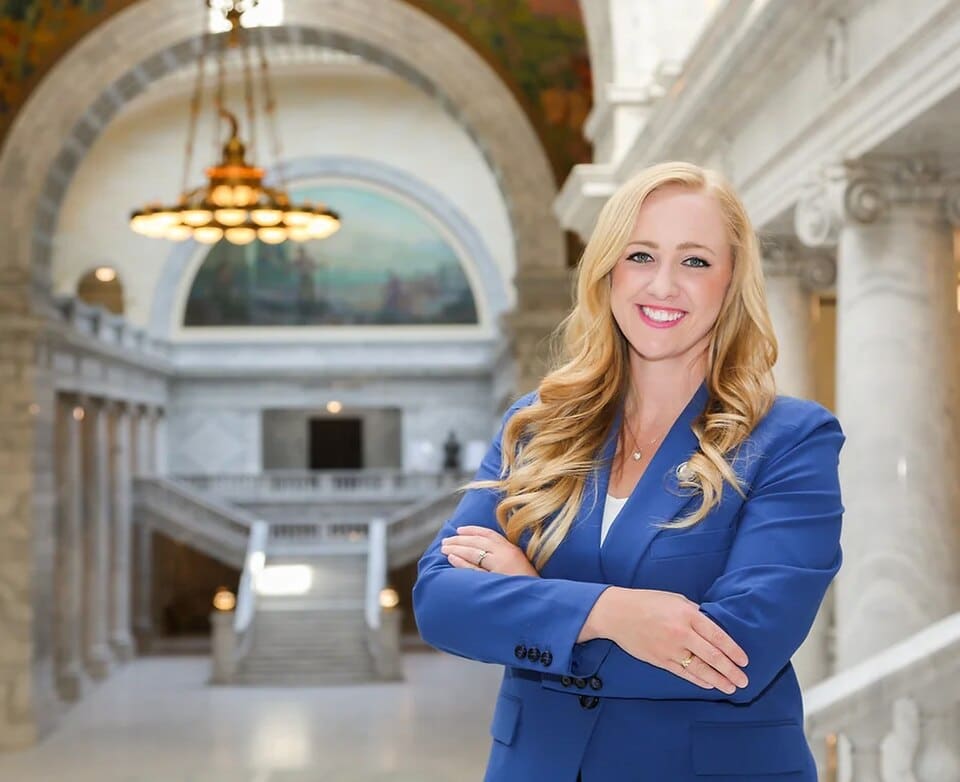
State Representative Candice Pierucci was the youngest member of the Utah Legislature when first elected in 2019 and now serves as House Majority Whip.
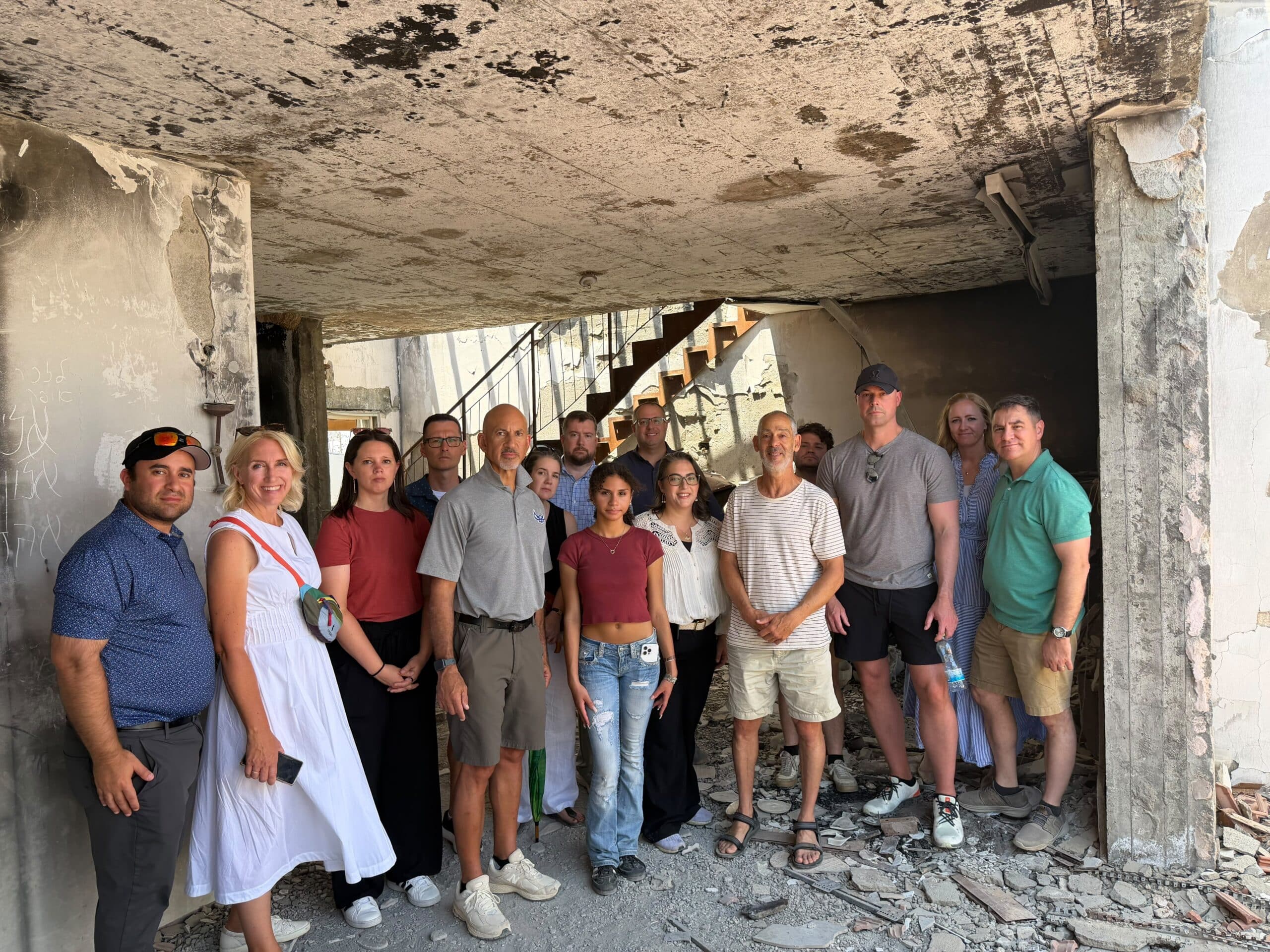
Pierucci recently returned from CAM-organized delegation trip to Israel, where she and other state lawmakers from across the United States gained insights into Israel’s history and modern-day realities, experienced its economic and cultural vitality, and explored the key role states must play in fighting rising antisemitism back home in America.
You’re one of the youngest members of Utah’s House leadership. Looking back, what experiences most shaped the leader you’ve become?
“I will never forget reading a biography in fifth grade about Eleanor Roosevelt and Amelia Earhart, and there was something about that book that lit something in me,” Pierucci said.
In high school, she asked her local state representative if she could shadow him for a day. Instead, he made her an offer. “Better yet, why don’t you just come intern for me?” he asked her.
“Walking up the marble steps of the Capitol, carrying all of his binders and books during my internship, I remember thinking, I want to be here someday, and I want to make a difference,” Pierucci said.
Her father supplied the rest of the education, refusing to let her look away when other kids were targeted. “My dad would tell me to stand up to bullies, and give me a pep talk on the ride to the bus stop on how to stand up for myself and the other kids,” she said. “It was almost like a training ground on leadership development.”
You’ve become a vocal advocate for the Jewish community in Utah. What first convinced you this was an issue you couldn’t stay silent about, and how has your faith shaped that?
Pierucci gave two answers. The first was strategic. “I would describe myself as a national security hawk,” she said, and Israel “is our greatest strategic ally.” Her worry is that in a generation with no memory of World War II and a rising generation too young to recall 9/11 “there’s not this mindset around national security as a baseline foundation.”
The second is personal. “As a member of the Church of Jesus Christ of Latter-day Saints, my pioneer ancestors had an extermination order out for them in Missouri, and a mob pillaged and destroyed their home, and they fled to Utah,” she said.
That history of religious persecution resonates with her. “After seeing all the horrors the Jewish people have been put through, it only makes sense that they would be able to have a place to call home — their home, and they have the full right to defend it,” she emphasized.
Utah has earned a reputation for bipartisan cooperation on combating antisemitism, and you’ve said you’d like to see the International Holocaust Remembrance Alliance (IHRA) Working Definition of Antisemitism formally adopted by the State Legislature. How do you build consensus on an issue that’s become so polarized elsewhere?
“I think you have to name something to be able to call it out,” she said. She added that legislative adoption was “definitely something I’ll be working on with my colleagues.”
“In Utah, about 85% of our legislation is passed by Republicans and Democrats,” P noted. “When I’m working on a difficult issue, I will go to the influential members of the minority and just try to find a basic understanding of where they’re at.”
Even so, Pierucci sees troubling signs. “I’m getting concerned about a faction growing within my own party,” Pierucci, a Republican, noted. She pointed to “the more isolationist view” taking hold in parts of the Republican Party and some of the “antisemitic currents” within it. However, she views this faction as still reachable and believes Republicans can unite again in supporting Israel.
Many Democrats, meanwhile, have moved somewhere she “cannot reason with,” she said.
You recently traveled to Israel with a CAM delegation of state legislators. What stood out to you most and how did your thinking evolve over the course of the trip?
“Israel is held to an unrealistic standard that no other country in the world would be held to,” Pierucci said. “If someone came to the United States and killed the equivalent of 40,000 people, percentage-wise to Israel’s population, that was murdered on October 7th, it would be a declaration of war, and we would go scorched earth to eliminate the terrorists. No questions asked. We would not go drop food supplies after, and no one would expect us to.”
After her trip, calling October 7th an “attack” still bothers her. “It was a full-blown ground invasion into the country, and people were mowed down,” she says. “It was war, where hundreds of innocent Israelis — fathers, mothers, babies — were horrifically murdered.”

Looking back on your visit to Israel, what’s one thing you think every American lawmaker should witness firsthand?
“I think just walking through the streets of Jerusalem,” Pierucci said. “Walking through the Muslim Quarter, then to the Jewish Quarter… it was a seamless walk. There were no fences. There were no inspection checkpoints. If people only understood the religious freedom and diversity happening in Israel, they would be shocked and pleasantly surprised. It is nothing like you hear in the media.”
“People need to come to Israel and actually see what the heck they’re talking about, because they’re so off base,” she continued.
The delegation also toured several kibbutzim near the Gaza border that were overrun by Hamas terrorists on October 7th. “People should walk through those houses,” Pierucci said. “Walk through them and see the last horrific moments of families’ lives.”
“As a parent, what would I do? I then would ask my fellow Americans, what would you expect your country to do after this happened?” she added.
Visiting Kibbutz Nir Oz, where the Bibas family lived, hit particularly close to home for Pierucci, who had followed their tragic story closely. “It was heartbreaking to walk the neighborhood that those children had played in, thinking of their mother’s love for them, and knowing they were murdered in cold blood. I couldn’t help but think of my two children at home, and it made me emotional.”
You teach American government at Utah Valley University. What has that shown you about the education gap on this issue?
A year after October 7th, a student walked into Pierucci’s class wearing a keffiyeh. “It was really jarring for me, because I was like, she’s wearing what the terrorists wear,” she said.
On the first anniversary, she built the day’s current-events lesson around it, discussing the scale of the massacre. “The class got quiet, and I had a student in the back raise her hand, and she said, ‘What are you talking about, Professor Pierucci?'”
Pierucci asked the student where she was getting her news. “She said, ‘TikTok,'” Pierucci recalled. “I said, “Okay, well, TikTok’s owned by the Chinese Communist Party, so let’s diversify here.'”
If you could give Americans one message about confronting antisemitism, what would it be?
“Antisemitism has no place in the United States,” Pierucci declared. “It is a persistent and dangerous form of hatred that has led to unspeakable suffering throughout history and continues to threaten Jewish people around the world today.”
“Normalizing antisemitism is not okay,” she continued. “Laughing it off, shrugging it off is not okay. When it starts happening so frequently, it desensitizes people to hearing it, and we can never let that happen.”
“What’s important is that we name it, we call it out, and we say, ‘That’s incredibly antisemitic. Stop it,'” she stated.
To groups that purport to shine a light on human suffering, Pierucci has another message. “If you’re going to support human rights, you need to do it equally and not be hypocritical about it,” she said.
Read more: