|
Getting your Trinity Audio player ready...
|
An IDF captain and reservist recounts what it cost to build a life in Israel, and the sense of belonging that made it all worthwhile.
Exactly one week after October 7th, Hayley Nagelberg sat with a group of officers in an IDF war room.
“I don’t understand how it was just one week,” she said.
As Israel reeled from the deadliest massacre of Jews since the Holocaust, Nagelberg, who had made aliyah from the United States four years earlier, was trying to determine who was where, who could be reached, who had been in the south, and what each unit needed to keep functioning.
Her memoir, The Price of Belonging: The Beauty and Chaos of Becoming Israeli, traces the choices that brought her to that war room and what building a life in Israel demanded along the way. The story begins years earlier, on an American college campus where her outspoken Zionism made her a target.
Nagelberg grew up in East Brunswick, New Jersey, attending the Solomon Schechter day school through 12th grade and becoming active in USY and Israel advocacy work. She had never personally experienced antisemitism. Her first major confrontation over Israel came at the age of 17, during a USY conference in Atlanta, when she challenged a CNN executive over the network’s coverage.
Her parents told her to write down what had happened. She did, in a blog post for The Times of Israel. It pulled her further into Israel advocacy before she had even chosen a college.
She enrolled at the University of Illinois Urbana-Champaign in 2015.
“I had wonderful experiences as a Jewish student on campus,” she said. “I just also had bad experiences.”
Tracked for Being a Zionist
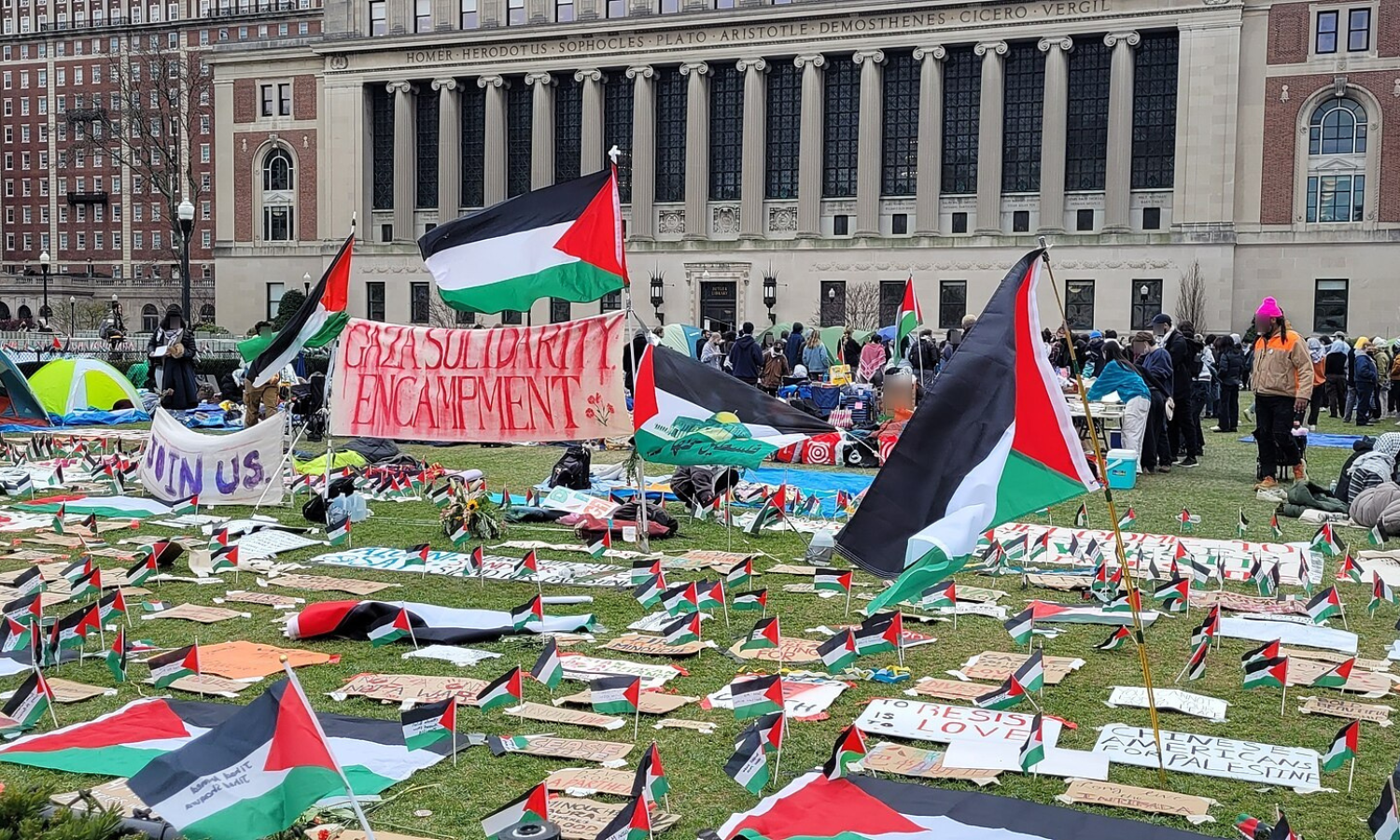
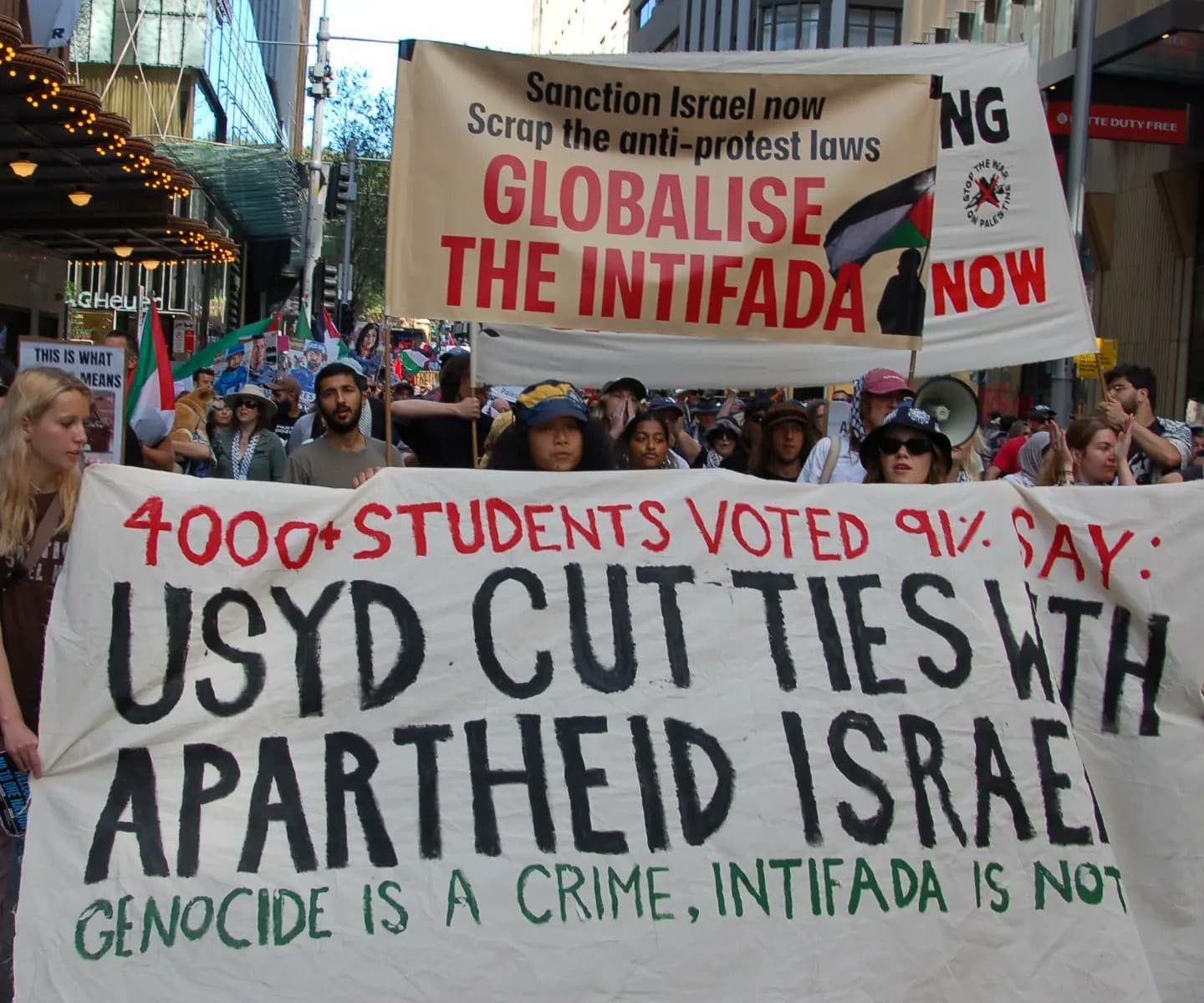
She’d been given a nickname online, Zionist McZionist, and activists photographed her at pro-Israel events, tracking and posting where she was and what she was doing.
“I was not hiding who I was,” she said. “They would physically follow me and a few other highly involved student leaders around campus.”
She received threatening messages online, including death threats from outside the school, which police said were not connected to any students there.
“I can tell you literally nothing was done,” she said.
She sat, she said, in “countless meetings with the highest levels of university leadership, the Chancellor, the Vice Chancellor, the Board of Trustees.” By her senior year, activists had posted “no room for Zionists at UIUC” online and burned an Israeli flag on campus. She brought photographs of the burning directly to the chancellor. “That’s not on campus,” she recalled being told. “And it was,” she said.
That year, she and other students filed Freedom of Information Act requests and compiled a roughly 40-page report that, they argued, compared the university’s handling of complaints against Jewish students with its handling of complaints against others. She presented the report to the University Board of Trustees.
After she graduated, the Louis D. Brandeis Center for Human Rights Under Law took legal action over the university’s treatment of Jewish students. Nagelberg said the resulting agreement required antisemitism training for senior staff and during freshman orientation.
“To tell you it’s made a world of difference, no,” she said.
Years of making that case before the Campus Senate and the administration, she said, left her wanting to “put my money where my mouth was.”
The Uniform She Chose
Her path to Israel had started even earlier, with a chance encounter at the age of 12 with visiting Israeli soldiers, including a young woman who served in Oketz, the IDF’s canine unit.
“I very much remember thinking maybe one day that will be me,” she said.
She made the decision two years into college, deferred it to finish her degree as promised, graduated in May 2019, and made aliyah that July 4th.
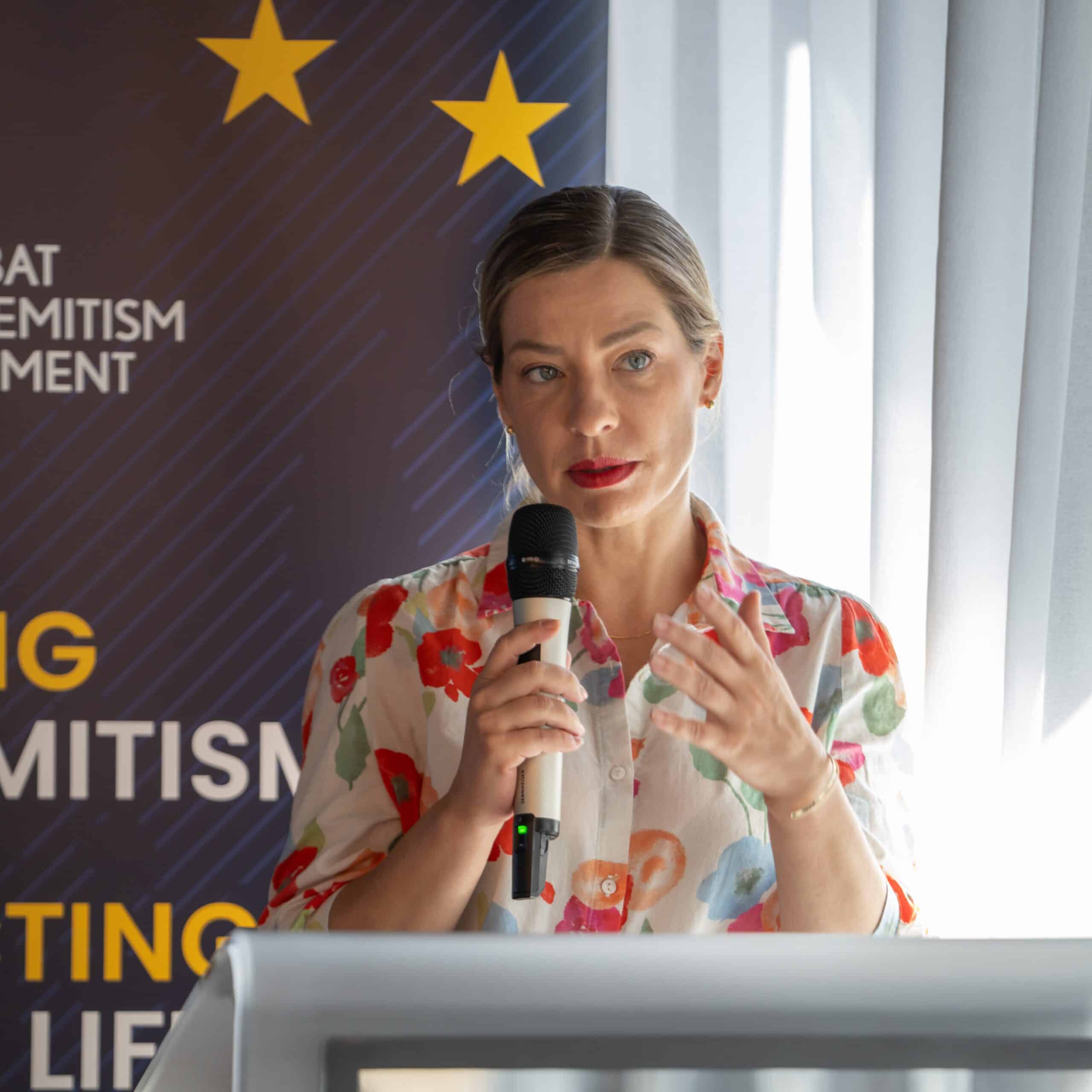
Not long after arriving, she entered and won the Combat Antisemitism Movement’s Natan Sharansky essay contest, writing about the everyday joys of Zionism and everyday heroes. She still lives by a related principle, inscribed on a ring she wears daily, a line from Pirkei Avot, “say little, do much, and greet every person with a cheerful face.”
A sesame allergy ruled out combat service. “From the moment they told me I couldn’t be a combat soldier,” she said, “I said, well, then one way or another, I’m going to officer’s course.” She was commissioned within eleven months of enlisting.
“I definitely think it was the best decision I ever made,” she said, “with all the difficulties that came with it.”
“This is not a me thing anymore,” she recalled thinking during officer training. “There’s going to be soldiers who report to me.” She also created a one-page guide outlining Facebook groups, hotlines, and other resources that officers could share with lone soldiers under their command.
Her soldiers, she said, “accepted me, accepted my accent, accepted editing all of my emails before I sent them,” and welcomed her into their families for holidays.
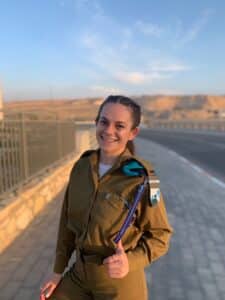
She first oversaw reserve soldiers in the IDF Spokesperson’s Unit, later moving into personnel oversight, internal audits, and inspections, and attained the rank of captain. Being invited on a Friends of the IDF (FIDF) delegation to speak in American high schools, in uniform, was, she said, the highlight of her service. She had become the kind of visiting soldier who had inspired her at the age of 12.
Her Service Was Ending When the War Began
By early October 2023, Nagelberg was six weeks from completing her active-duty service. She had already given away her old uniforms and winter clothing to lone soldiers on the kibbutz where her host family lived, on the edge of the Gaza envelope, certain she wouldn’t need them again. That family invited her to spend the holiday weekend with them. She chose a day to herself instead.
On October 7, sirens sent her to her building’s shelter. She came back up and was standing in the hallway with her roommate as the first images arrived. Through the kibbutz group chat, she learned that her host father had been shot in the hand while cycling. Because it happened so early in the morning, he reached a hospital quickly and was treated. He survived.
“Who knows what the day would have looked like?” she said.
She began messaging her parents in New Jersey as the day unfolded. “By the time my parents woke up,” she said, “they woke up in a different world.”
On October 8, Nagelberg reported to base as an active-duty officer. She was still several weeks from her scheduled November release.
A friend from her aliyah cohort later texted that her cousin had been killed on October 8 in Kfar Aza. Nagelberg said she has never shaken the memory of seeing that message appear on her phone.
As her release date approached, she was given two options: extend her active-duty service or return the following day as a reservist with no fixed end date. She chose reserve duty and continued working in the war room, spending roughly four months there during the opening stretch of the war.
At the time of the interview, she was still serving in the reserves, typically one or two days a month and remaining on call for emergencies.
Far From Family, at Home in Israel
After October 7th, she recalled her brother in the U.S. telling her, “I know you’ve been in Israel for four years, but you’re sharing your location,” so someone would know where she was if she couldn’t answer her phone during a shift. It was the first time she had shared her location during her adult life in Israel.
She wasn’t in the U.S. when her grandmother died, or for her niece’s and nephew’s births. Distance from family, she said, has been the steepest cost.
What Israel has given her is the sense of belonging she first experienced at the age of 10.
“I don’t have to explain to anyone anything about myself,” she said.
After everything she experienced on campus, that feeling came to mean not having to defend her literal right to exist.
“I don’t necessarily think everyone should make aliyah,” she said. “But I feel strongly that every Jewish person who might one day want or need to come here should be able to. That was really the piece that made me want to serve, to be part of ensuring that this place exists, so that someone who doesn’t feel they belong somewhere has where to be.”
When Two Sentences Weren’t Enough
Nagelberg began writing near the end of an extended stretch of reserve duty, as she tried to imagine civilian life in Israel after years of military service.
By then, she had reduced her own story to a two-sentence answer for job interviews: grew up Jewish, loved Israel, faced antisemitism on campus, decided to serve.
“That’s just not the whole story,” she said.
“I’m going back to my roots. I’m going back to writing,” she said. “I’m saying everything I’ve ever wanted to say. And whoever reads it, reads it.”
Her memoir returned her to the idea at the heart of her winning CAM essay.
“The individual stories,” she said, “carry, personally, so much more weight than even the famous stories everyone knows.”
Asked what she hopes readers take from the memoir, Nagelberg returned to the people whose lives make up the country.
“There are people living here, people living their lives here, people trying to make the world a better place here,” Nagelberg said.
Hayley Nagelberg’s memoir, The Price of Belonging: The Beauty and Chaos of Becoming Israeli, is available on Amazon.