|
Getting your Trinity Audio player ready...
|
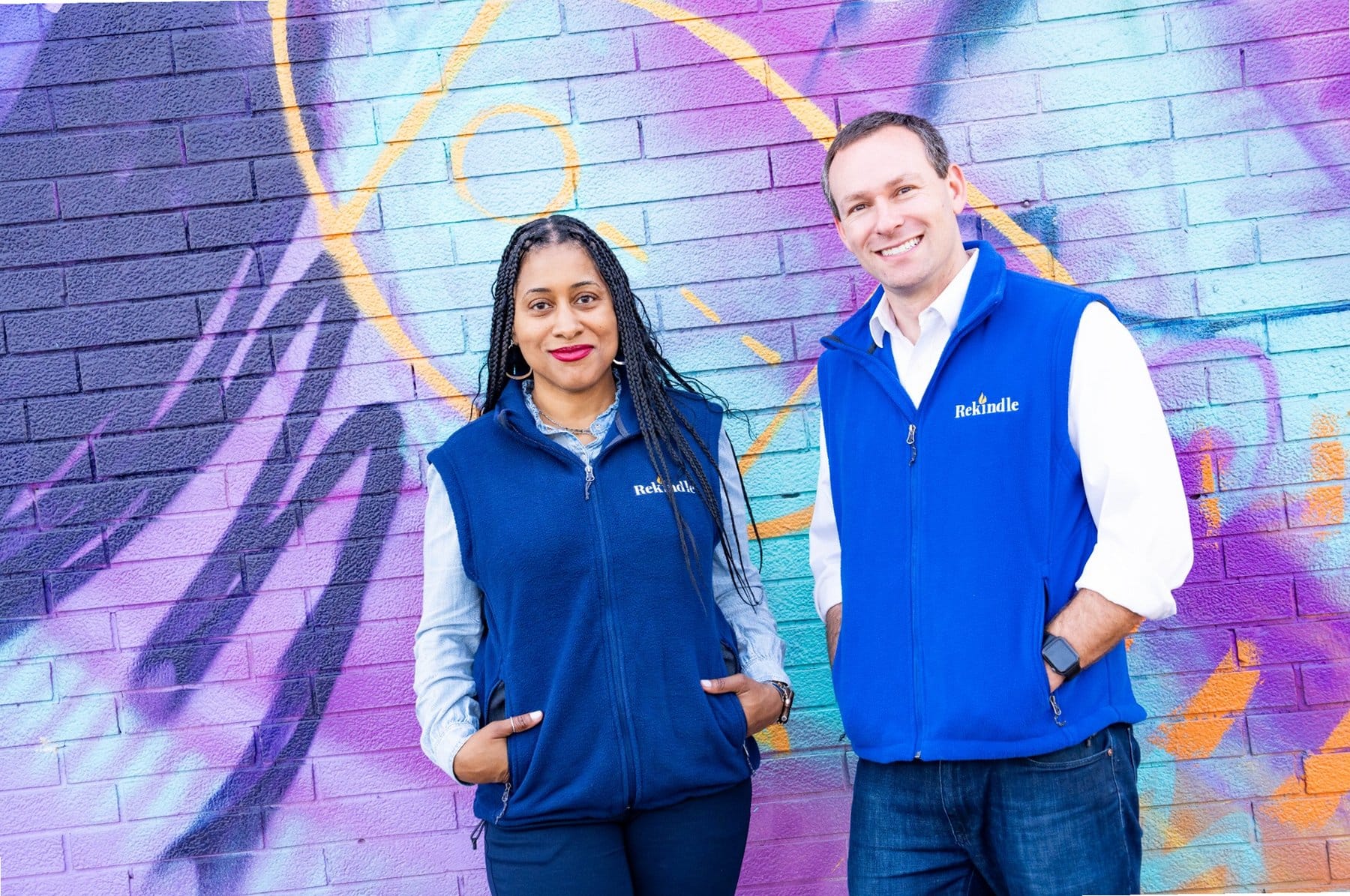
Matt Fieldman serves as executive director of Rekindle, a national Fellowship he co-founded with his colleague and friend Charmaine Rice. Launched in Cleveland, Ohio, in April 2021, Rekindle brings Black and Jewish leaders together for sustained, face-to-face dialogue.
Fellows complete five three-hour sessions over 10 to 12 weeks, exploring race, religion, identity, intergenerational trauma, and shared resilience. From that initial group in Cleveland, Rekindle has grown to more than 20 local chapters from coast to coast. Through the trust and personal connections developed during the Fellowship, the program seeks to strengthen relations and foster lasting cooperation between Black and Jewish communities.
What led you to create Rekindle, and what did you hope it could change about Black-Jewish relations?
“I’ve been working in the secular community the last 16 years, and I didn’t feel like I could be my full self,” Fieldman said. “I was a certain Matt from Monday to Friday, when I was in inner-city Cleveland working with Black leaders. Then, from Friday night through Sunday, I was in my Jewish community with my Jewish friends doing Jewish stuff. It was weird — they didn’t know each other. I wanted to create a space where they could get to know each other and work together.”
“I said to my friend Charmaine Rice, ‘Our communities work in parallel rather than in partnership. I see voter registration drives in both communities. I see criminal justice reform in both communities. Wouldn’t it be better if we worked together?'”
“I knew from the get-go that whatever we built had to be co-founded and co-led. It could not be the Jewish community doing it for the Black community, or vice versa. We’re doing this because we are stronger together.”
Rekindle looks to the Black-Jewish alliance of the Civil Rights era. How much of that alliance can realistically be rebuilt today, and what would it take?
“It needs to be rebuilt for a modern context, with the understanding that neither community is monolithic,” Fieldman said. “We have different issues, different things we’re working toward, and different concerns.”
“Too many organizations come in saying, ‘We just need to be allies. Let’s start.’ You can’t do that without a foundation. First comes exposure to the other community. Then real conversations lead to an awareness of each community’s challenges. You can’t become friends in one night; you need repeated exposure. That is how you build toward allyship and collaboration.”
“I look at this as a coalition of the willing. If you’re happy in your camp on the political left or your camp on the right, and you see the world in black and white, then Rekindle isn’t for you. We’re looking for people who want to challenge themselves, who see the value of allyship, and who are okay with agreeing on 90 percent of things. On a few issues, we are going to vehemently disagree, but that’s okay. We’re going to work together.”
“Martin Luther King and Rabbi Abraham Joshua Heschel didn’t agree on everything, but they saw the value of working together around specific topics. That’s where we need to get back to.”
Rekindle asks participants to challenge their own beliefs and engage seriously with perspectives different from their own. What happens when those conversations reach a genuine impasse?
“They absolutely reach an impasse sometimes, and that’s fine,” Fieldman said. “You’ve heard another perspective, and you don’t have to accept it. But it informs your own perspective and helps you understand other people’s life experiences in a whole new way.”
“We establish very strict conversation guidelines in the first session and revisit them at the beginning of each subsequent session. When things get hard, don’t withdraw. Lean in with curiosity. Ask good questions.”
“We lean into the disagreement and explore it, but we don’t let it linger and fester. We keep the conversation moving because we know we’re not going to resolve everything. We say, ‘This is great. Please continue these conversations over coffee between sessions. Now we’re going to move to a new topic.'”
How have October 7th and the rise in antisemitism since then affected Rekindle’s work and the conversations among Fellows?
“October 7th happened in the midst of our seventh cohort,” Fieldman said. “It happened on a Saturday, and we were scheduled to meet on Sunday night. I spent all day Sunday talking to Fellows, mostly the Jewish Fellows, saying, ‘Please come. Have these conversations. We’ll create a safe space.’ Some of them had family members fighting in the IDF. It was very, very tough.”
“That cohort bonded over the emotional impact. We had Black Fellows say, ‘I don’t know much about the history or the situation, but I see that you’re in pain. I feel your pain, and I recognize the trauma you’re experiencing.”
“I don’t know that October 7th has changed our work, but it has made that work more pressing than ever. The environment has become much harder, and October 7th has been the hardest thing to work through.”
What has surprised you most about the misconceptions participants bring into Rekindle — and what happens when they surface?
“One thing that’s fascinating is that, on both sides, Jews and Black folks come in with misinformation about the other community that they’ve heard on social media,” Fieldman said. “But not every question should be interpreted as antisemitism. We have to make room for ignorance and education.”
“One Black Fellow said, ‘I want to understand why all the buildings in Cleveland have Jewish names on them. Where did all your money come from? How is it that you guys are so rich?’ A lot of people in the room thought, ‘That’s such a trope.’ Our intergenerational trauma and defense mechanisms came up. It wasn’t a fact that all the buildings had Jewish names, but the buildings she saw did, and she wanted to understand why.”
“In another context, she would have been canceled or thrown out, and she would have left saying, ‘I can’t talk to Jews.’ I’m glad she saw Rekindle as a safe space to ask these questions, have the conversation, and move closer toward allyship rather than feel ostracized.”
What does real allyship require when it means confronting antisemitism or anti-Black prejudice within your own community?
“Doing the best you can to build real relationships and not being transactional about it,” Fieldman said. “Certainly never saying, ‘My people were there for your people 70 years ago, so you have to be there for us today.’ That doesn’t hold any water.”
“Fellows tell me they feel empowered to talk to that ‘crazy uncle’ or ‘crazy cousin’ in a way they never would have otherwise.”
“I hope Fellows leave sharing what they have learned and standing up for the other community when they hear something negative, saying, ‘No, I know Jews. They’re not like that. I know Black folks. They’re not like that.'”
Rekindle is designed to turn dialogue into action. What evidence have you seen that these relationships create change beyond the Fellowship itself?
“We survey Fellowss three times: before the Fellowship begins, immediately after it ends, and six months later,” Fieldman said. “In the six-month survey, 93 percent said Rekindle helped them connect with the other community in new ways. Another 93 percent said it empowered them to address hatred of that community, and 80 percent said it led them to advocate on its behalf. This isn’t just kumbaya. It’s about really changing people’s perceptions for the long term.”
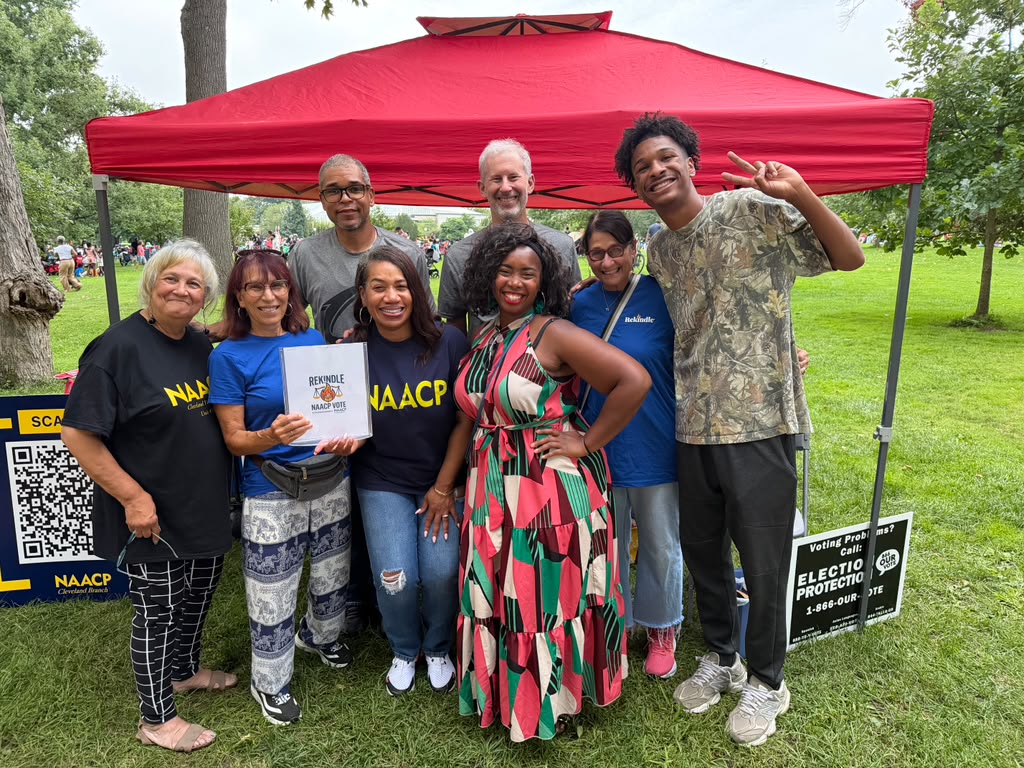
“Here in Cleveland, we held our first joint program with the NAACP, where Black and Jewish Fellows tabled together around voter registration. In Boston, Fellows self-organized around voting rights. Other chapters have undertaken literacy initiatives and food-distribution efforts.”
What do you hope Fellows carry into their communities and future leadership roles — and how could that reshape Black-Jewish relations over time?
“Sixty-seven percent of Fellows have shared something they learned through Rekindle with their communities,” Fieldman said. “I’d love to see that number be even higher, but two-thirds is good.”
“We want to plant seeds. Fellows may not remain in regular contact, but a year or two later, when they have a reason to reach out, that connection is already there.”
“We focus on leadership and changemakers, and we want those changemakers to think outside the box. When they’re working on an initiative, it can’t involve only members of their community. I want them to pick up the phone and call each other to say, ‘We’re working on this. Would you like to be part of it?’ Reach out to each other and collaborate — not as an afterthought, but as part of the process.”
For more information on the Rekindle Fellowship, please visit: rekindlefellowship.org