|
Getting your Trinity Audio player ready...
|
East Palo Alto Mayor Webster Lincoln has recently faced backlash for standing with the Jewish community, supporting the International Holocaust Remembrance Alliance (IHRA) Working Definition of Antisemitism, and traveling to Israel. Despite the pressure, Lincoln has remained steadfast.
His committed stance on these issues became increasingly public after he participated in the CAM-organized Northern California Mayors Roundtable on Antisemitism in March. During Jewish American Heritage Month (JAHM) in May, the East Palo Alto City Council approved a measure endorsing the IHRA framework, joining the more than 1,300 entities worldwide to have done so.
Mayor Lincoln spoke with CAM this week about his approach to the city-level fight against antisemitism.
What experiences have shaped you as a leader, and how has East Palo Alto’s distinct history and identity influenced your approach to leadership?
East Palo Alto’s demographics have transformed several times over, from having a predominantly African American population during Lincoln’s childhood to a city today with large Hispanic and Pacific Islander communities, alongside Caribbean and Asian residents.
“It was a lot of white people, then Black people moved in, now Black people are moving out,” he said. “It’s always changing. You can’t win an election only advocating for one group of people. You have to be advocating for all residents.”
Lincoln traced that instinct to his own upbringing. “I have a unique perspective just by being African American and growing up in this community,” he noted, “but you need to be able to communicate with everybody, be respectful of everybody, and make sure everybody’s needs are being addressed.”
His mother served on East Palo Alto’s sanitary district board, and he grew up watching her campaign. The COVID-19 pandemic pushed him toward public service. “Our city needed some really good leadership,” he said, citing housing and gentrification-related concerns that must be dealt with when governing a city in Silicon Valley.
What were your biggest takeaways from CAM’s Northern California Mayors Roundtable on Antisemitism?
“I got an understanding of a lot of the different ways people are using current events to attack and go after Jewish people,” Lincoln said. “I think it’s unfortunate that people are trying to hold Jewish Americans responsible for whatever the government in Israel is doing.”
He wanted Jewish constituents to know their elected leaders stood with them. “Antisemitism should be defined and addressed,” Lincoln said. “You can’t address something that’s not clearly defined.”
How can you ensure the IHRA definition becomes a practical tool for the city rather than simply a symbolic gesture?
Lincoln said the proclamation passed in May was a starting point providing the City Council with a clear, nonbinding framework for recognizing antisemitism. If an incident or conflict arises, officials can use it to identify hate directed at Jewish residents.
Lincoln recalled a claim that the IHRA definition was unneeded in East Palo Alto because it only had a small Jewish population. In response, Lincoln asked, “So that’s an excuse to hate someone?”
The city’s staff includes Jewish, Palestinian, Iranian, and Indian employees, he noted.
“There’s no excuse to hate anyone,” Lincoln emphasized.
Some people view fighting antisemitism as primarily as a national or global task. Why do you believe it is also a municipal responsibility?
“A lot of people don’t understand the impacts of local government when it comes to enforcement and investigation,” Lincoln said. “We can’t rely on the federal government for everything.” The FBI might pursue organized hate groups, but day-to-day enforcement, ordinances, and the handling of complaints all fall on municipalities, he pointed out.
“The local level is very important — more so than the federal government or even the state government,” Lincoln said.
What did the backlash over your trip to Israel reveal to you, and why was it important to stand by your decision?
Lincoln said the reaction exposed misinformation, intimidation, and an unwillingness to listen. “We should promote people going and trying to get an understanding for themselves,” he said. “You should always be open and willing to talk with people and listen to their issues.”
He had previously traveled to China and received some critical comments, but nothing approaching the response to his Israel trip. The backlash began after someone with whom he was not politically aligned took a screenshot of a post from his private Facebook page and circulated it online.
“If every trip is propaganda, then what isn’t propaganda?” Lincoln asked. “You’re going for someone else’s view of the world.”
For him, shouting down elected officials who seek firsthand knowledge accomplishes nothing. “Yelling and screaming and trying to intimidate — it’s a good show for people, but what does it solve at the end of the day?” he asked.
How did experiencing Israel firsthand shape your understanding of the country?
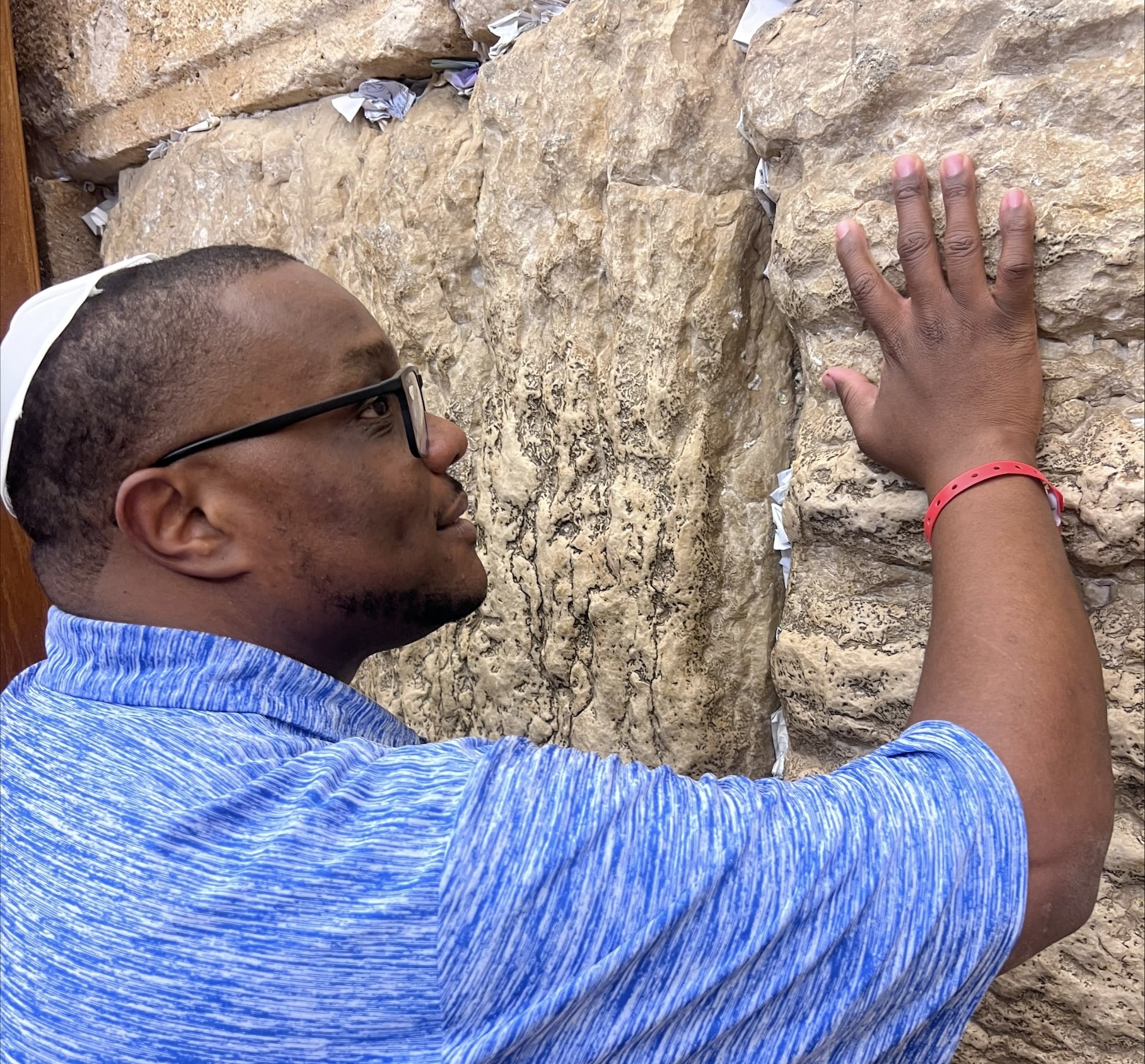
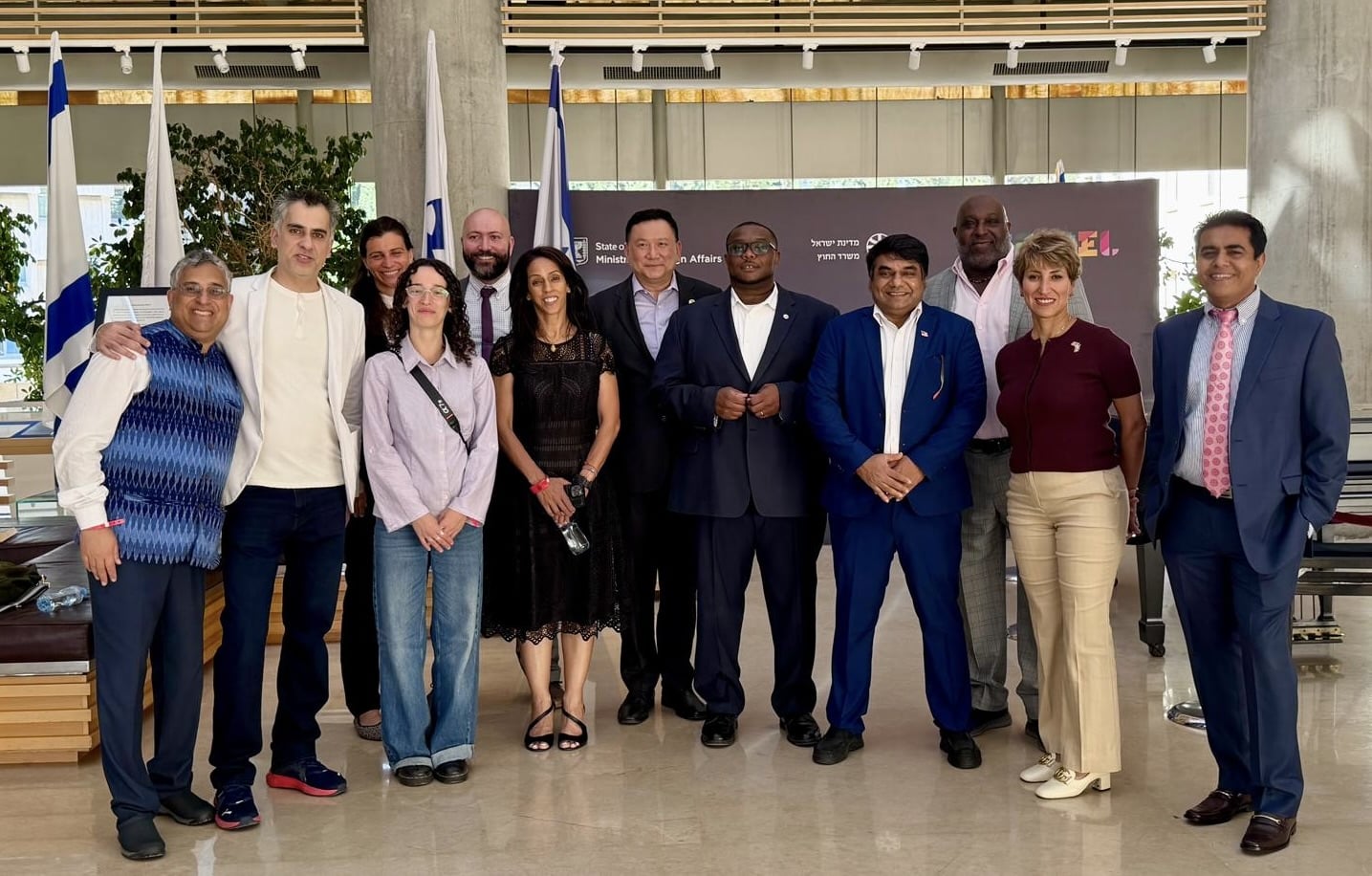
Lincoln’s trip took him from northern Israel to the Negev. He visited the Ministry of Foreign Affairs and Yad Vashem, ate with Druze families in their homes, and heard from members of Israel’s LGBTQ community. He also spoke with an Israeli woman involved in delivering humanitarian aid to Gaza.
Lincoln also visited a kibbutz near the Gaza border that was attacked on October 7th. “You can still see the bullet holes and where they tried to burn down the buildings,” he said.
For Lincoln, those encounters demonstrated the value of seeing a country beyond the images presented online and in the media. “There’s no better way to get an understanding than to actually go somewhere and speak to the people,” he said. “You should go and gain your own perspective if you have the opportunity.”
What do you think Americans misunderstand about the Jewish people’s connection to Israel?
Lincoln said many Americans discuss Israel without understanding the Jewish people’s millennia-old connection to the land. He pointed to ancient Judea and the repeated displacement of Jews over centuries. Despite that displacement, Jewish communities maintained a continuous presence in the Land of Israel.
“A lot of people don’t realize the historic ties the Jewish community had to that area and how Jews were dispersed throughout the world,” he said. “They don’t understand the history of that area and its significance to Jewish culture and religion.”
Lincoln also connects Jewish self-determination to centuries of persecution culminating in the Holocaust. The Jewish people, he argued, needed a homeland where they could defend themselves. “How are you going to protect yourselves?” he asked.
Your JAHM proclamation invoked Rabbi Abraham Joshua Heschel and Dr. Martin Luther King Jr. What can their partnership teach us about rebuilding Black-Jewish solidarity?
“Jewish people were with Martin Luther King during the Civil Rights Movement,” Lincoln said. Andrew Goodman and Michael Schwerner, who were Jewish, and James Chaney, who was Black, were murdered together during Freedom Summer in 1964. “We understood what it means to be discriminated against,” he added.
“We have to reject hatred in all forms, racism in all forms, and be willing to speak out against those things,” Lincoln said. “That’s how we build bridges and protect our communities.”
What troubled you most about the public response to October 7th?
Lincoln distinguishes legitimate criticism of the Israeli government from hatred of Jews and the glorification of terrorism. He was disturbed by praise of the massacre. “People were celebrating that stuff,” he said. “That’s really sick.”
He also challenged protesters to explain what they ultimately wanted. “What’s the goal? What’s the outcome?” he asked. “Do you think the Jewish people should all just pack up and leave?”
Any movement seeking the elimination of Jews or their expulsion from Israel, he said, crossed the line into antisemitism.
Lincoln was equally direct about those who align themselves with Hamas. “Hamas hates Americans,” he said, while emphasizing that “not all Palestinians support Hamas.”
His own position is unequivocal. “I don’t want to eliminate anybody,” he underscored. “I want peace. I want people to live together and respect each other.”
Looking back on your experiences over the past year, what advice would you give mayors who want to build stronger relationships with their local Jewish communities and confront antisemitism in their cities?
Lincoln’s first advice is to listen — and prepare for the criticism that may follow. “Be open to actually hearing people out,” he said. “Be respectful, and also have some thick skin.”
As an African American leader, Lincoln said he understood the experience of discrimination. “I’m a Black man,” he said. “I know what the struggle is. I could only imagine what it’s like being Jewish and walking around in society post-October 7th.”
Above all, he urged mayors to reject collective blame and treat Jewish residents as individuals. “Not every Jewish person is the same, not every Black person is the same,” he said. “Respect people as individuals.”
Read more: