|
Getting your Trinity Audio player ready...
|
The following article was authored by CAM Director of Engagement and Outreach for Central Asia and the Balkans Yana Naftalieva:
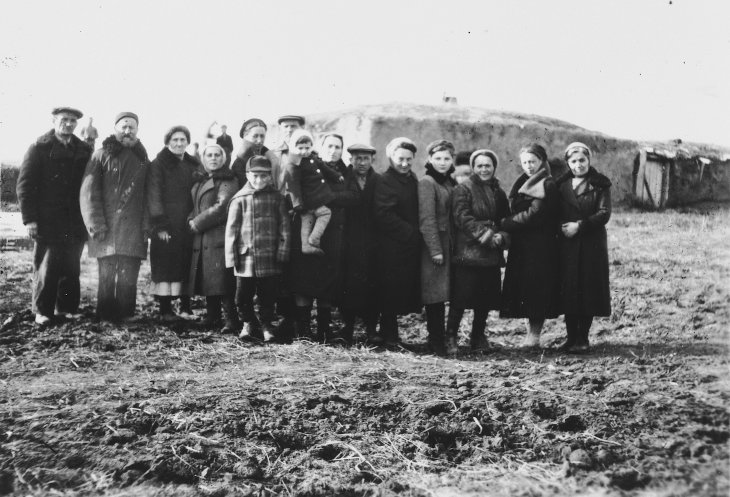
During World War II, the then-Soviet Republic of Kazakhstan became a Central Asian safe haven for hundreds of thousands of people fleeing the Nazi invasion of Eastern Europe.
For the Jews among them, reaching Kazakhstan meant survival at a time when millions of Jews across Europe were being systematically exterminated by the German regime and its collaborators in the Holocaust.
It is estimated that more than 100,000 Jews passed through Kazakhstan over the course of World War II. The evacuations were part of broader Soviet efforts to move civilians out of harm’s way and sustain the wartime economy.
In Kazakhstan, Jews worked in factories, farms, schools, and hospitals. While the direct Nazi threat remained distant, life was not free from the hardships of war, including food, housing, and medicine shortages. Some of the refugees also experienced antisemitic discrimination.
A Family Divided by War
Rosalia London and her son Feliks left the Ukrainian capital of Kyiv as Nazi troops approached in the summer of 1941. Later that year, they arrived in the northern Kazakh city of Kostanay, Kazakhstan, joined by Feliks’s paternal grandmother Anna. Rosalia worked, Feliks attended school, and Anna helped look after him.
Family members who stayed behind in Kyiv faced a grim fate. Rosalia’s parents, Solomon and Sonya Ashkenazi, and her sister Berta were murdered at Babyn Yar in September 1941.
Their story illustrates how escaping to Kazakhstan could mean the difference between life and death, even within the same family.
Starting Again Far From Home
Mark Khazanov found similar refuge in Kazakhstan. In 1941, he fled Dnipropetrovsk, along with his mother Eve and brother Simon. After stops in Novomoskovsk and Makhachkala, they crossed the Caspian Sea on an oil tanker and continued by freight train to the southeastern Kazakh city of Shu. There, Mark went to school until he returned with his family to Dnipropetrovsk following the Soviet liberation of the city from the Nazis.
Commemorating a Forgotten Chapter of History
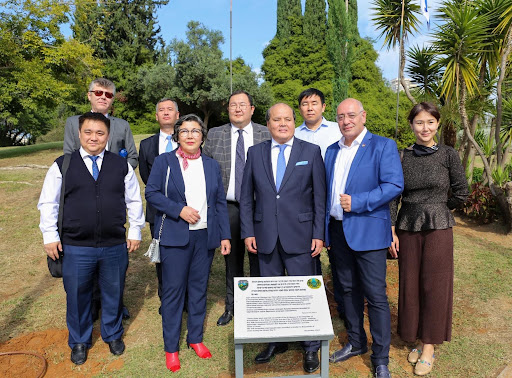
In November 2021, a plaque was unveiled at Memorial Park in Rishon Lezion, Israel, commemorating Kazakhstan’s role in sheltering Jews during World War II.
Kazakhstan’s place in Holocaust history is reflected in the lives and legacies of those who sought refuge there. Remembering their stories preserves for future generations an often-overlooked chapter of the World War II era — one that unfolded far from Europe’s ghettos and death camps, in a place that offered sanctuary amid unimaginable peril and loss.