|
Getting your Trinity Audio player ready...
|
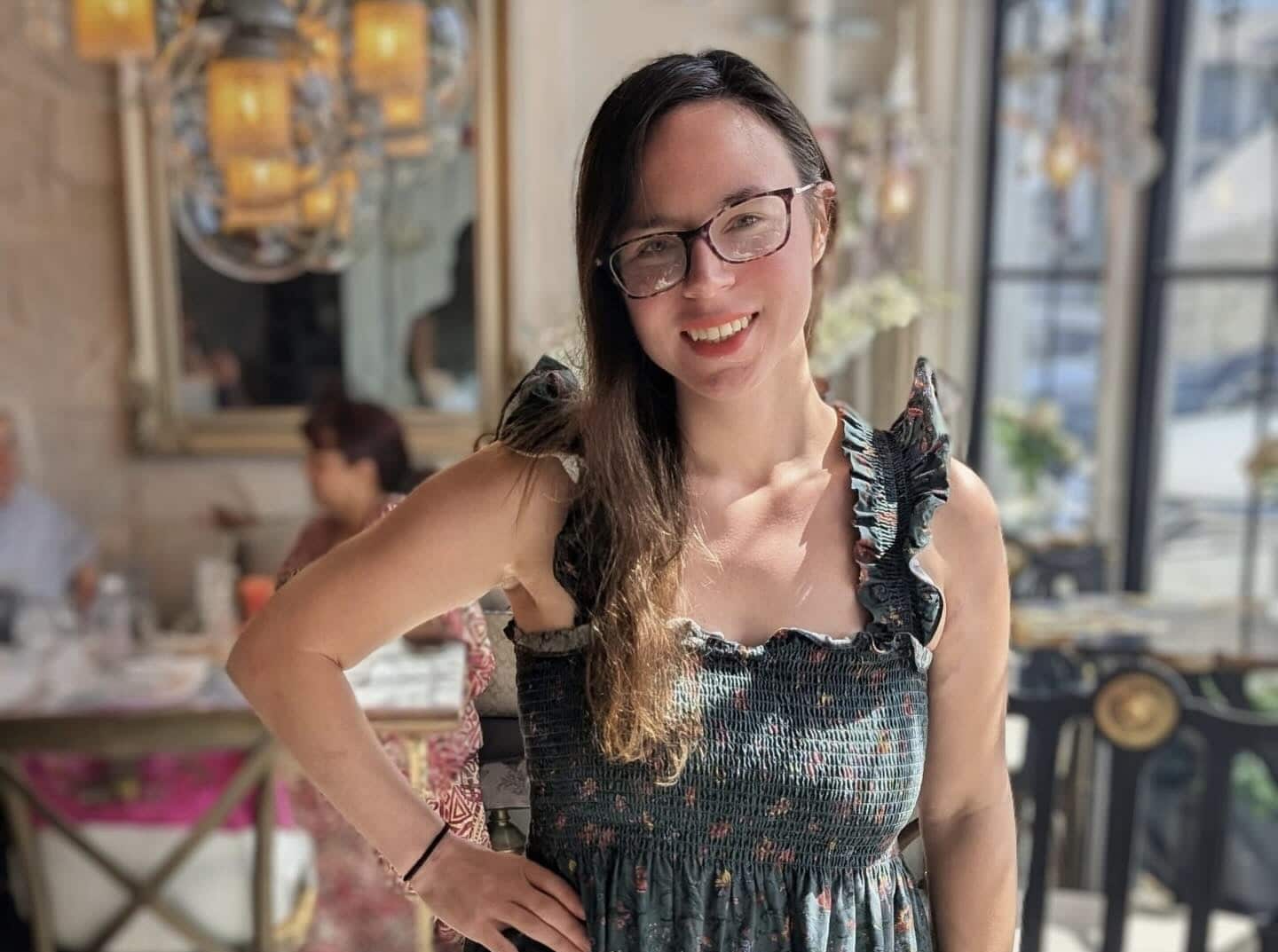
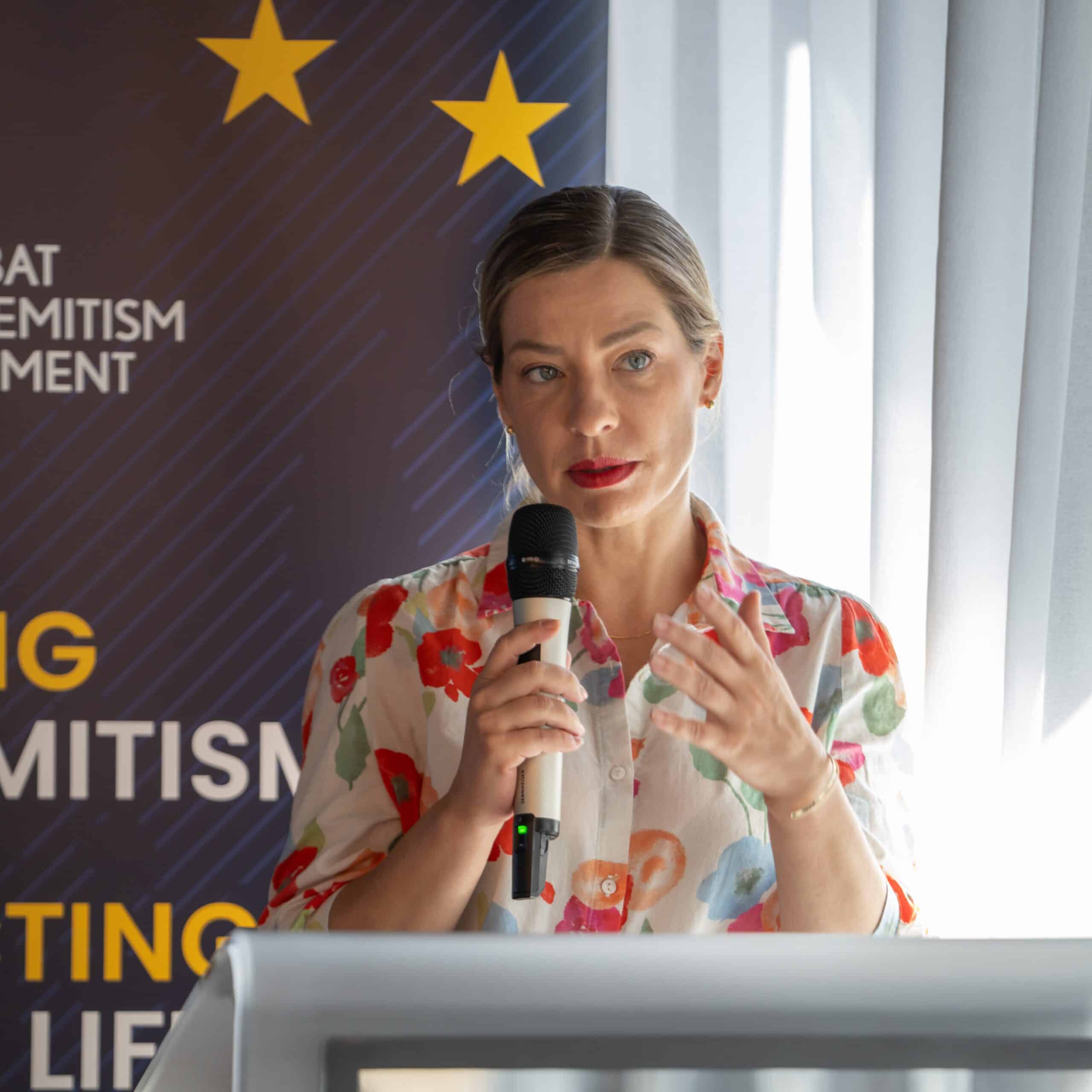
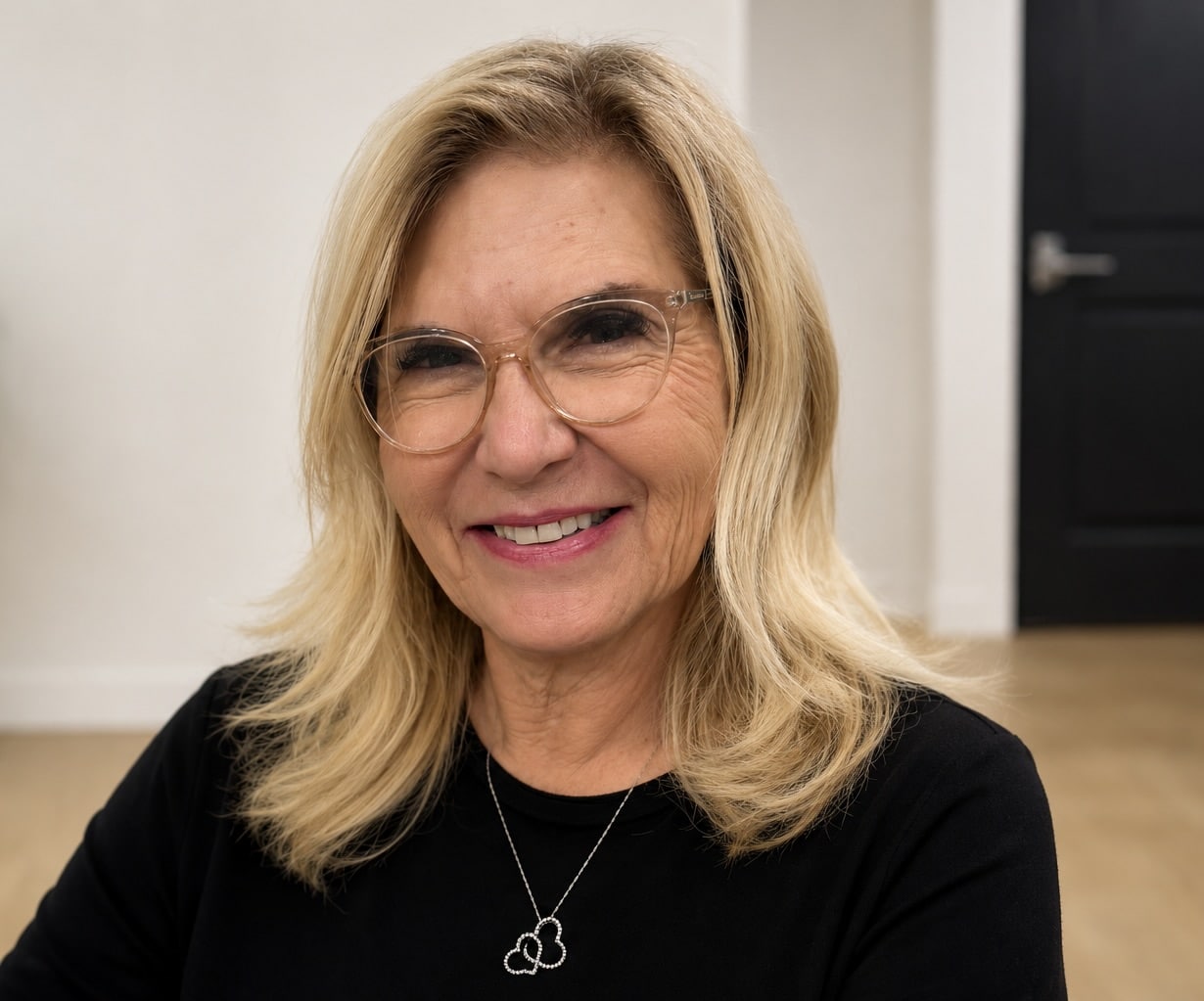
Marjorie Robinow is a psychologist, civic advocate, and pro-Israel activist based in Kansas City. A leading figure in the passage of anti-BDS legislation across multiple states, she has spent the last decade navigating statehouses, building cross-partisan coalitions, and showing up in rooms where Jewish voices are rarely heard.
Robinow will tell you she is nobody. “I always tell people,” she says, “when I’ve been working on some project, or I’ve escorted a senator somewhere, or I’ve been supporting Israeli ambassadors, they ask who I am. And I always say: I’m nobody. The nobodiness is the best part of this. Really, anybody can do this.”
It is, to put it mildly, an understatement. She grew up in Cleveland in a large, close-knit Jewish family. Robinow was the first in her immediate family to go to college and later earned graduate degrees in psychology. When she was asked to help lead the effort to pass anti-BDS legislation in Kansas, she knew almost nothing about the legislative process. Looking back, Robinow says that innocence may have been an advantage. “Fools go where angels fear to tread,” she said. “A touch of innocence gave me strength.”
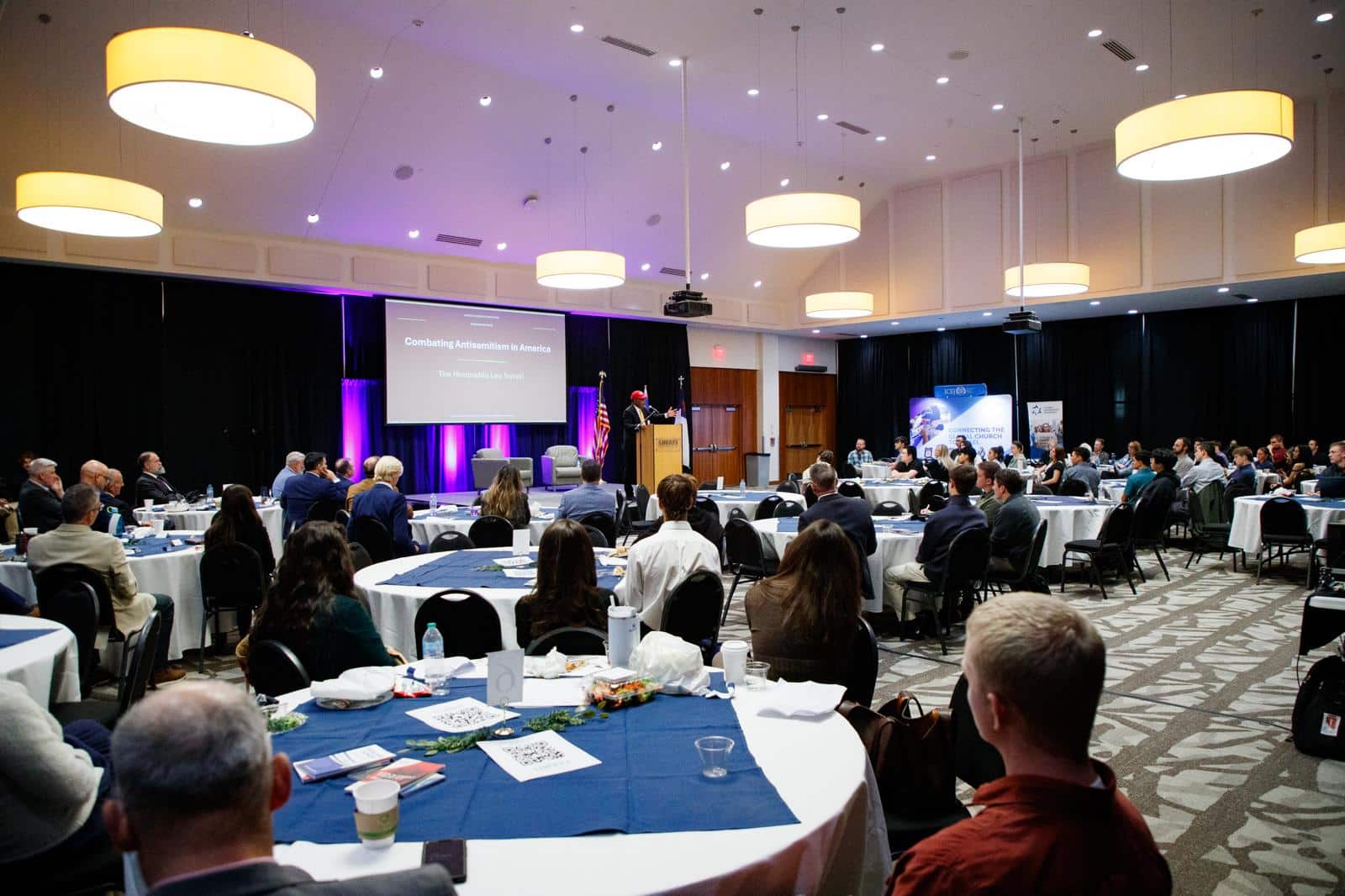
The Combat Antisemitism Movement (CAM) recently spoke with Robinow on the occasion of Jewish American Heritage Month (JAHM) about fighting BDS from the ground up, building pro-Israel coalitions across political and religious lines, and what Jewish leadership must do to secure the next generation.
Before October 7 brought renewed attention to antisemitism and anti-Israel activism, you had already spent years involved in anti-BDS and pro-Israel advocacy. Can you take us back to that period and tell us what you were seeing, and what kinds of efforts were you personally leading or involved in?
“I’m young enough that Israel always existed in my lifetime,” she said. “My generation is really the first generation to always have Israel in our consciousness.” When a governor she knew well approached her and asked her to lead the effort to pass anti-BDS legislation in Kansas, she had no legal background and no political infrastructure behind her. But her connection to Israel and the Jewish people made the decision feel obvious. She said yes.
“I’m a psychologist. I’m not a lawyer. I didn’t know anything about writing a law.” She reached out to organizations working on the issue nationally, obtained legal templates and support, and then went door to door through the state capitol, meeting with legislators from across the political spectrum. “I didn’t care if they were far right or far left,” she said. “I talked to everybody.”
The law she helped pass in Kansas required any company doing significant business with the state to certify that it did not boycott Israel. The bill passed. At the signing ceremony, the governor quoted Genesis, saying those who bless the Jews shall be blessed, and closed with a blessing for Kansas. The effort eventually spread to Missouri, Nebraska, Iowa, Arkansas, Oklahoma, and beyond.
The statehouse work came with a cost. At legislative hearings, Robinow encountered antisemitism directly. “A state representative said to me that there’s all this antisemitism all over the place, and people seem to hate Jews a lot. What is it that Jews do that makes everybody hate them?”
Her response was instinctive and her strategy was deliberate. She drew on personal history. Her father-in-law had been barred from American medical schools in the 1940s because of Jewish quotas and had to train in Switzerland instead. And she addressed the room, not the man who had asked the question. She knew the hostile representative was not her real audience. The legislators around him who had yet to vote were.
“You have to compose yourself,” she said. “Deep breath. You have to focus. All my therapist training totally kicks in. You have to present yourself in a way that the person asking the question doesn’t care what you say. They just said it because they want the effect of saying it. But all those other people who are going to vote for you, you have to respond the right way for them so they continue to stay on your side.”
Much of the national conversation about American Jewish life tends to focus on places like New York, Los Angeles, or Washington. What has it meant to build Jewish leadership, Jewish advocacy, and pro-Israel engagement in a place like Kansas, far from those traditional centers of influence?
“There are a lot of supporters I never dreamed of,” she said. “Non-Jews. I find there’s more tension in the Jewish community than outside.”
Churches invite her to speak. Latino Republican organizations come to Israel Day at the Capitol and stand up to declare their support for the Jewish people’s right to their homeland. These are words, she noted, that many in the Jewish community are reluctant to say themselves. When a Cuban Catholic friend called asking her to join the founding board of the Republican National Hispanic Federation’s Kansas chapter, Robinow laughed and agreed. “There’s just this sense of we are a community,” she said, “as opposed to you’re this and we’re that.”
Kansas City’s Jewish community also carries remarkable stories of survival and renewal. Robinow described seven young women who had been sent to the same displaced persons camp in Italy after the war. “They made a pledge to each other that they were going to all get out of the DP camp and go together to make a new family, help each other,” she said. “They all got married in the camps. Some of them had their first children there.”
They all came to Kansas City, raised their families, and remained intertwined for the rest of their lives. The last of the seven died just weeks before this conversation, at age 97. “It’s an amazing story, from the ashes,” Robinow said. “Beautiful stories.”
Jewish American Heritage Month is about recognizing the ways Jewish Americans have helped shape the civic, cultural, political, and democratic life of this country. Looking at your own experiences over the years, where do you think Jewish American contributions have been especially meaningful, yet still underrecognized?
Education, she said without hesitation. Jewish philanthropists have shaped American academic and medical institutions in ways that go largely unacknowledged. “The gifts I’m seeing now to make medical school free for young people, almost all those gifts are coming from Jewish philanthropists,” she noted. “If you didn’t have somebody to fund you, people are walking around with a lot of debt to start off their lives.” She was equally quick to credit Jewish educators. “I also think the Jewish teachers are incredible,” she said.
Robinow pushed back with dry humor on the antisemitic tropes about Jewish power and influence. “I think people overestimate Jewish influence in the political sphere,” she said. “I always say, if we control the press, why would we get such bad media? And if my group of friends controlled the world, it would look a whole lot different.”
You’ve spent decades involved in Republican politics while also remaining deeply engaged in Jewish communal and pro-Israel advocacy. Looking at American public life today, what changes have most concerned or surprised you over the years?
“I feel like the Democratic Party abandoned me. I didn’t abandon my values,” she said. “If they were still on a pathway closer to John Kennedy’s kind of thing, that’s the Democratic Party I was taught to be connected to.” “The people who stand up for the Jews are the conservatives,” she said. “Everywhere I go — Arizona, Kansas, the Latino communities — that’s what I see.”
Yet for Robinow, politics is ultimately not the central issue. Her concern about the future, she said, is about Jewish leadership itself. “My generation has been failing the younger generation in a lot of ways,” she said. “We’re keeping the power within the people who are, you know, the generation that’s going to die off, and the structure is falling apart.”
She is direct about what needs to change. “Empowering young people — I think we all have to be about that every day. Put a couple of teenagers on your board. Bring the college students in.”
Robinow pointed to BBYO, a global Jewish youth movement, as a model. “They’re giving a lot of power to people who don’t have a lot of experience. But that makes great leaders. You have to make mistakes. You have to change.”
After everything you’ve seen across politics, Jewish advocacy, and American public life over the years, what gives you the greatest hope for the next generation of American Jews?
“We have really smart, creative people,” she said. “My children — diverse, interested, different paths — but every one of them, great hearts, amazing involvements in their own communities.”
The pintele yid, the little flicker of the Jewish soul that her grandparents spoke of, is still there. “Even if they come with a cowboy hat and boots and they’re living on a farm in central Nebraska, they come over and say, I’m a Jew,” she said.
As a psychologist, she sees Jewish resilience through a particular lens. “From the psychology point of view, I believe that fighting depression and staying strong maintains our capacity to fight demagogues within our communities and negative political systems.”
Her mother-in-law, who died last fall at 91, put it more simply. People would ask how she stayed positive after everything life had brought her. “Attitude and gratitude,” she would say. The family is engraving it on the back of her gravestone.
“After all the crazy — and we’re still here,” Robinow said. “It’s always going to be better. It’s gonna come. I’m gonna still pour the glass of wine.”