|
Getting your Trinity Audio player ready...
|
Parents for Peace — which operates a national confidential helpline for families of radicalized loved ones — has launched a dedicated line for anti-Jewish hate after discovering that antisemitism runs through the vast majority of cases it handles.
Parents for Peace is a nonprofit that helps families intervene when a loved one is being radicalized into extremism. Created by family members of radicalized loved ones, the organization is built on a core insight. Parents are almost always the first to notice something is wrong, long before law enforcement, schools, or mental health professionals become involved. Since 2016, its national helpline has guided hundreds of families through the process of helping a loved one disengage from extremism.
Earlier this year, the organization launched the Antisemitism Intervention and Recovery (AIR) helpline, a dedicated line for families dealing with anti-Jewish radicalization.
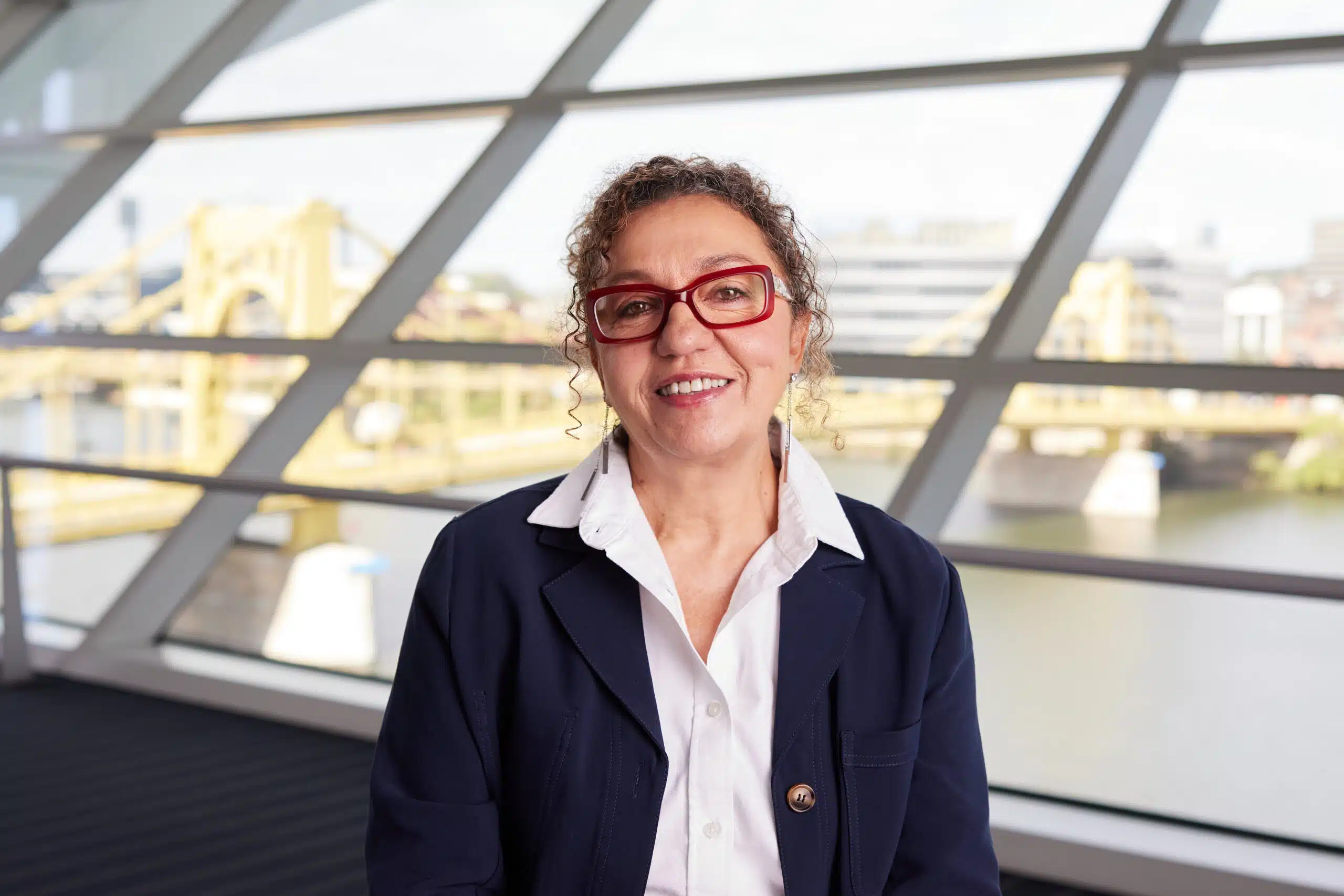
Parents for Peace Executive Director Myrieme Nadri-Churchill is a psychotherapist and a native of Casablanca, Morocco, who has spent over 30 years working at the intersection of trauma, identity, and violence. Recent data from CAM’s Antisemitism Research Center (ARC) illustrates the scope of the problem. In the last week of May alone, the ARC tracked antisemitic incidents across all major ideological sources — with 44.6% categorized as far-left, 43.9% as Islamist-inspired, and 11.5% as far-right.
Nadri-Churchill spoke with CAM about the new program, the post-October 7 surge in radicalization, and why she treats extremism the way clinicians treat addiction.
One of the most striking aspects of the AIR helpline is that families often reach out before a crime has been committed. What does intervention look like at that stage, when someone has not yet crossed a legal line, but the trajectory is clearly dangerous?
“What we realized is that the connective tissue between all hate groups, from Islamist to white supremacy to far left, all of them, is antisemitism. Our statistics from 2025 say 70 percent of our cases are connected with antisemitism, and we don’t think that’s accurate. We are reviewing our data because we believe it’s higher.”
Nadri-Churchill said even professionals are often unaware of this pattern. “We have a whole world that doesn’t know what we know. Doctors, pediatricians, teachers, schools. They don’t know. So we said, this needs its own helpline, its own intake process, its own dedicated team.”
The separate helpline serves two purposes. It allows Parents for Peace to track antisemitism cases with greater precision. And it removes the barrier for families who don’t know how to categorize what is happening to their child. “People that call, they don’t know what’s going on,” she said. “They don’t come to us saying, ‘My kid is a neo-Nazi’ or ‘My kid is a jihadist.’ They just know something is terribly wrong. We wanted to create AIR so that people immediately know there is a place for them.”
After a structured intake, each case is assigned to a two-person team. One is a licensed clinician. The other is a former extremist, sometimes a former antisemite. “At Parents for Peace, we call extremism a drug of choice. It’s almost like dealing with an addict. They don’t think there’s a problem. They don’t go get help until they hit bottom, or there is an intervention from the family. People are not necessarily going to change because of their therapist. They will change because they see the damage it’s doing to their family members.”
But reaching out, she said, requires overcoming profound shame. “One of the mothers who called us said, ‘My best friend is a Holocaust survivor. I am embarrassed and ashamed. I don’t know how to handle this. I’m afraid that my friend will not speak to me anymore.'”
Nadri-Churchill compared the barrier to the early years of the HIV epidemic. “With HIV, nobody would talk about it, and it spread and killed a generation. But by taking a public health approach, people started coming forward. That’s what we’re doing. If people are ashamed and fearful, they’re going to hide.”
What led you to this work personally?
“My father is a Black Muslim and my mother is a white Christian. I was born biracial in the 1970s in Casablanca. Kids in the streets would say, ‘If you are half Muslim and half Christian, that makes you a Jew, and you’re going to burn in hell.’ People threw rocks at me.”
That experience, she said, set the course of her career. “I think I became a therapist because of that. I was a target of hate and suffered from antisemitism. I’m not even Jewish. But it led me to become obsessed with the problem of violence, where it comes from, why people get scapegoated for who they are. And why are the Jews always the target?”
Growing up in Morocco also shaped how she sees one of the most common claims in today’s anti-Jewish rhetoric. “In Morocco, the Jewish population looks like me. Dark skin, curly hair. When I came to America and met a white Jewish American in college, I said, ‘Are you sure?’ I had no idea there were Jews who were white. So when I started seeing college students after October 7 calling Jews ‘white supremacists,’ I thought, how is this level of ignorance possible? Take it from someone from Africa.”
Since October 7th, have you seen noticeable changes in the kinds of antisemitism or radicalization patterns families are reporting, and what role do social media and algorithms play?
“Before, we had very clear labels. Islamist, neo-Nazi, far left, far right. But now we have just anti-Jewish. You didn’t see that in isolation before. After October 7th, it’s really privileged college students with privileged families going into this very shortcut rhetoric of oppressed versus oppressor, not understanding the broader complexity.”
One pattern that alarmed Nadri-Churchill was the growing number of people who arrived at anti-Jewish hatred through movements that viewed themselves as advancing social justice. “People who say they are for social justice because they support the gay community and African Americans and this and that. But then they scapegoat another population. They use the language of human rights against Jews. That really got our attention.”
She described students who told her that condemning the murders and rapes of October 7th would get them expelled from their friend groups. Much of this radicalization, she said, is amplified by algorithmic echo chambers. “What we are seeing with Gen Z is that the enhanced social media use creates a rich subculture and algorithmic echo chamber. They start thinking everybody agrees with them. That what they’re doing is for justice. They start thinking of themselves as heroes, because they are young and their brains still work in black and white.”
Nadri-Churchill pointed to Calla Walsh, a young activist from Cambridge, Massachusetts, profiled in The New York Times and involved in Massachusetts Senator Ed Markey’s campaign, as an example. According to Nadri-Churchill, Walsh was groomed into the far left and is now in Lebanon, producing anti-American and anti-Jewish rhetoric.
“This isn’t someone from ISIS or the Ku Klux Klan. This is a college kid from a loving family.”
The public conversation often focuses on law enforcement after violence occurs. Do you think society invests enough in prevention and early intervention models like the AIR helpline before someone becomes dangerous?
“I met with a group of members of Congress and told them we should create policy for a massive investment in prevention. We are a small organization. We’ve been knocking on the doors of schools saying, ‘You need us, we need to train educators.’ It’s been very slow because we don’t have the funding.”
Her long-term vision, she said, goes beyond the helpline entirely. “The helpline is reactive. My vision is that we don’t need a helpline anymore. My wish is that we become trainers. Imagine, instead of us helping one person at a time, we train a whole school to spot the early signs of concern. Imagine the ripple effect.”
Nadri-Churchill argued that Parents for Peace, as a non-Jewish organization, is uniquely positioned to make this case. “The hatred of Jews doesn’t only hurt the Jewish population. It hurts everyone. When family members call us, their lives have been ruined because of antisemitism, even though they’re not Jewish. I want this treated as a public health crisis.”
Despite the darkness you encounter in this work, what gives you hope that people can disengage from extremism and rebuild their lives?
“We have helped people who were radical antisemites, literally wearing Hitler outfits, and they have not only changed but went to college, got married, and are still in touch with us. It’s a long journey and hard work, but people come back from it.”
She compared the long-term trajectory to recovery from addiction. “Just like addiction, people are clean until they’re not. There are relapses. But most of them move forward. My favorite thing is when a family member sends me a text saying, ‘My son is engaged, and he and his fiancée got a puppy.’ It’s miraculous, quite frankly.”
Her message to policymakers was direct. “Please, fund us. Help us. Create policy. We know the problem. We have the solution. For 10 years, it has worked. This is not like the early days of HIV, when we didn’t have a cure and didn’t know how to prevent it. In this situation, we know the answer. So why not support the people who have the secret sauce?”
Asked what keeps her up at night, she didn’t hesitate. “What keeps me up at night is the fear of Parents for Peace losing funding and not being able to exist. Many people tell us we’re the hope. And if we’re not around, that’s terrifying.”
The Parents for Peace general helpline can be reached at 844-49-PEACE (844-497-3223) or by email at help@parents4peace.org. The helpline operates Monday through Friday, 9:00 a.m. to 5:00 p.m. Eastern. The Antisemitism Intervention and Recovery (AIR) helpline can be reached at 912-214-4AIR (912-214-4247) or by email at air@parents4peace.org, Monday through Friday, 10:00 a.m. to 2:00 p.m. Mountain. For more information, visit: parents4peace.org/air. In case of emergency, contact 911 or 988.