|
Getting your Trinity Audio player ready...
|
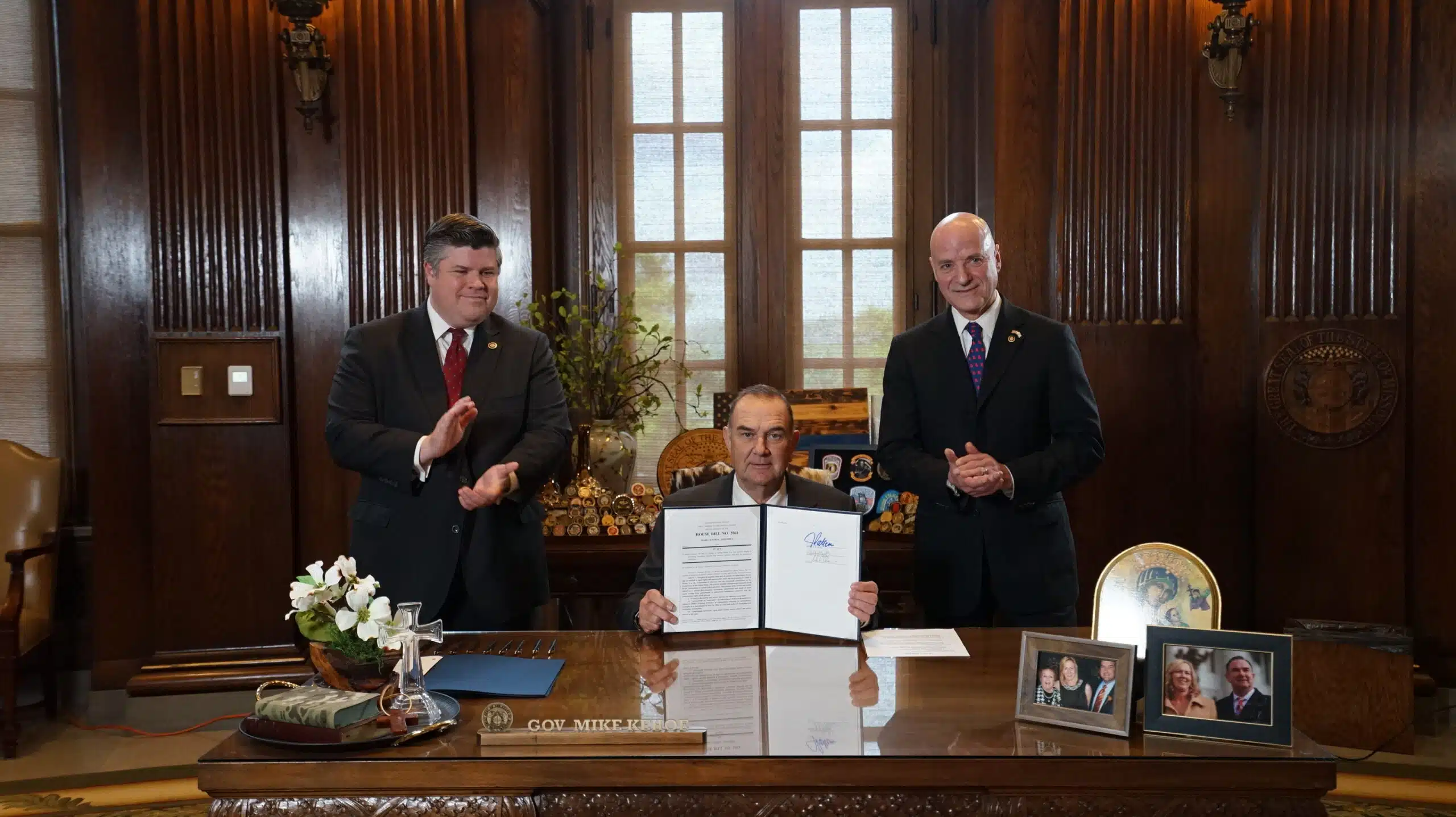
In April, Missouri Governor Mike Kehoe signed HB 2061, landmark legislation aimed at combating antisemitic discrimination in the state’s public K-12 schools and institutions of higher education.
The law defines antisemitism using the International Holocaust Remembrance Alliance (IHRA) Working Definition of Antisemitism, including its illustrative examples, making Missouri the 18th U.S. state to codify this vital framework for identifying and countering antisemitism in its many contemporary forms.
Missouri public schools and universities must now incorporate IHRA’s definition into their student, faculty, and employee codes of conduct and use it when evaluating complaints involving alleged antisemitic discrimination. HB 2061 also strengthens enforcement of Title VI of the federal Civil Rights Act by requiring Missouri education authorities to designate
coordinators responsible for monitoring, reporting, and investigating complaints of antisemitic discrimination.
These protections are intended to ensure that Jewish students as well as faculty and staff receive the same safeguards already afforded to individuals facing discrimination based on race, religion, or national origin.
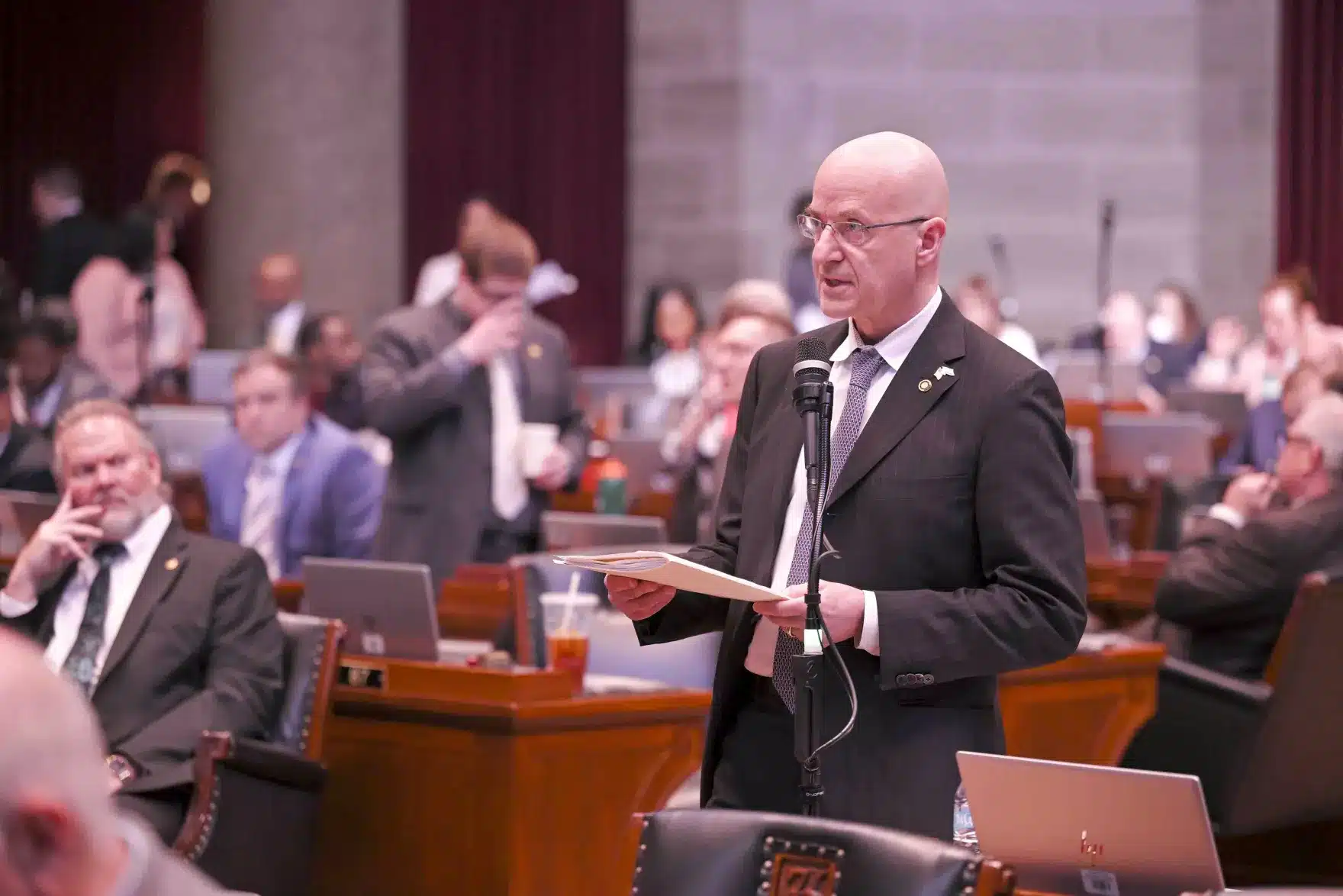
Recently, CAM spoke with the bill’s primary sponsor, Missouri State Representative George Hruza, a Republican from House District 89 in central St. Louis County, about its passage and the state-level fight against antisemitism.
According to the IHRA definition, “Antisemitism is a certain perception of Jews, which may be expressed as hatred toward Jews. Rhetorical and physical manifestations of antisemitism are directed toward Jewish or non-Jewish individuals and/or their property, toward Jewish community institutions and religious facilities.” It doesn’t infringe on free speech, but critics of your legislation were still concerned about free speech rights.
The bill makes it clear that there are no prohibitions on free speech. There’s no issue if you use what IHRA defines as antisemitic, if you’re just exercising your free speech rights — “Globalize the Intifada,” or “From the river to the sea,” or whatever. It doesn’t curtail free speech. What the bill addresses is if someone is using antisemitic speech to directly harm, intimidate or harass students, faculty or staff. For instance, if someone is Jewish and is stopped from entering a library because they’re told they’re “murdering Palestinian children,” or using some other antisemitic trope, those are actions the bill is designed to address.
What does the bill do to combat antisemitic incidents?
The incident is reported to the school, which then investigates it and assesses if it was harassment or intimidation. If it is, the school must take disciplinary action according to their rules on antisemitic behavior. If the student feels that the school has not handled it appropriately, they would file a complaint with the state Title VI coordinator, who would give the school 30 days to explain what they did. Did they follow the rules? Are their rules non-discriminatory? If the coordinator determines that it wasn’t handled appropriately, the complaint goes to the federal level as a potential Title VI violation. And if the federal government determines that there’s a Title VI violation, that puts the school’s federal dollars at risk.
And there’s a second mechanism. A report is filed with the state legislature, which lists it on a public website. The purpose is to shame the schools at fault. Educational institutions don’t want a reputation for antisemitic incidents on their campuses. Parents, for instance, don’t want to send their kids to schools that are disorderly and cruel and incapable of curtailing antisemitic incidents.
What inspired you to sponsor the bill?
October 7th. Even while Hamas was still murdering Israelis, there were demonstrations against Jews in the U.S. and Israel. That was so crazy. I never really experienced antisemitism myself. Until I saw what was going on after October 7th.
Were there antisemitic protests at Missouri schools after October 7th?
They did try to have an encampment at Washington University, but the school shut it down right away. They arrested the organizers, who were not students, for trespassing. Washington University did so well handling it that now they’ve gotten Jewish students transferring in from other schools. Saint Louis University didn’t do as well as Washington University but they didn’t really have a lot of dramatic stuff going on. The University of Missouri had some issues, but they have also made great progress because their chancellor has refocused the school on education and done away with a lot of the progressive stuff that went on there. As for K-12, there were students subjected to antisemitic bullying, and their parents ultimately moved them to a Jewish school to feel safe.
What’s the size of the Jewish community in Missouri?
There are about 40,000 to 45,000 Jews in St. Louis, which is the largest population of Jews of the state. Kansas City has about half as many. In the rest of the state, there are not many Jews, maybe a few in Columbia, where the University of Missouri is located.
Were you raised in Missouri?
My mother was a Hungarian Jew and grew up in Slovakia. When Hitler took over, both of her parents and all four grandparents were deported from Slovakia to Auschwitz. One of her grandfathers died in the cattle car on the way to Auschwitz and the other five were murdered in Auschwitz. She and a brother were the only two members of the family that survived.
She was deported from Hungary where she was studying on a death march to Austria. As she was walking up to Eisenerz Pass with all the other prisoners, the mud started turning red. And then she heard people shouting, run, run, and as they were running, there was the local Austrian militia, which had set up a shooting gallery along the sides of the road. People were falling all around her. She said she kept thinking that as long as you can breathe, you’re alive. She was just counting her breaths. She kept going, and she survived.
She was liberated on May 4, 1945, by Patton’s 71st Infantry. She weighed 67 pounds and had typhus. She would not have survived without the Americans nursing her back to health. She went to Czechoslovakia, where she met my father in medical school. He wasn’t Jewish but he did fight in the Prague uprising against the Nazis toward the end of the war.
They both became doctors and then in 1966, we escaped through Yugoslavia to Sweden. And then New York. I lived in Astoria, Queens, and went to Stuyvesant High School. I went to NYU undergrad and then NYU medical school, Harvard for a laser surgery fellowship and then Mohs surgery fellowship in Wisconsin and then came to St. Louis. I’ve been in St. Louis ever since, for 38 years.
Why did you run for public office?
I initially ran in 2022 for the State Senate and won the primary but lost the general election. And then I ran 2024 and won a seat in the State House of Representatives. I ran because I’d been doing healthcare advocacy for more than twenty years. I’ve seen tens of thousands of patients over my career and I felt that if I can be at the other side of the table, I would be able to impact all 6.2 million residents of Missouri in a positive way. The other reason I ran is because I felt that our country is going down the socialist path, which my family escaped from.
What advice can you give to other state and local legislators who want to codify the IHRA definition into law to fight rising antisemitism in their states and districts?
You must get allies. I was just a freshman legislator, so I had to get allies who were willing and able to help. I was naïve because in my first year I thought, well, this is so obviously right, what’s not to like? We’re trying to keep Jewish students safe at school, because after October 7th, they don’t feel that way. But I didn’t get it through in that first year.
You have to work with other people. Senator Curtis Trent sponsored the bill in the Senate.
You’ve got to get others on board to back it, and you’ve got to do that well ahead of time and then make it easy for them to get it through. Make sure to listen to their suggestions and modify the bill as long as the changes do not change the key components of the bill. And you have to get allies from the Jewish community, too. And you have to get leadership to buy in. Do your homework, be prepared for all the arguments the opposition may throw in the way and how to handle them. If the governor very openly supports it, that gives you a huge advantage. That will almost automatically have others fall in place because they want to be on the same side as the governor.
Most importantly, you need to be a champion who believes that this is important and this is the right and important thing to do.
Read more:
Landmark Antisemitism Bill Signed Into Law by Missouri Governor Mike Kehoe
CAM Educates State Lawmakers on Urgent Need for Action Against Antisemitism in Public Schools