|
Getting your Trinity Audio player ready...
|
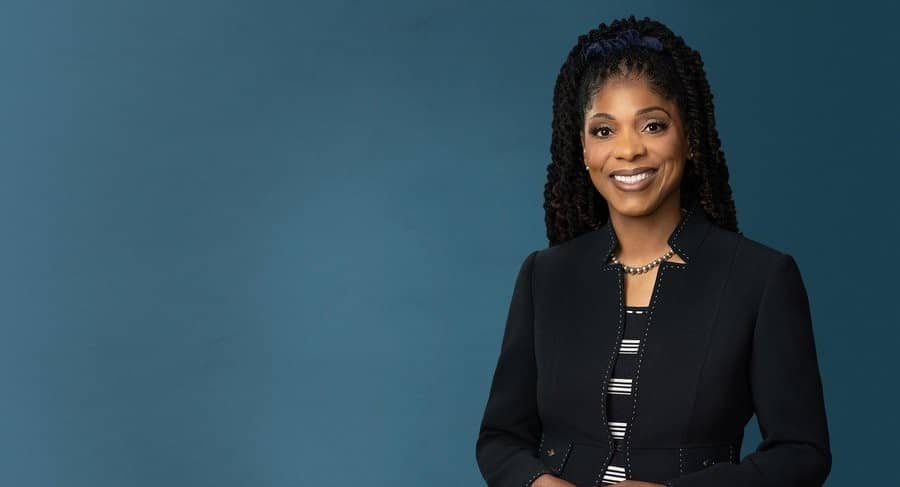
Before founding Chase Your Dreams Academy, Sonia Chase spent a decade playing professional basketball.
She became the first woman drafted directly from the University of Maryland into the WNBA and played for the Charlotte Sting. She also competed professionally in Greece, Turkey, and China, earned All-Star honors in the National Women’s Basketball League, and won a gold medal at the U.S. Olympic Festival.
In August, the Combat Antisemitism Movement (CAM) partnered with Chase Your Dreams Academy on a week-long, Nike-sponsored pilot basketball camp in Baltimore, organized in collaboration with the Jewish Community Center of Greater Baltimore and the Elijah Cummings Youth Program, a Baltimore-based leadership fellowship that strengthens Black-Jewish ties.
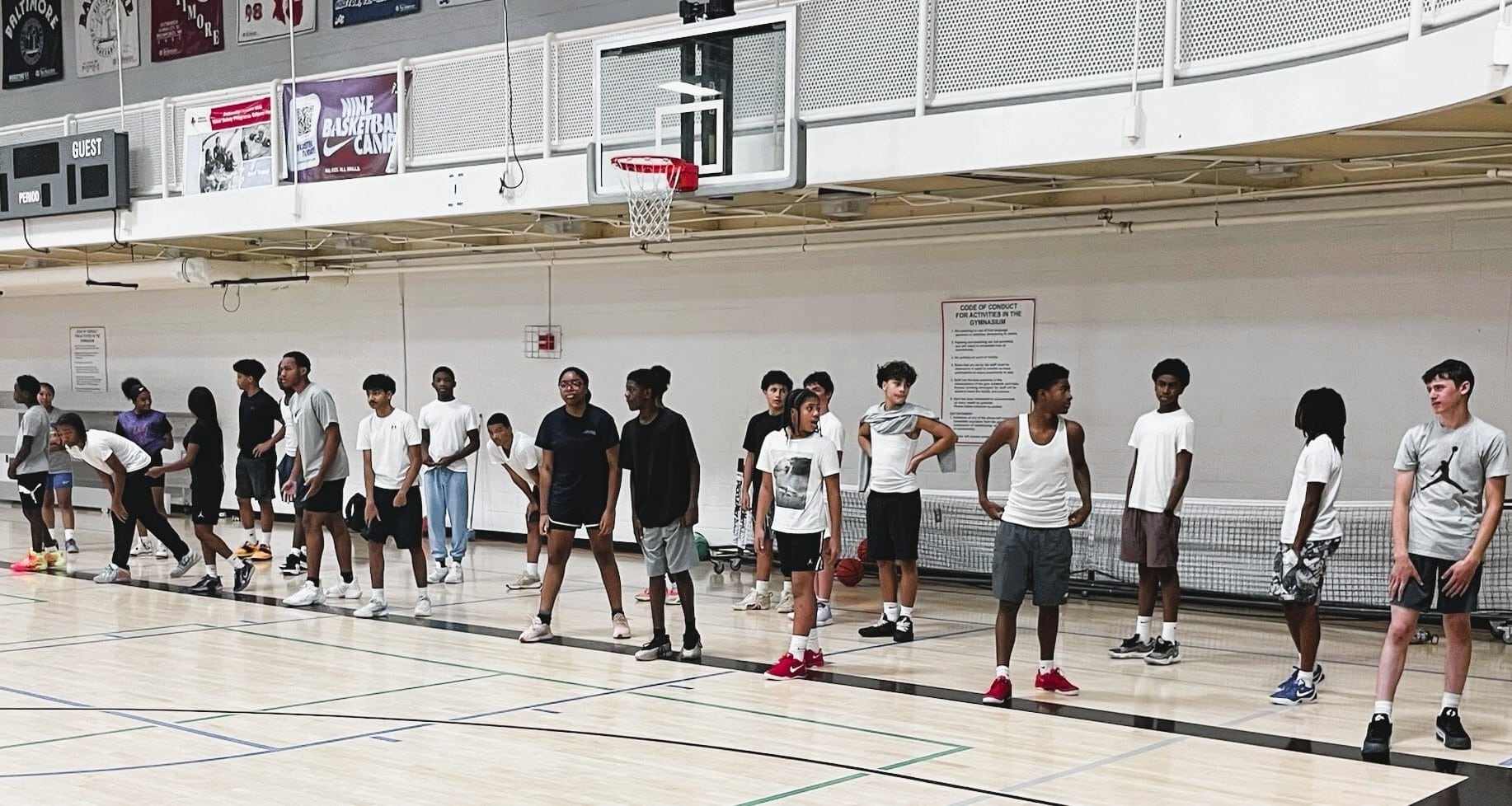
The camp brought together about 55 children ages 8 to 17, largely from the local Black and Jewish communities. It combined basketball instruction with leadership programming and workshops on tolerance, peacebuilding, conflict resolution, and antisemitism awareness. CAM provided pilot funding, direct program assistance, and marketing support.
What led you from professional basketball to using the sport to bring young people and communities together?
“Competition for me started at a very young age. My dad introduced me to basketball when I was seven. Growing up in Baltimore City, where challenges and obstacles were right in my face, basketball allowed me to stay focused on academics, get good grades, and go to practices. It allowed me to climb that ladder from middle school to high school to college,” Chase said.
“It allowed me to earn a four-year scholarship to play Division I basketball at the University of Maryland, and it eventually took me around the world.”
“What I found throughout my career — from Baltimore City to the University of Maryland, then overseas and in the WNBA — is that sport is universal. It brings communities together. It is a bridge builder. If you use your platform the right way, it can create an opportunity for discussion.”
Sonia Chase college and professional career highlight videos:
How did your own childhood shape your decision to found Chase Your Dreams Academy, and what did you want it to provide beyond basketball?
“As a little girl, I was bullied a lot. Because I was so talented at basketball, many of the boys in the neighborhood were not supportive. My parents could not afford to put me into camp, so my camp was outside — riding my bike, trying to get onto the basketball court, and then being bullied off because I was a little girl,” Chase said.
“The only camp I attended was at the University of Maryland, and someone in the community sponsored me.”
“When I started with Nike, I saw children from affluent families who could afford $500 for the week. But a whole population was missing: low-income and at-risk children from communities like mine. I would not have been able to attend a Nike camp when I was younger because my mother did not have the funding. I asked myself, ‘What can I do for that population?’ That is where Chase Your Dreams Academy was born.”
“We offer the same basketball programming as our for-profit camps, but we also provide food and clothing. Sometimes our meal at camp is the only meal a child gets. Funding, donations, grants, and investments are important because I take that funding and put it right into the community.”
What inspired your commitment to building bridges between the Black and Jewish communities?
“My mother used to clean houses and care for the Meyerhoff family’s children,” Chase said, referring to a prominent Jewish family in Baltimore.
“I would go with my mother when she cleaned their house or babysat their children, when I was eight, nine, or ten years old. Lenel and John Meyerhoff knew that I had a talent for basketball. They told my mother about McDonogh,” Chase added, referring to McDonogh School, a private college-preparatory school outside Baltimore.
“My mother said, ‘Lenel, we can’t afford that.’ Lenel said, ‘You need to look at McDonogh because Sonia has a talent for basketball, and academics are going to be very important to her.'”
“Lenel and John helped my parents get me into McDonogh. Who knows what would have happened if I had not gone there? From McDonogh, I went to the University of Maryland and then was drafted into the WNBA. It was because of them that I was exposed to those opportunities.”
“Now I can pick up the phone and call a university and say, ‘I have a child in my camp you should recruit.’ I can do the same thing that Lenel and John Meyerhoff did for my mother.”
How do the camp’s workshops teach interfaith understanding, conflict resolution, and antisemitism awareness in practice?
“For me, it points directly to our core values. We call them RITES: respect, integrity, teamwork, excellence, and service,” Chase said. “Through the workshops, we teach the values of belonging, peacebuilding, and relationship-building.”
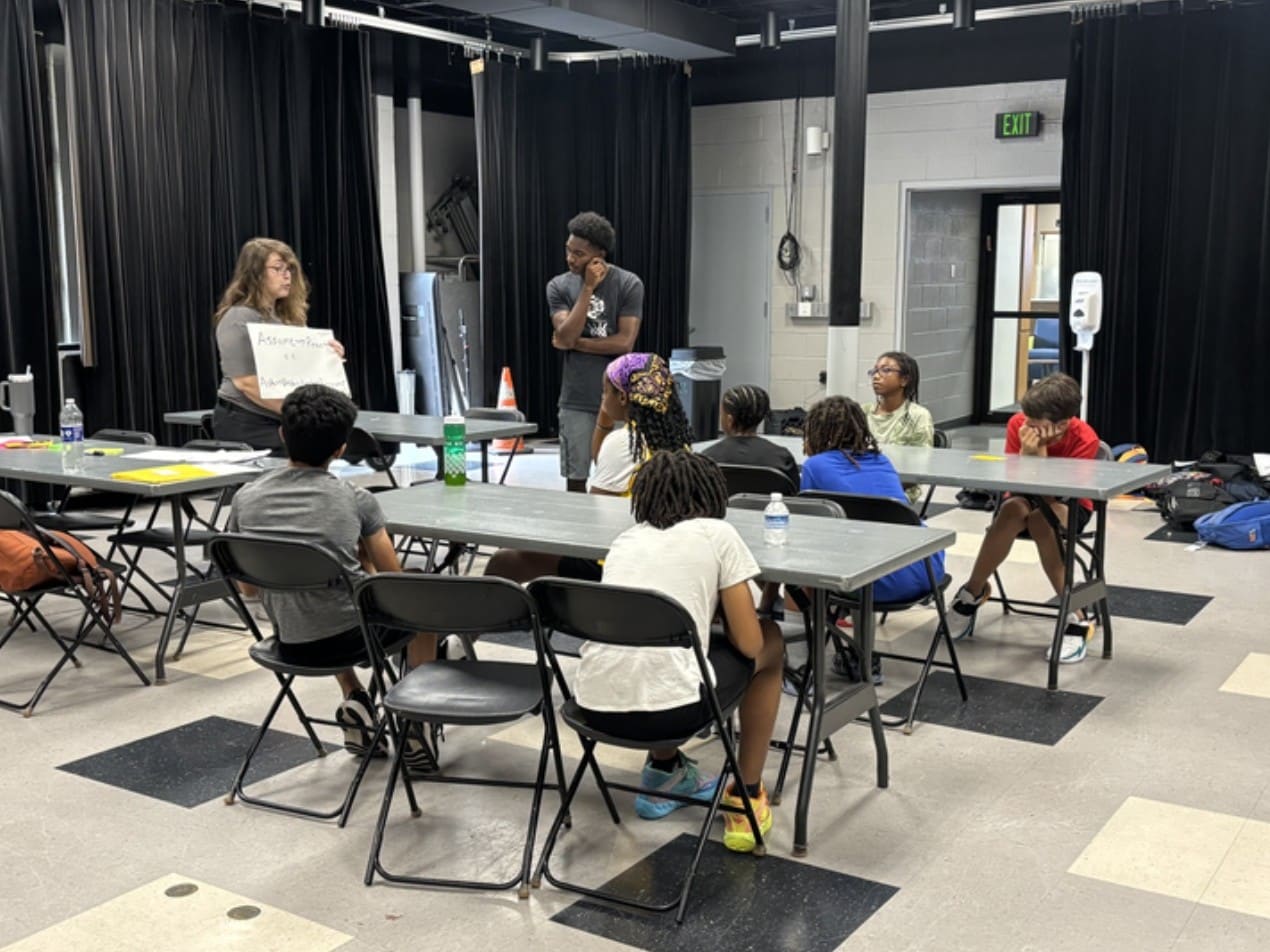
“We partnered with the Elijah Cummings Youth Program. We divided the campers into three groups — ages eight to ten, eleven to thirteen, and fourteen to seventeen — and created lessons for each age group.”
“For the youngest group, the goal was to introduce students to interfaith values through belonging and identity. We helped them identify something special about themselves — their strengths, interests, families, religion, or culture — and define what belonging means. Belonging can mean different things to different students. Once we understand that, we can identify our commonalities and differences and open the discussion.”
“Children may see things on television and social media that lead them to think Jewish people are not good people. That is not true. They are learning that what they see in the media does not represent everyone’s views and that we live in a diverse world.”
Can you recall a moment when basketball changed how children from different backgrounds saw one another?
“On the first day of camp, the children were separated and not really communicating with one another. Some were Jewish, some were Christian, some were Muslim, and some were Hindu. They were very much staying in their own groups,” Chase said.
“By Wednesday, they were high-fiving one another, talking, and sitting together at lunch.”
“Some children played on a Jewish Maccabi basketball team, while others came from predominantly Black inner-city teams. They realized that basketball is taught the same way. Everyone was learning how to bounce the ball, shoot, dribble, and be a teammate.”
What will it take to expand this pilot and bring the model to communities across the country?
“We know this model works. Expanding it will require more manpower, more resources, and more training. My staff has had training in conflict resolution, but conflict resolution is only the first step,” Chase said.
“When we go into predominantly Black communities, conflict resolution often takes place among peers — people who look like one another. But what about resolving conflict with people who do not resemble you or share your background? That is a different type of conflict resolution.”
“Partnering with CAM to bring programs like this to communities across the country is what is needed now.”
If these campers encounter antisemitism or racism after they leave, how do you hope this experience will shape their response?
“It comes down to fundamentals. On the basketball court, we teach dribbling, passing, shooting, jump stops, and layups. Through the interfaith and bridge-building workshops, we teach fundamentals too,” Chase said.
“When campers encounter racism or antisemitism, they can return to the RITES values they learned at camp. They can understand that someone may be acting that way because they have not had the same exposure or training. They learn forgiveness, how to get along, and how to resolve conflict.”
“They respond with the fundamentals they learned at camp. They can take a second and say, ‘I understand how to combat this, and I have the tools in my pocket to use when I need them.'”
What advice would you give the next generation of athletes about finding the courage to speak out against antisemitism and racism, even when doing so may be difficult or unpopular?
“It really goes back to leadership. Leadership does not always mean standing with the masses. Sometimes leaders have to stand alone. Using your platform to stand up against racism, antisemitism, and violence in all forms — that is being a leader,” Chase said.
“I am someone who likes to do things in the background. But I realize that, with the platform I have, I have to use it. Children come to my camp, look to Coach Chase, and ask, ‘What would Coach Chase do?'”
“I hope they think of Coach Chase not simply as a WNBA player, but as someone who was willing to stand alone and stand up for something. My relationship with the Jewish community began years ago, when I was a child. They extended their hand to my family. Now it is my job as a leader to stand up in defense of the Jewish community and use my platform to combat antisemitism. That is what I am doing.”
Read more:
Black and Jewish Youth Build Bridges Through Basketball, On the Court and Beyond