|
Getting your Trinity Audio player ready...
|
The following analysis was authored by Tablet Magazine columnist and CAM editorial advisor Lee Smith:
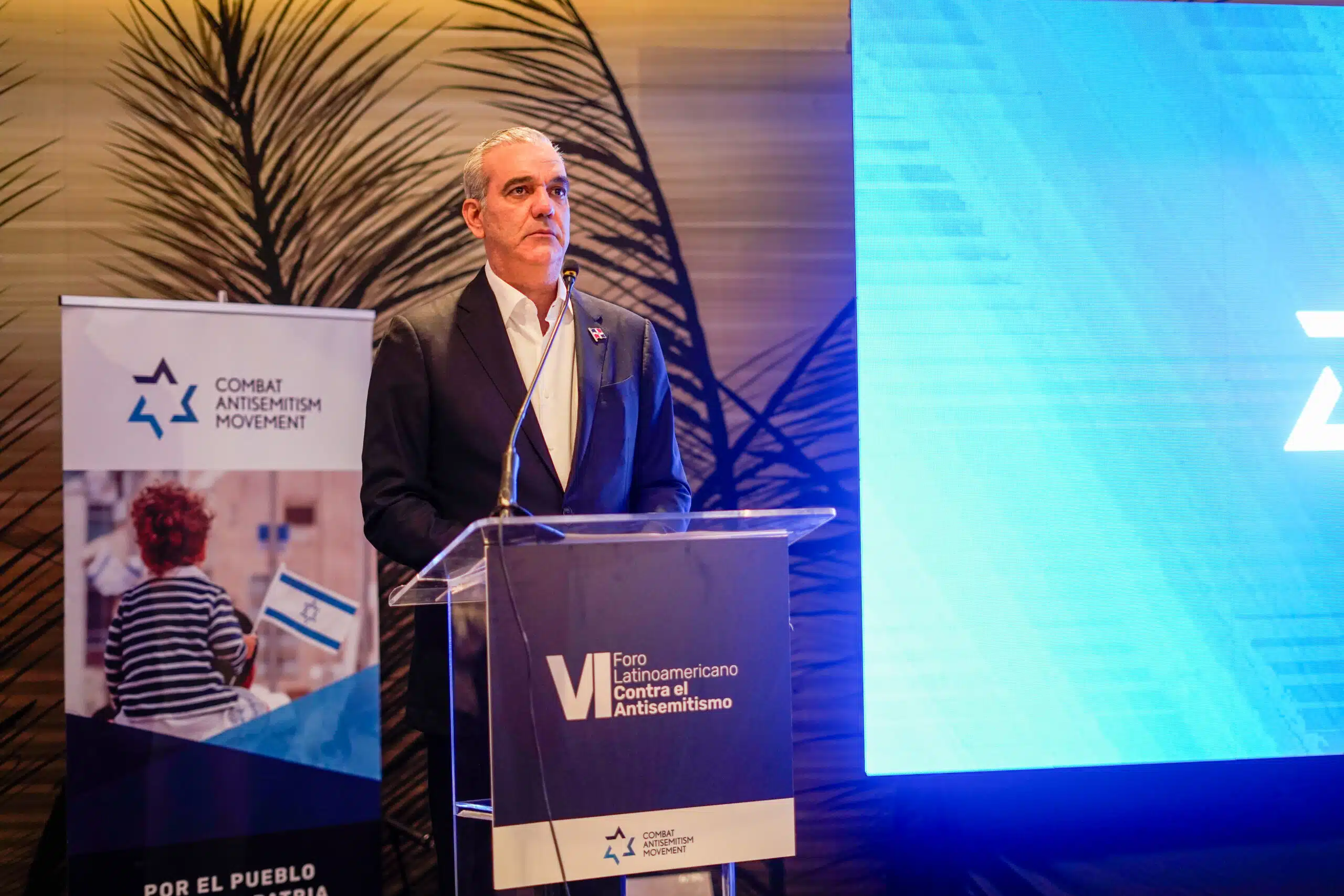
During the sixth-annual Latin American Forum Against Antisemitism held in Santo Domingo this week, President Luis Abinader announced the Dominican Republic’s formal adoption of the International Holocaust Remembrance Alliance (IHRA) Working Definition of Antisemitism. This makes the Dominican Republic the seventh Latin American nation to embrace the IHRA framework, joining Argentina, Colombia, Costa Rica, Guatemala, Panama, and Uruguay.
At the same time that Latin American governments are deploying resources to combat antisemitism, many of them are also drawing closer to Israel. And Jerusalem sees it as a good opportunity to rebalance its geostrategic relationships.
In the aftermath of October 7th, Israel has become increasingly isolated and unpopular across Europe, Canada, Australia, much of Asia, and parts of Africa. Even in the United States, while the strategic alliance remains strong, public opinion has moved sharply against Israel. Latin America’s embrace of the Jewish state cuts against the broader trend.
Credit certainly goes to Israel and especially Foreign Minister Gideon Sa’ar, who designated 2026 as a year of special focus on Latin America. But what’s really driving this realignment are the political dynamics of the region. Since October 7th, Latin American voters tossed out left-wing governments accustomed to heaping scorn on Israel and punishing it in diplomatic arenas. Electorates throughout the region opted instead for center-right parties that oppose socialism and promote personal freedom, free markets, and the West’s Judeo-Christian foundations.
That’s been good for Israel and bad for its enemies, especially the Islamic Republic of Iran, which thanks to its Lebanese proxy Hezbollah has built strongholds throughout Latin America. And now Latin American leaders see Israel as an ally in a conflict that threatens their national security.
Argentina and Paraguay are worried about the Tri-Border Area, where money laundering, smuggling, and Hezbollah financing is a threat to stability. Panamanian President José Raúl Mulino, who replaced a leftist in 2024, wants an expanded relationship with Israel because of the threats Iran and Hezbollah pose to international shipping, which affects revenue drawn from the Panama Canal.
Of course, the region’s pro-Iran architecture suffered a major blow when the Donald Trump administration removed Nicolas Maduro from power in Venezuela in January. Under Maduro and before him Hugo Chávez, Venezuela became Iran’s closest strategic partner in Latin America. For years, Venezuelan officials facilitated networks connected to Iran and Hezbollah involving sanctions evasion, money laundering, narcotics trafficking, travel documents, and financial transactions.
The remaining members of Latin America’s communist bloc, Nicaragua and Cuba, are still hostile to Israel. Brazil and Mexico, the two largest countries under left-wing governments, are volubly critical of Israel but nonetheless maintain normal trade relations.
Other citadels of far-left politics have been utterly transformed. Under center-right governments, Bolivia and Chile have restored their ambassadors to Israel with an eye to reinvigorating relations. Peru’s new government also wants closer cooperation with Israel, particularly in fighting transnational crime, including cocaine trafficking.
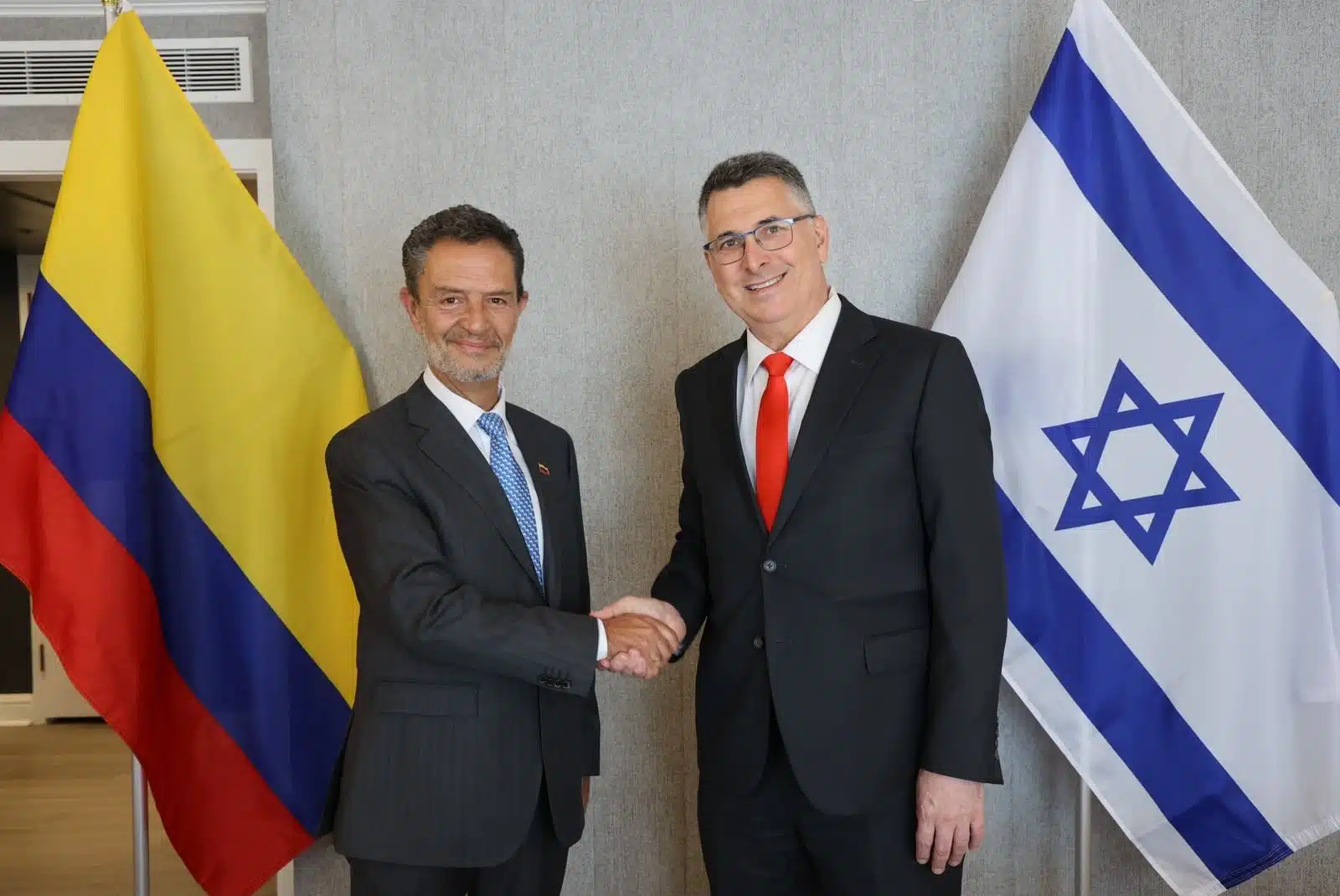
Colombia;s metamorphosis is the most dramatic. Under former President Gustavo Petro, Bogota severed diplomatic relations with Israel in May 2024. But since President Abelardo de la Espriella took office earlier this month, his government has not only restored full diplomatic relations but has formally decided to move Colombia’s embassy to Jerusalem, joining other Latin American states — Guatemala, Honduras, and Paraguay — that previously did so. Further, Colombia became the second country in the world after the United States to recognize Israeli sovereignty over the Golan Heights.
The most interesting diplomatic development is due not to Latin American electorates, but a natural disaster — the twin earthquakes in June and July that killed more than 6,000 people in Venezuela. There were no diplomatic relations between the two countries when Israel detailed a large technical and humanitarian mission to rescue trapped survivors, attend to the injured, and ensure that remaining buildings were safe. And then in August, Israel and Venezuela announced that they were restoring consular relations after 17 years, and continuing bilateral technical cooperation. Full diplomatic relations have not yet been restored, but it’s a remarkable reversal.
But the anchor of Latin America’s realignment with Israel is Argentina, also governed by the left until Javier Milei’s 2023 election. There is no world leader outside of Israel more proud of his love for Israel, the Jewish people, and Judaism, than Milei. It’s hardly surprising then that he’s made Israel a centerpiece of his foreign policy. This past April, he and Israeli Prime Minister Benjamin Netanyahu launched the Isaac Accords.
Based on the Abraham Accords, this new strategic framework ties together Israel, Argentina, and other regional governments to combat antisemitism, drug trafficking, organized crime, and terrorism “with particular attention to Iran’s attempts to expand its terrorist networks and operational presence across the Western Hemisphere.”
Argentina’s experience with Iran-backed terror dates back more than three decades, when Iran and Hezbollah bombed the Israeli embassy in 1992 and the AMIA Jewish community center in Buenos Aires in 1994. In January, Argentina designated Iran’s Quds Force and 13 associated individuals as terrorist entities.
Accordingly, Paraguay is also concerned about the threats coming from the Tri-Border Area. It has designated Hezbollah and Iran’s Islamic Revolutionary Guard Corps (IRGC) as terrorist organizations. Last November, Asunción and Jerusalem signed a security cooperation memorandum.
The new realignment between Israel and Latin America not only demonstrates that closer relations can advance common security interests, it also reminds the rest of the world what the Jewish state has to offer countries willing to treat it as a partner rather than a pariah.
Yes, advanced technology, agricultural and water expertise, and access to an innovative economy, and there’s more — friendship with a nation that helped build the foundations on which Western civilization still stands.
Read more: