|
Getting your Trinity Audio player ready...
|
The following analysis was authored by Tablet Magazine columnist and CAM editorial advisor Lee Smith:
It’s only in the aftermath of Tuesday’s midterms that it’s become clear antisemitism and Israel were pushed into the middle of our elections by partisans on both sides of the aisle. And the consequences may come to damage the country as a whole regardless of who holds political power.
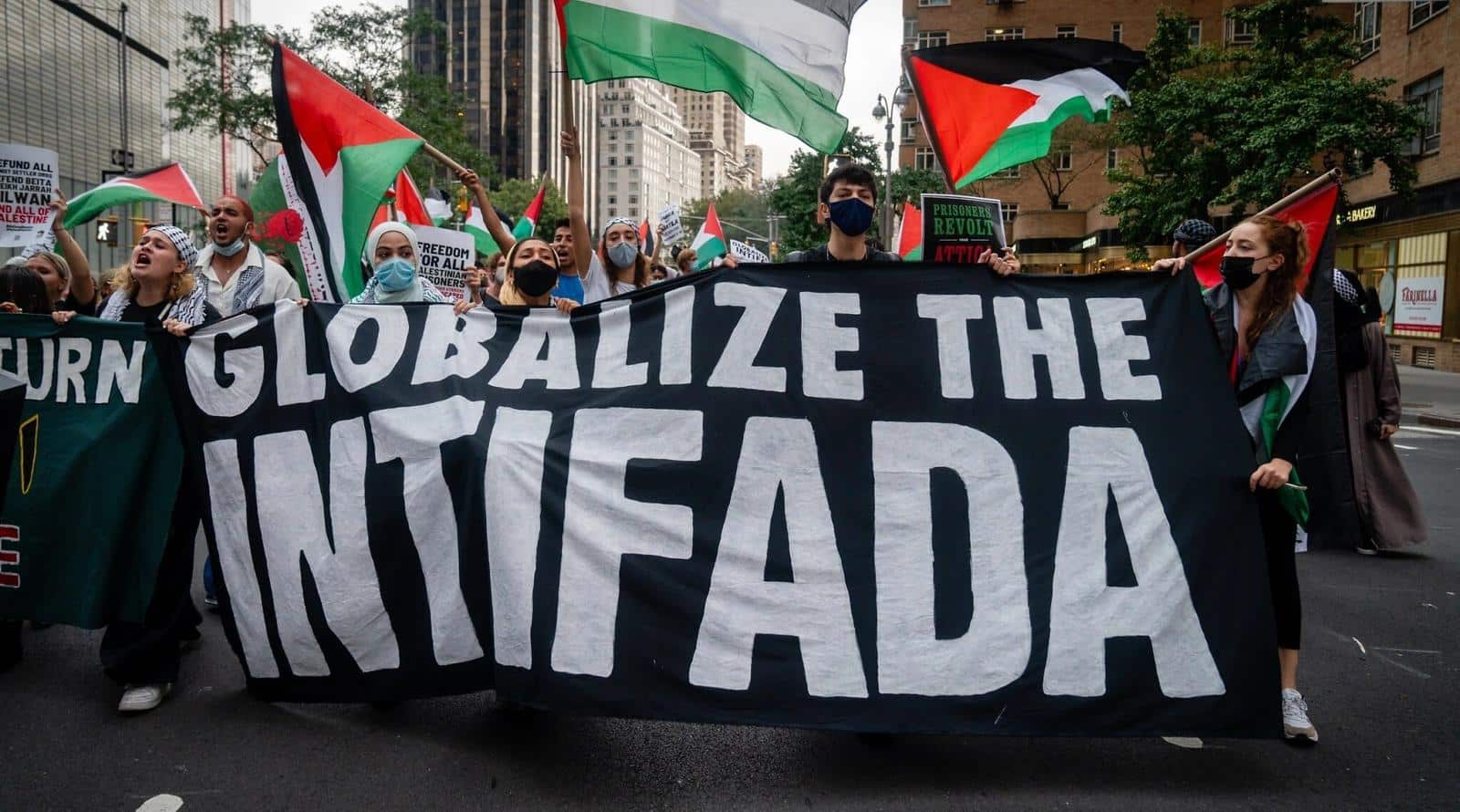
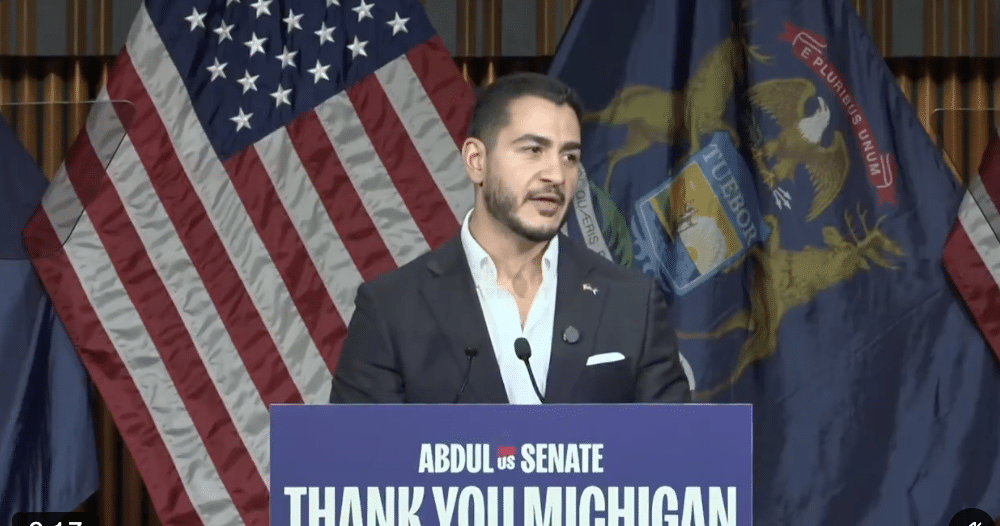
The problems started to surface two days before the election, when Michigan Congresswoman Haley Stevens stood her ground after asking Senate candidate Abdul El-Sayed to disavow an antisemitic TV ad produced by left-wing podcaster Cenk Uyghur. Stevens had previously backed El-Sayed after her narrow loss to him in the Democratic primary in August, but when the candidate disinvited her from a campaign event because of her criticism of the commercial, which alleged that Michiganders couldn’t afford groceries because their money was being used to pay for Israeli bombs to kill Palestinians, she crossed party lines to endorse Republican Mike Rogers.
Despite attacks from Democratic leadership, Stevens sent a strong message and hopefully inspired others to take a stand against the Jew-hatred poisoning her party.
The same day Stevens spoke out, right-wing antisemitic podcaster Tucker Carlson published a long post on X asserting, “Under pressure from Israeli prime minister Benjamin Netanyahu, the Trump administration may be within days of launching a nuclear strike on Iran.” Netanyahu, Carlson continued, “‘calls Trump about it every day,’ says an informed observer.”
It seems Carlson was abusing his friendship with Vice President JD Vance, and President Trump’s eldest son Donald Trump Jr. to claim he had inside information, in order to shock and demoralize Republican voters while energizing the Left. On election day, Trump responded.
He acknowledged how the attacks leveled by El-Sayed and others, likely hinting at Carlson, were hurting GOP candidates, and announced that he and Netanyahu had agreed months earlier to end roughly $4 billion in annual U.S. military aid to Israel by the end of 2026.
Israeli officials said they had received no formal notice of an immediate cutoff and it is not clear if the president and the prime minister can cut short an agreement set to expire in 2028 without the approval of both countries’ legislative bodies.
In any case, the president’s announcement didn’t help Republican candidates, including Rogers, who lost by seven points to El-Sayed, despite the Democrat’s well-documented connections to Muslim Brotherhood entities. Indeed, El-Sayed’s win was the cornerstone of a pro-Palestine surge on Capitol Hill.
In the Maine Senate race, Republican incumbent Susan Collins lost to Troy Jackson, who has accused Israel of genocide and opposes American military aid to Israel. New Jersey’s 12th Congressional elected Democrat Adam Hamawy, who worked as a physician in Gaza in 2024 and campaigned against U.S. military assistance to Israel. Darializa Avila Chevalier, a Muslim convert and Democratic Socialists of America (DSA)-backed candidate who helped organize the Gaza-encampment at Columbia University, won New York’s 13th District. Additional DSA-supported House winners included Claire Valdez (NY-7), Melat Kiros (CO-1), Donavan McKinney (MI-13), Chris Rabb (PA-3), and Angela Gonzales-Torres (CA-34).
Other congressional winners who’ve condemned Israel’s defensive campaign in Gaza included Brad Lander (NY-10), Frederick D. Haynes III (TX-30), and Analilia Mejia (NJ-11). In January, they’ll be sworn in alongside anti-Israel incumbents Rashida Tlaib, Ilhan Omar, Alexandria Ocasio-Cortez, Summer Lee, Delia Ramirez, Ayanna Pressley, Pramila Jayapal, and André Carson.
This was presumably part of the map Vice President Vance was reading when he posted on X the day after the election his own assessment of what went wrong. According to Vance, a pollster told him some voters who supported Trump in 2024 “were angry and planning to vote for Democrats” due to four reasons: a desire to “end the war” in Iran, to “focus on cost of living/inflation,” to “put America First,” and to “change our relationship to Israel.”
Many on the Right, Jews and non-Jews alike, objected to Vance’s post effectively blaming an American ally for a loss that was entirely homemade. To others it seemed like bad form for the vice president to blame his boss for the Democrats’ onslaught, but the president told the press he didn’t mind. “I thought it was good,” Trump said of Vance’s post. “We knew that; I knew that when I went in.”
And it’s true, Trump has been saying for months that he anticipated the Iran campaign would affect the midterms and he didn’t care. Because, as he said Wednesday, “it’s the only answer. You can’t let Iran have a nuclear weapon.”
The president deserves credit for sticking to his guns, even when he knew the likely cost. With two years left in his term, there’s still time to resolve the war decisively and dismantle Iran’s nuclear program once and for all, either through negotiations or military action.
Post-election polling shows that Republicans still strongly support Israel at 72%, with 59% responding it was not strong enough. Thus, GOP efforts to win over Democrats by putting space between Washington and Jerusalem, as the vice president argues, are likely to backfire.
There’s no competing with a Democratic Party where Palestinianism is a core feature of a progressive base that markets grievance like a consumer good. The conservative way forward is to appeal to voters’ rational self-interest: Our alliance with a country that fights the enemies of the West is good for Americans because it keeps us safer and makes us wealthier. The Iran war illustrates that perfectly.
Israel sees Iran’s nuclear weapons program as a nearly existential threat but, contrary to popular claims, Trump didn’t go to war with Iran to protect Israel. Rather, he sees stopping Iran from getting the bomb as a vital American interest, a conviction that comports with the priorities of U.S. policymakers dating back to World War II.
For more than eight decades, Washington has seen the Persian Gulf as a pillar of American power and has accordingly prevented other actors — the Soviet Union, Saddam Hussein, Sunni jihadist groups, etc. — from dominating the region. Although only a small part of our energy needs today are met by Gulf resources, our Arab partners — i.e. Saudi Arabia, the UAE, and Kuwait, among others — supply energy to the world’s leading industrial economies, including U.S. allies such as India, Japan, and South Korea.
Thus, protecting Gulf shipping lanes preserves global commerce, economic stability, and America’s strategic position in Asia. And that’s why President Trump, like most Republican policymakers over the years, sees Iran’s nuclear program as a threat to U.S. peace and prosperity. That is, American and Israeli converged. Blaming Israel for joining America in a military campaign that defends U.S. interests and keeps American voters safe and prosperous is not a winning message for either party.
Read more:
Newly-Elected Michigan Senator Abdul El-Sayed Invokes ‘Genocide’ and ‘Apartheid’ in Victory Speech