|
Getting your Trinity Audio player ready...
|
The following analysis was authored by Tablet Magazine columnist and CAM editorial advisor Lee Smith:
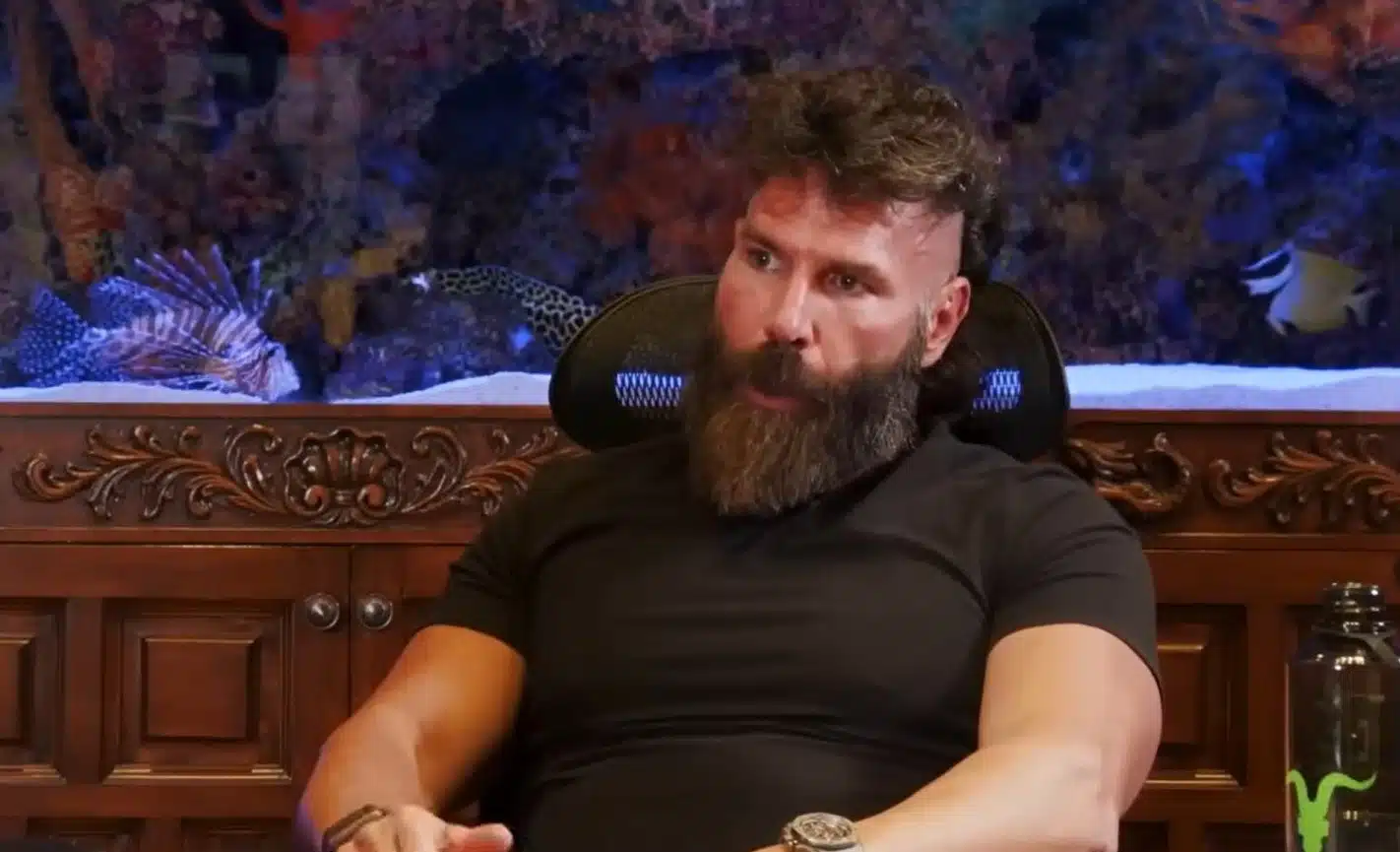
First, the good news about Representative Randy Fine’s nearly 40-point victory over podcasting conspiracy theorist Dan Bilzerian in Tuesday night’s Republican primary in Florida’s 6th Congressional District. It showed that conservative voters continue to reject antisemitism by wide margins.
The bad news, however, is that nearly 17,000 voters in a state with the country’s third-largest Jewish population approved of Bilzerian’s toxic message of Jew-hate, or at the very least didn’t mind it enough to vote for any of the other three candidates besides Bilzerian and Fine.
Fine is calling for an FBI investigation of his opponent, alleging that around $1 million in foreign cash was secretly pushed into Bilzerian’s campaign. But there’s another element of foreign influence that couldn’t be more public. The primary contest lent further evidence that social media’s global aggregation and amplification of antisemitic content is shaping American politics.
Bilzerian, once called the “King of Instagram,” has 29 million followers on that app and more than 2 million on X, and ran campaign accounts on both platforms, where he pledged to end “JEWISH SUPREMACY.” Leading up to Tuesday’s vote, he posted to his X account an AI video of an attractive woman singing a song in which Fine was called a “fat Jew,” Jews were accused of raping children, and Hitler was celebrated as a visionary. Though X claimed to have limited the post’s visibility in a note explaining that it “may violate X’s rules against Hateful Conduct,” it’s nonetheless been viewed 1.6 million times.
A recent Combat Antisemitism Movement (CAM) assessment showed that 33% of the X posts on Bilzerian’s campaign account were antisemitic, and the themes he hit on — including alleged Jewish blackmail schemes and plots to assassinate American political figures — attracted millions of views. His political platform, therefore, was nothing but antisemitism. And so was his communications strategy, which successfully gamed the global nature of social media.
A separate CAM investigation demonstrated that antisemitic content was regularly pushed on Instagram users whose viewing preferences showed no previous interest in it. Why are they nonetheless fed a steady diet of Jew-hate? Because the algorithms promote what’s proven to keep audiences fixed to their phones, and obsessive engagement is appealing to advertisers.
The crux of the issue then is that the number of social media users that are in thrall to Jew-hate — and then relay antisemitic content to their followers, who pass it on to theirs and so on — is many times larger than the tens of thousands of Florida voters who voted for the pro-Hitler ticket earlier this week.
Entire regions of the world are captive audiences for antisemitic content, including most of the Muslim Middle East, North Africa, and South Asia — where at the same time ruling authorities there typically restrict social media use for fear the platforms will be used to raise revolutions against them. But now the many millions of young men drawn from those populations who have moved westward into Europe and North America have become an especially attractive target audience for social media influencers.
As podcaster Megyn Kelly recently explained, young Muslim men are the big growth demographic prized by her and her antisemitic peers, with Tucker Carlson first and foremost among them. That’s a large part of Dan Bilzerian’s audience, too, and by feeding it the antisemitic content it craves, he’s riding the algorithm to ensure his posts get wide circulation on social media — even with posts with supposedly limited visibility. His campaign marked something new in our politics — mobilizing a foreign base to influence American elections through social media.
Antisemitism is hardly new to the U.S. but what’s long been cultivated domestically is now augmented by an enormous block of foreign users whose hatred of Jews is transforming the public sphere. We see it in the polls. But the reason a shocking number of young Republican voters are, for instance, down on Israel, isn’t because after a careful assessment they dislike the post-October 7th policies of Israel’s wartime prime minister. Rather, it’s because their brains have been rotted by the antisemitic content that social media influencers designed primarily for young male immigrants hailing from Jew-hate hothouses.
So what young conservatives see as edgy commentary pushing the boundaries of polite discourse to “speak truth to Zionist power” is in reality just an echo chamber repackaging third-world resentment.
The solution is obvious. Build a wall. Protect America’s public sphere by fencing out antisemitic content, whether it’s created by foreigners or natives, individuals or hostile intelligence services like Russia’s that have long seen antisemitism as a useful instrument to weaken and divide the U.S.
But there’s power and money at stake, and neither Democrats nor Republicans want to take on the social media giants, lest they find that come election time their own content is marked for limited visibility. And it’s easier to look the other way when social media entrepreneurs such as X owner Elon Musk cast themselves as free speech absolutists. And Musk does deserve some credit.
After federal law enforcement and intelligence agencies abused resources and programs designed to defend Americans from foreign propaganda and terror threats and turned them against Donald Trump supporters to censor their political speech, Musk gave them back their voice. But that doesn’t mean we have to celebrate the open sewer of Jew-hate his social media platform has become.
X is a private company and Musk is under no obligation to publish content that promotes hatred of Jews and incites antisemitic violence. X is not a federal agency. There is no constitutional right to post on social media, never mind material that is turning U.S. politics un-American and antisemitic.