|
Getting your Trinity Audio player ready...
|
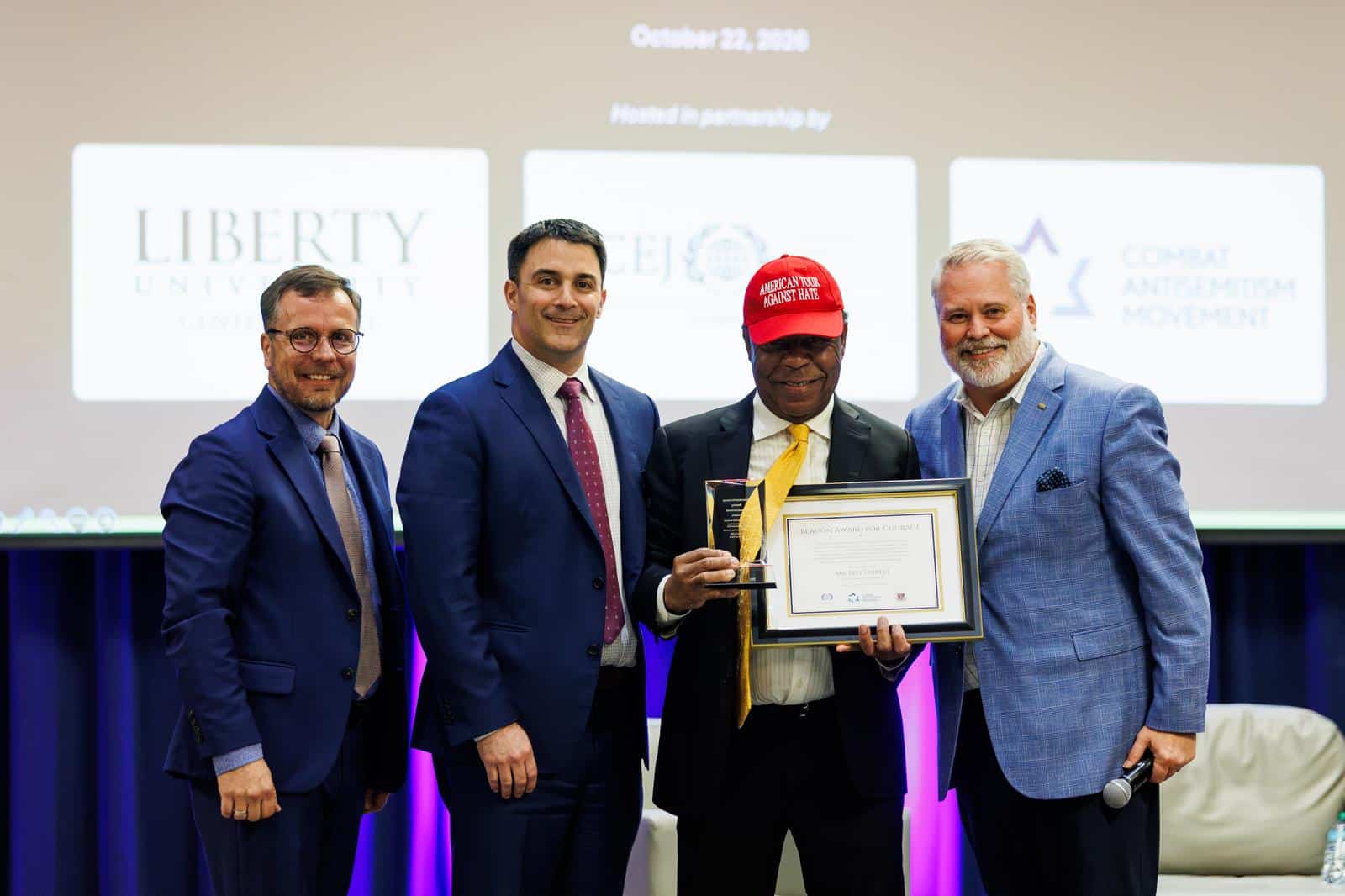
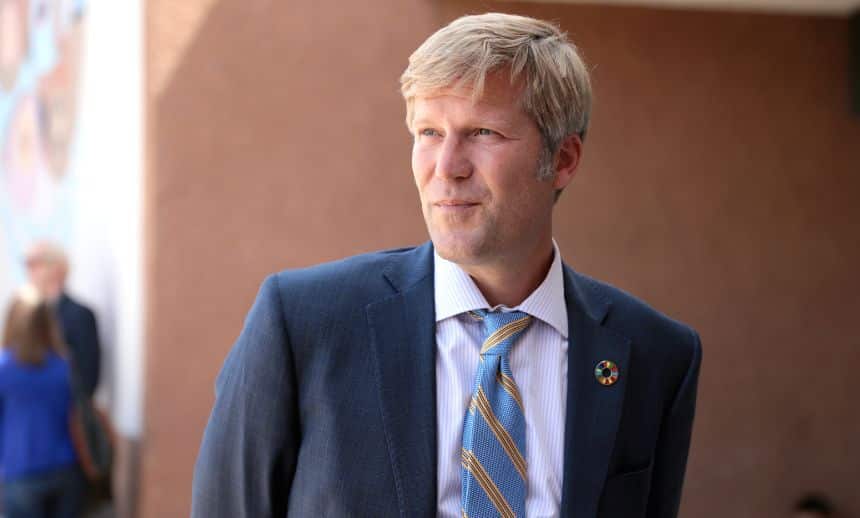
Tim Keller has served as Mayor of Albuquerque, New Mexico, since 2017. His city is home to three synagogues and a Jewish community that, while relatively small, has not been immune to antisemitic threats.
Albuquerque is not a city that typically makes national headlines on matters of Jewish life. Yet in a recent week, the Antisemitism Research Center (ARC) by CAM documented more than one antisemitic incident per hour worldwide, a reminder that communities of every size can be affected.
Earlier this year, in partnership with CAM, Mayor Keller sent a letter to fellow city leaders in the U.S. Conference of Mayors (USCM) calling on them to initiate and participate in Jewish American Heritage Month (JAHM) activities.
In the following interview with CAM, Keller discussed preserving Albuquerque’s Jewish history, responding to antisemitic threats, and why consistency — not crisis response — was the real test of local leadership.
What first drew you to public service, and why has combating antisemitism become an important part of your leadership as mayor?
Keller said he has spent his entire career in Albuquerque and still viewed public service through the lens of long-term community building. “We’ve been through a lot of ups and downs and a lot of challenges,” Keller said. “I knew we could do better as a community, and maybe I could help. That’s how I got started.”
Over time, he said, that commitment became grounded not only in the city’s future, but in the people who shape it. “You believe in the people and that we can actually build something together that lasts much longer than our own term or tenure,” Keller said. “It’s each other that motivates us.”
Keller said his concern about antisemitism also predated his time as mayor. Earlier in his career, he worked in international development and spent time in different parts of the world, including the Middle East. “Through that process, I developed a deep appreciation for all major religions,” he said. “It also gave me a strong reaction when people are hated or discriminated against because of what they believe or because of their ethnicity.”
The issue also became deeply personal, he noted. “My kids are Jewish,” Keller said. “So now it’s also very personal for me.”
Your administration proclaimed Jewish American Heritage Month and commemorated Albuquerque’s first mayor, Henry Nathan Jaffa, by naming City Hall’s lobby in his honor. Why was that important to do?
Henry Nathan Jaffa served openly as Albuquerque’s Jewish mayor in the 1880s. Keller said that, for generations, both Jaffa’s legacy and his Jewish identity received little public recognition.
“People never talked about him because he was Jewish,” Keller said. “The reality that our first mayor was Jewish was largely ignored. And he was openly Jewish, even in the 1800s when he was elected.”
The dedication came amid a surge in antisemitic incidents nationally, including attacks on synagogues following the October 7th massacre. “We did it in defiance,” Keller said. “We’re proud of our Jewish heritage, and we’re going to make sure it’s shared, not hidden or pushed aside.”
After the October 2023 bomb threat against Congregation Adat Yeshurun, what lessons did Albuquerque take about protecting Jewish institutions and responding to threats?
“Every threat has to be treated as real,” Keller said. “We get threats here. Fortunately, they have not played out. But that’s number one. Every threat has to be treated as real.”
Following the bomb threat, Keller’s administration met individually with leaders from each of Albuquerque’s three synagogues and expanded coordination between Jewish institutions and law enforcement. The city now holds regular meetings with synagogue leadership, keeping those relationships active before they are needed.
“After a particular bomb threat, we met individually with the leadership of each synagogue,” Keller said. “We also have a coordinated roundtable that includes leaders from across the Jewish community.”
Keller said Albuquerque’s police department has also prioritized maintaining close communication with the Jewish community and ensuring it can respond quickly to potential threats.
You’ve participated in CAM-led mayoral initiatives on antisemitism. What did you take away from those engagements?
Keller said one of the most instructive parts of the CAM conferences was learning to recognize the coded language and symbols often associated with antisemitism. “One of the antisemitism conferences that CAM led that I went to was very educational with respect to understanding a lot of the antisemitism that is sort of dog-whistle based,” Keller said. “Unless you know the meaning behind a lot of coded terms, that can be hard to recognize.”
He also pointed to the CAM’s Municipal Antisemitism Action Index as a useful tool for understanding the issue at scale. In New Mexico, he said, Jewish history and heritage are not always widely taught or understood.
“Our Jewish heritage is not at the forefront of what New Mexicans learned when they’re growing up,” Keller said. “So those two pieces were really, really helpful.”
Looking ahead, what does meaningful city-level leadership against antisemitism look like? And what is one step any mayor can take right now to make Jewish residents feel more seen, understood, and protected?
Keller said one of the greatest challenges for city leaders is sustaining engagement on antisemitism outside moments of immediate crisis or public attention.
“Part of it is that we have to be consistent, and that’s something even I struggle with because there’s a lot going on in other realms of the city,” Keller said. “But we have to continue pushing back on hate, maintaining dialogue with our houses of worship, and keeping direct relationships with Jewish leaders and members of the community.”
He also acknowledged that many municipal leaders remained hesitant to engage the issue publicly, particularly in places where antisemitism and Jewish history were not widely understood.
“I think the broad middle of mayors just don’t know that much, and they’re kind of tentative to engage because it’s so sensitive sometimes,” he said. “Not every mayor is in the same place.”
Keller also described the role mayors can play in strengthening connections between Jewish communities that may otherwise remain isolated from one another.
“It was a reason for them to get together,” Keller said of one regional gathering organized by Albuquerque’s leadership. “They don’t always see each other otherwise.”
“We don’t want a crisis. We don’t want an incident,” he said. “That kind of consistency is a big challenge.”
Read more: