|
Getting your Trinity Audio player ready...
|
The following analysis was authored by Tablet Magazine columnist and CAM editorial advisor Lee Smith:
The week saw another modern-day miracle in the Middle East, after the co-pilot of a FlyDubai passenger jet en route to Tel Aviv attacked the captain and then attempted to crash the plane into the ground. Instead, Israeli passengers stormed the cockpit, righted the control yoke, and pulled themselves out of the jaws of certain death.
Memes celebrating the quick-thinking courage of the men Prime Minister Benjamin Netanyahu called lions are proliferating on social media, as Israelis see it as an opportunity to show pride in their national character while poking fun at themselves. Still, it’s horrible to imagine what would have happened if, despite their bravery, the passengers had failed to stop the plane’s rapid descent. Hundreds of Israeli corpses would have been scattered in the desert, with large parts of the world ghoulishly celebrating, again, the mass murder of Jews.
The incident highlights the heroism of ordinary Israelis, men and women who love life so much that they risk death to protect it. And it also makes plain the enormous abyss separating Israel, the U.S., and other nations that created Western civilization from the societies at war with it.
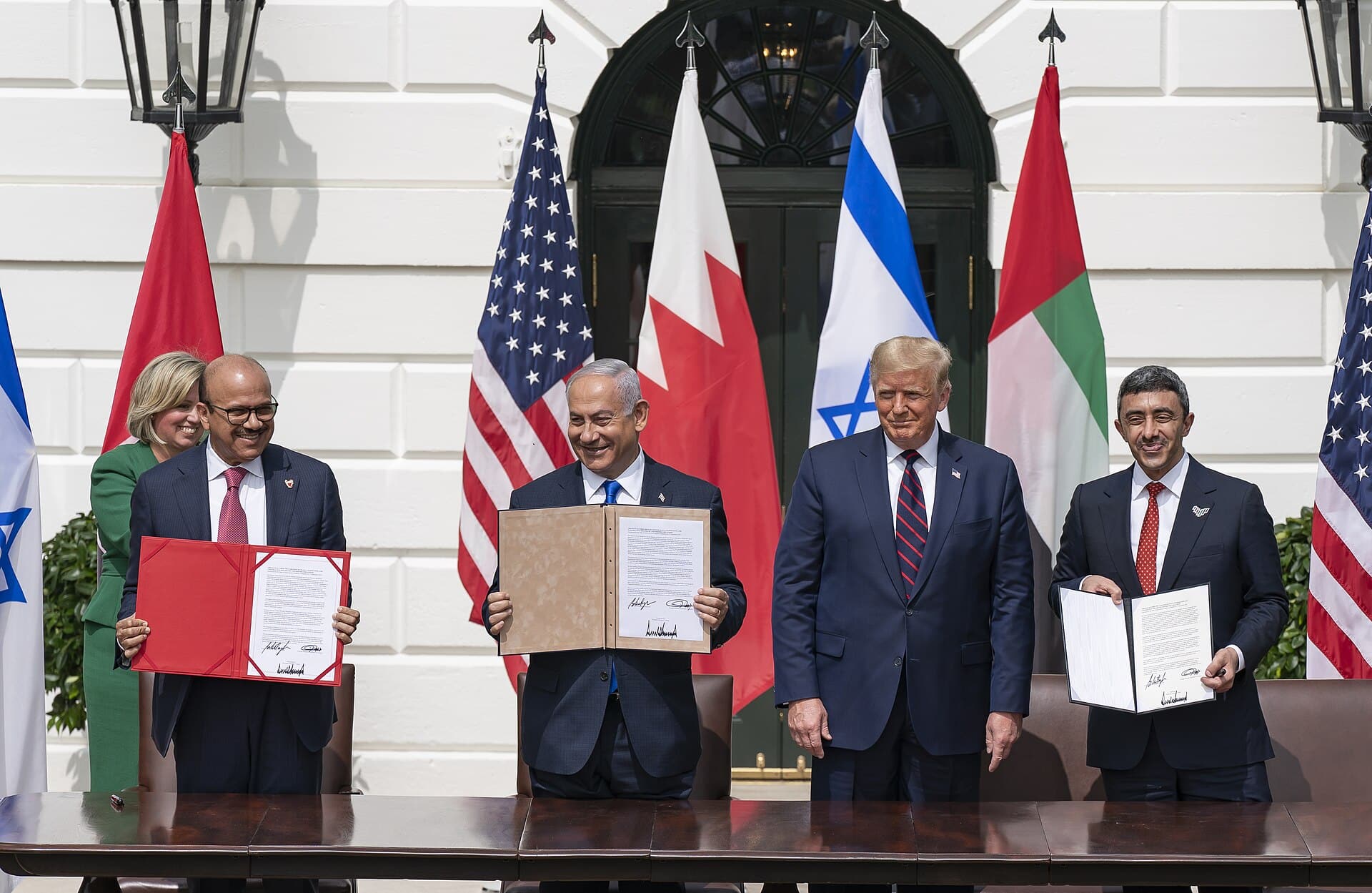
The name of the co-pilot has yet to be released, but he reportedly carries an Omani passport. And here Emirati officials may have some questions to answer. The normalization agreements Jerusalem and Abu Dhabi signed under the Abraham Accords have opened the Emirates to adventurous Israeli tourists, but their aviation agreements stipulate that flights between the two countries must be staffed by pilots from countries that recognize Israel, and Oman does not.
That seems like a sound security precaution, even if there’s little evidence that nationals from Muslim states that recognize Israel are less likely to commit terror attacks targeting Israelis or Jews than those whose governments are still officially at war with Israel. In fact, the historical record shows that while peace deals keep armies from making war on Israel, they have little effect on individuals from Muslim-majority regions.
Jordan, for instance, has a peace deal with Israel, but only a year ago, a Jordanian truck driver opened fire at the Allenby Bridge crossing with Israel and killed two Israeli military personnel before Israeli security forces shot him dead. The previous year, another Jordanian drove a truck to the same crossing and shot to death three Israeli civilians.
Egypt also made peace with Israel, but in October 2023 an Alexandria policeman murdered two Israeli tourists and their Egyptian guide. In June 2023, an Egyptian security officer crossed the border with Israel and killed three IDF soldiers before he was eliminated.
Even pro-Israel activists outside of Israel are unsafe. In June 2025 an Egyptian national named Mohamed Soliman threw Molotov cocktails and opened fire with makeshift flamethrower on a group in Boulder, Colorado that held weekly walks calling attention to the Israeli hostages held in Gaza. One woman, 82-year-old Karen Diamond, suffered severe burns and later died from her injuries.
It’s also worth noting that leaders of Muslim countries who make peace with Israel, or even consider it, are themselves vulnerable to murderous attacks.
For example, King Abdullah I of Jordan was targeted by Palestinian terrorists for conducting secret negotiations with Israel after the 1948 war. That angered the Palestinians, especially Hajj Amin al-Husseini, the former Grand Mufti of Jerusalem and Nazi ally who was living in Cairo after escaping French custody. On July 20, 1951, King Abdullah was assassinated by a Palestinian gunman when he went to Al-Aqsa Mosque in Jerusalem for Friday prayers.
Abdullah’s teenage grandson, the future King Hussein, was with him and narrowly escaped death. More than four decades later, Hussein struck his own deal with Israel in October 1994 and was acutely conscious of the precedent. U.S. President Bill Clinton remarked at the signing that Hussein had confided in him that his grandfather was killed “at a time when he was intent on making peace with Israel.”
Peace with Israel put him the crosshairs of terrorists, but Hussein died peacefully. His Egyptian peer who’d also normalized relations with Israel was not so fortunate.
45 years ago next week, on October 6, 1981, Egyptian President Anwar Sadat was assassinated while reviewing the Egyptian armed forces during a military parade celebrating what official Cairo still tells itself is a consequential victory over Israel in the 1973 Suez offensive. But on the eighth anniversary of the Yom Kippur War, Egyptian Army officers affiliated with Islamist terror groups — Egyptian Islamic Jihad and Gamaa’ Islamiyah — stopped in front of Sadat, threw grenades, and then opened fire, killing him on the spot.
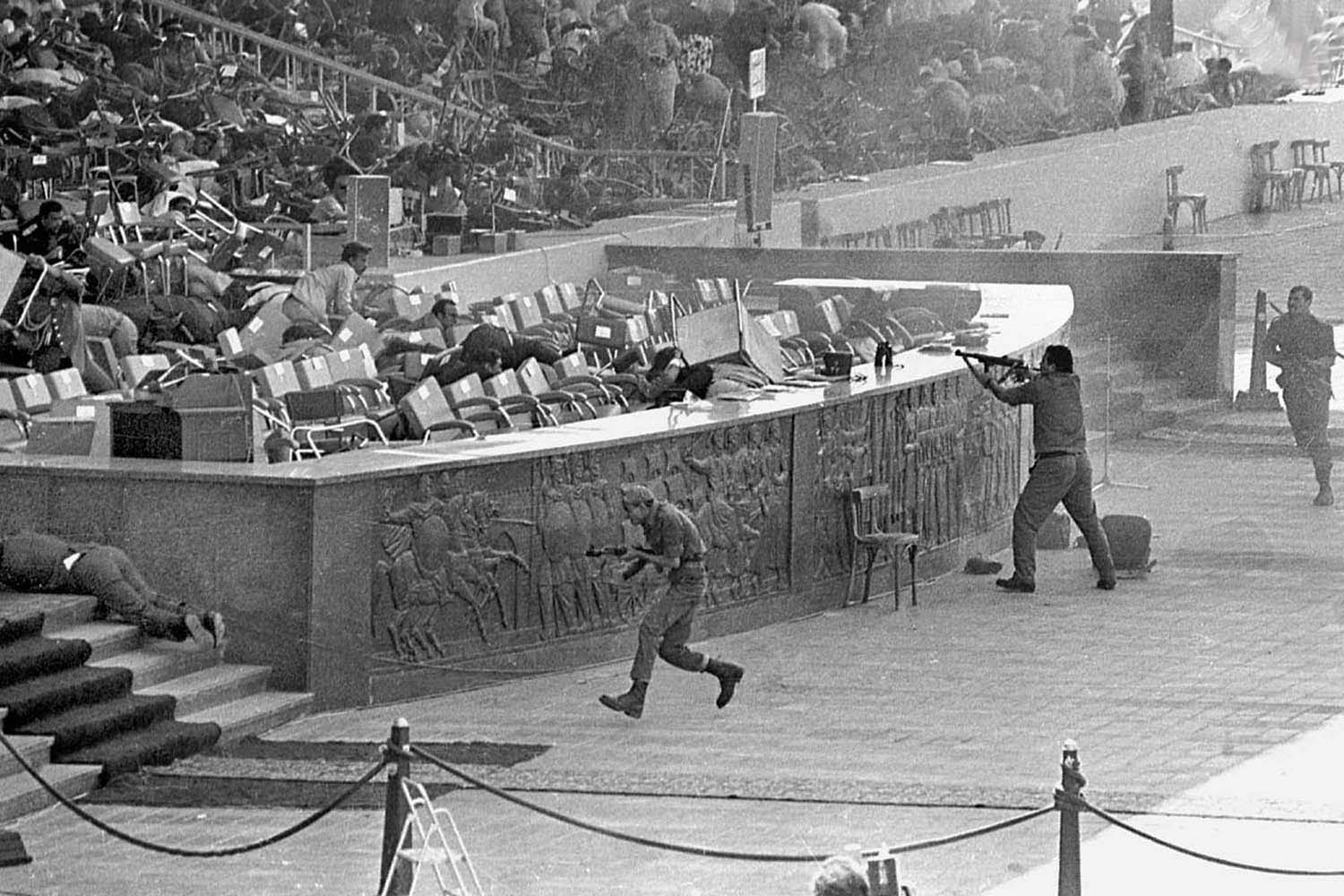
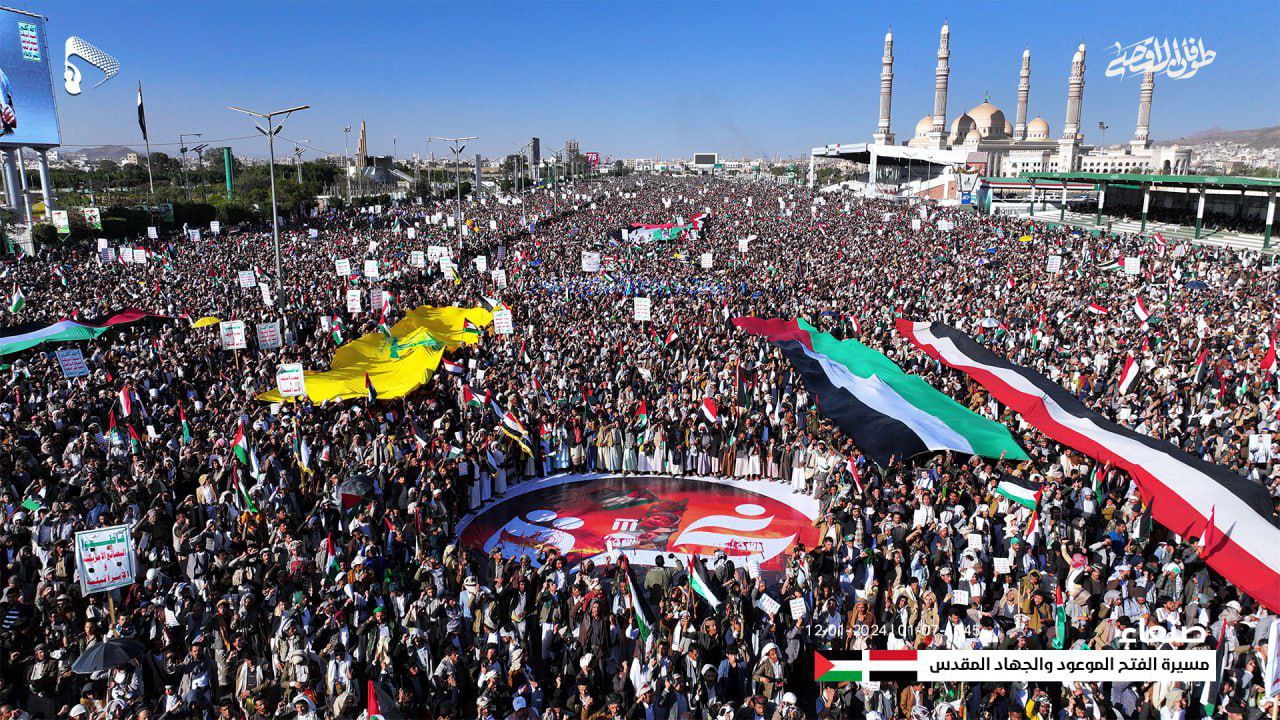
Sadat was executed in public because he’d made peace with Israel. And in Muslim-majority regions around the world it’s not just terrorists who believe that peace with the Jewish state is a betrayal of Palestine. And Middle Eastern masses far beyond the caves of Afghanistan and the Syrian desert believe the Palestinian struggle is a cause worth killing and dying for.
But in truth, the last century of Muslim and Arab terror has shown that the Palestinian cause is rather an excuse to kill Jews. Otherwise, Israeli peace agreements would have greatly reduced the number of terror attacks against Israelis and Jews. Instead, three years after the October 7th massacre, the region’s political pathologies coughed up an Omani national who sought to crash a plane full of Israelis in an attack patterned after 9/11.
In the aftermath of the failed attempt, Israeli, American, Emirati, and other officials are going to be asking if the terrorist was acting behalf of a state, such as Iran, perhaps to punish the UAE for normalizing relations with Israel. And counterterrorism experts will be debating in the press whether he was a “lone wolf” who was “self-radicalized” through social media or other means. No doubt there’s lots to learn about the attack that may save lives in the future, but much of the discourse around terrorism and the analytical categories used to explain against it obscure the real problem.
Far from the skies over the Arabian Desert, the first lady of New York City, Rama Duwaji, spent the week at a modish “wellness” retreat run by organization that promotes pro-Palestinian slogans, including “Abolish the colonial apartheid state of Israel. Free Palestine” and “From the river to the sea.” She’s not a terrorist, her husband governs the world’s greatest city, home to millions of Jews. Nonetheless, she’s is part of the poisonous reservoir of support for the ideas and slogans inspiring terror attacks on Jews and Israelis. That is, terrorism is not the source of the problem but an effect of it — the problem is found in the nature of the societies that mass manufacture the dark and damaged souls that celebrate the murder of Jews.
Neither terror nor anything else should stand in the way of Israeli leaders and those who rule Muslim states from making peace. But the unfortunate fact is that normalizing relations with Israel will do little to normalize the societies that cultivate a love of death so all-encompassing that it produces people determined to take their own lives in order to slaughter Jews.
Read more: