|
Getting your Trinity Audio player ready...
|
The following analysis was authored by Tablet Magazine columnist and CAM editorial advisor Lee Smith:
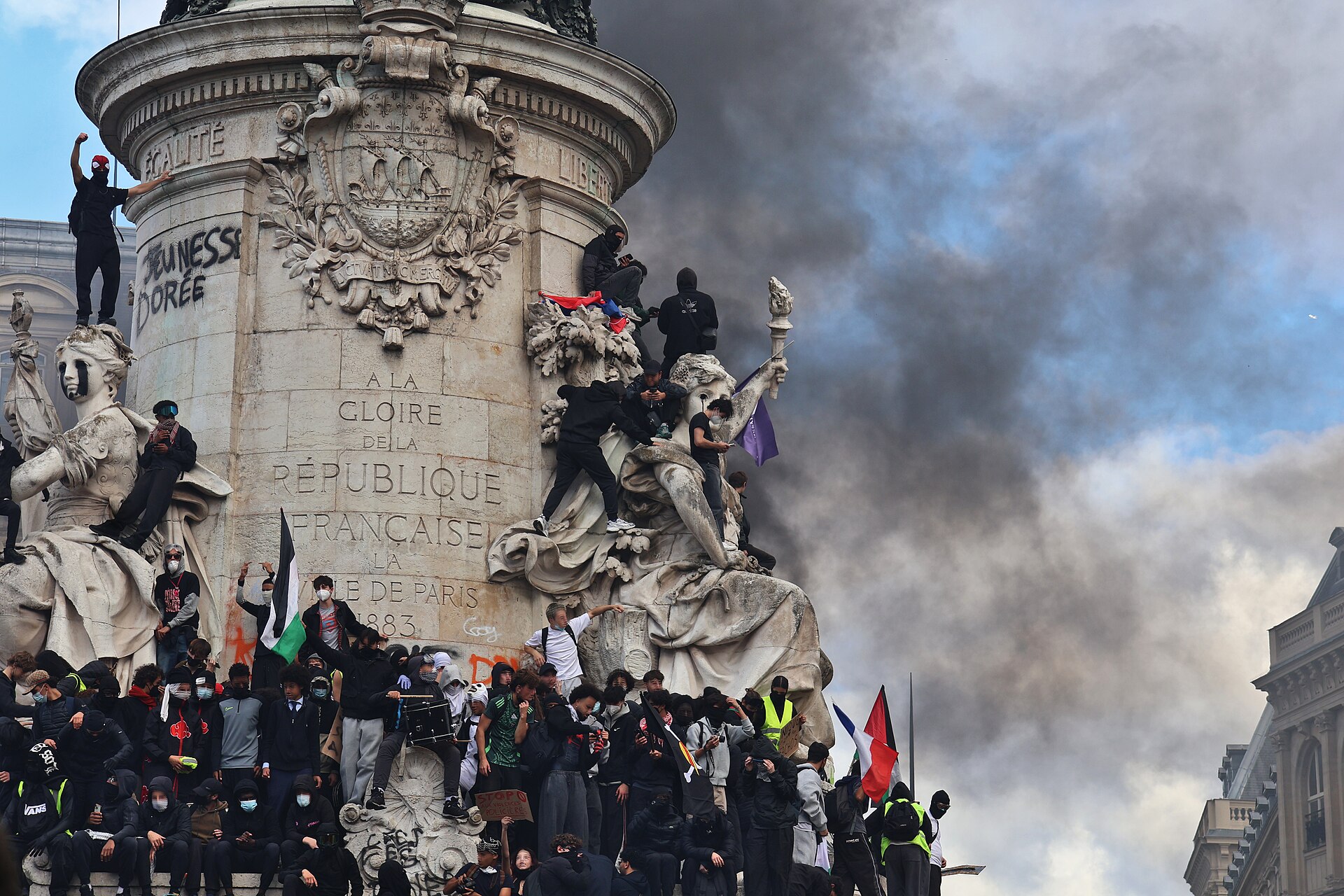
The ongoing protests in France have left many around the world wondering if one of the pillars of Western civilization is on the verge of collapse. That the violence sweeping through major cities leaving a thousand police and emergency workers injured, and costing tens, maybe hundreds, of millions of dollars in damage was conducted under the color of foreign flags — Algerian, Moroccan, and chief among them Palestinian — suggests that whatever may replace the Fifth Republic won’t be for the better.
Veteran observers of the French political scene, news analysts, and activists old enough to have participated in the historic May 1968 protests, say they’ve seen nothing like it before. Sure, there’s always some property damage and a few bloody lips and bruised bones to go with the political theater. But the widespread looting, arson, and vandalism, and the threats to violate people’s homes and do them harm is something new.
Indeed, it was a hybrid production, for the protest was only partly French. It started as a student movement with French youth taking to the streets to demonstrate against an educational system tilted in favor of generational elites. But that protest was absorbed by a more potent energy, which is how it turned into a Middle East-style show of force, made even more vivid by the fact that it was staged in one of the great capitals of the West.
Thus, those asking what more the pro-Palestinian migrants from the Third World could possibly want after President Emmanuel Macron officially recognized Palestinian statehood in September 2025 are missing the point. France tied its Middle East policy to support for the Palestinian cause decades ago; it further dignified the Palestinians’ murderous career after the October 7th massacre not just to placate Hamas’ French supporters but because this is what official France has become.
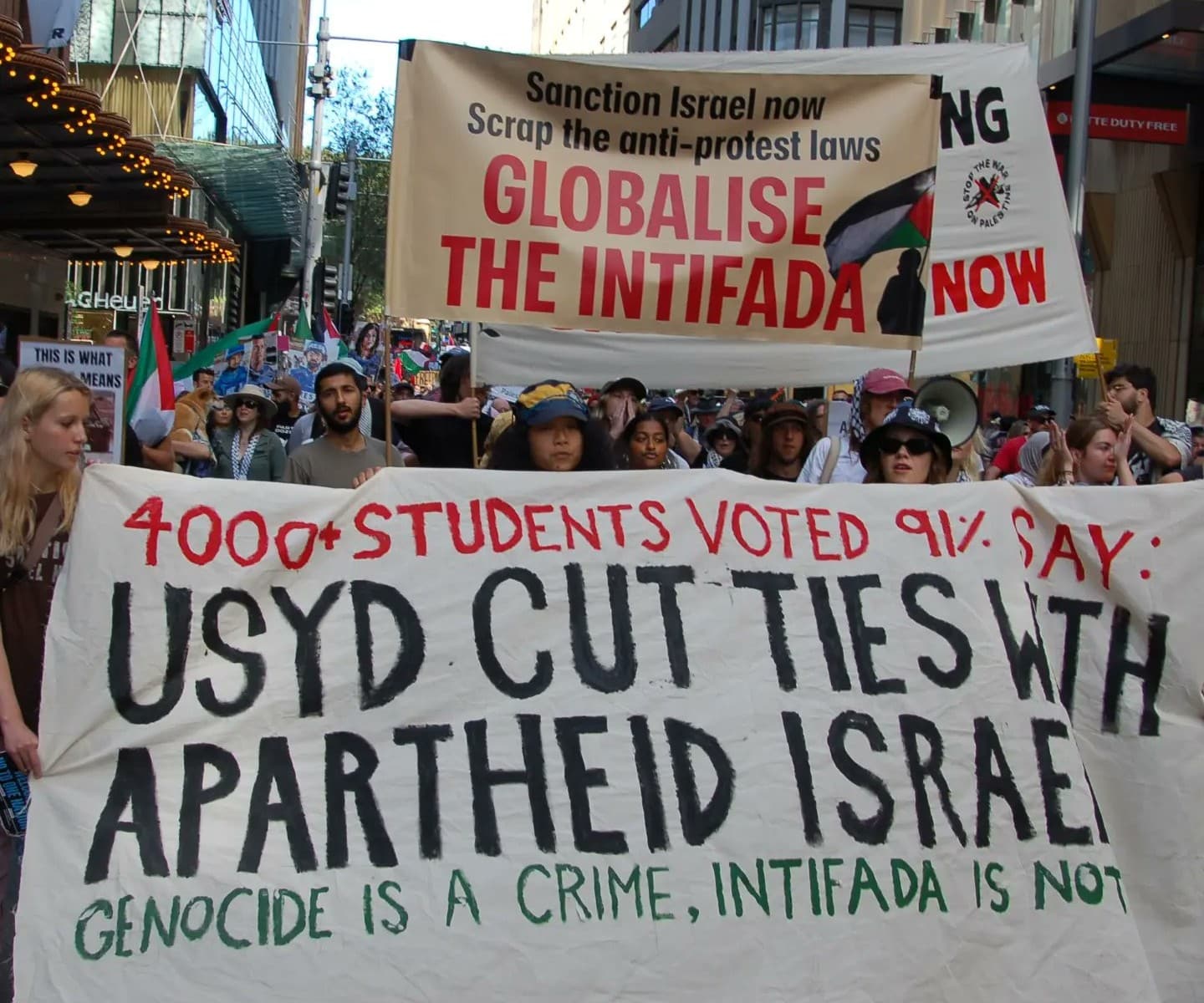
Accordingly, what drove the violence doesn’t have any real content, not political or even religious. It’s just nihilism, not the academic variety that Parisian intellectuals have ruminated on since the end of the Second World War, but the real thing in real time. And that’s what the Palestinian flag held aloft by protestors in French streets and throughout the West represents — an ever-darkening whirlpool of violence from which it will become increasingly hard to escape.
Hard as it may be to believe, France was once Israel’s closest ally. During the 1950s and early 60s, it was Israel’s principal arms supplier and played a central role in creating Israel’s nuclear infrastructure at Dimona, supplying the reactor, plans, equipment, technical assistance, and training.
France’s patronage had little to do with remorse for collaborating with the Nazis or guilt over sending French Jews to extermination camps. Rather, the two nations were drawn together by mutual interest as both saw Gamal Abdel Nasser as a top threat to their national security. The Egyptian president armed Algerian insurgents fighting French rule and sponsored Palestinian terror attacks against Israel out of Gaza. France and Israel’s close military and intelligence cooperation led to their joint campaign, alongside Great Britain, against Nasser during the 1956 Suez Crisis.
The France-Israel relationship changed once Paris recognized Algerian independence in 1962 and French President Charles de Gaulle sought renewed influence throughout the Arab world, access to expanding markets and oil supplies, and a position in the Middle East independent of U.S. and Soviet policy. Thus, as the Six-Day War approached, de Gaulle imposed an arms embargo on Israel and withheld delivery of Mirage fighter jets that Israel had already paid for.
France’s about-face worked out well for the U.S., for which Israel has been an indispensable ally through the Cold War to the present. But how did France’s independent policy pan out for the French? Well, Paris has good relations with the energy-producing Arab states, sells them arms (it built Iraq’s nuclear reactor, which was subsequently destroyed by Israel), and exercises some degree of influence in Lebanon, a former colonial holding.
But France’s efforts to curry favor with the Arabs by distancing itself from Israel backfired. Rather, it has embroiled the country in Middle East conflicts that have spilled into the streets of French cities and put French citizens in the crosshairs.
Even years after Paris gave Jerusalem the cold shoulder, France was under attack from the same groups at war with Israel. In September 1974, a grenade attack conducted by the Popular Front for the Liberation of Palestine (PFLP) at Paris shopping center killed two and wounded 34. In January 1975, PFLP operatives fired rockets at Israeli aircraft at Orly airport. In May 1978, at the same airport, Palestine Liberation Organization (PLO) gunmen attacked passengers waiting to board an El Al flight, killing two French policemen.
Jewish institutions were regularly targeted. In 1980, a PFLP faction bombed the Rue Copernic synagogue, killing four people. In 1982, another Palestinian terror group attacked the Goldenberg restaurant in the Marais, Paris’s historic Jewish quarter, killing six.
The French were also under fire abroad. In October 1983, a Hezbollah suicide bomber killed 58 French paratroopers in the attack at the Beirut airport that also murdered 241 American servicemen. Between 1985 and 1987, Hezbollah swept Beirut for French hostages, taking diplomats, journalists, and researchers, including Michel Seurat who died in captivity. During the same period, Hezbollah waged a bombing campaign across Paris, including a September 1986 operation that killed seven people.
Because Paris had become a terrorist battlefield, the city was again by a terror wave in the 1990s, this time waged by Algerian terrorists opposed to France’s support for the Algerian regime. In July 1995, a bomb at Paris’s Saint-Michel railway station killed eight people and wounded more than 100. Over the next three months, the Armed Islamic Group (GIA) carried out seven additional bombings or attempted bombings, targeting railway stations, public markets, and a Jewish school near Lyon.
The assassins behind France’s most recent wave of terror are not foreign operatives but citizens of Europe beholden to ideologies forged in the Middle East, like the terrorists who in January 2015 attacked staff at Charlie Hebdo and then a kosher supermarket, murdering 17 people. Less than a year later, French- and Belgian-born terrorists of Middle East origin carried out coordinated attacks that butchered 130 people in separate venues, including the Bataclan concert hall — which was previously threatened by Palestinian terror groups because its Jewish owners had regularly hosted pro-Israel events.
The last half century of French history gives evidence that France made a bad choice. With the opportunity to separate itself from radical Middle Eastern politics after withdrawing from Algeria, Paris instead eagerly marched into the darkest desert. Is there no way out?
French leaders regularly berate each other for failing to integrate Third World migrants into French society, but the reality is that France doesn’t do a great job of assimilating even those who cherish its culture and language. And as CAM CEO Sacha Roytman argues, the Muslim masses that have pushed Europe to the edge are typically supremacist bigots who have little but contempt for the nations that have sheltered them.
And yet the fact is that France has seen much darker times in the last century, under occupation and in collaboration with the Nazis. Eighty years ago, it was the United States that helped lead France out of the darkness. This time, walking toward the light would seem to start with a re-orientation of France’s Middle East policy, seeing America and Israel not just as strategic partners but also defenders of the same civilization.
Read more:
‘The Jews Did This to France’: Antisemitic Narratives Spread on X Amid Civil Unrest
Beyond Radical Islam: The Muslim Supremacism the West Has Overlooked