|
Getting your Trinity Audio player ready...
|
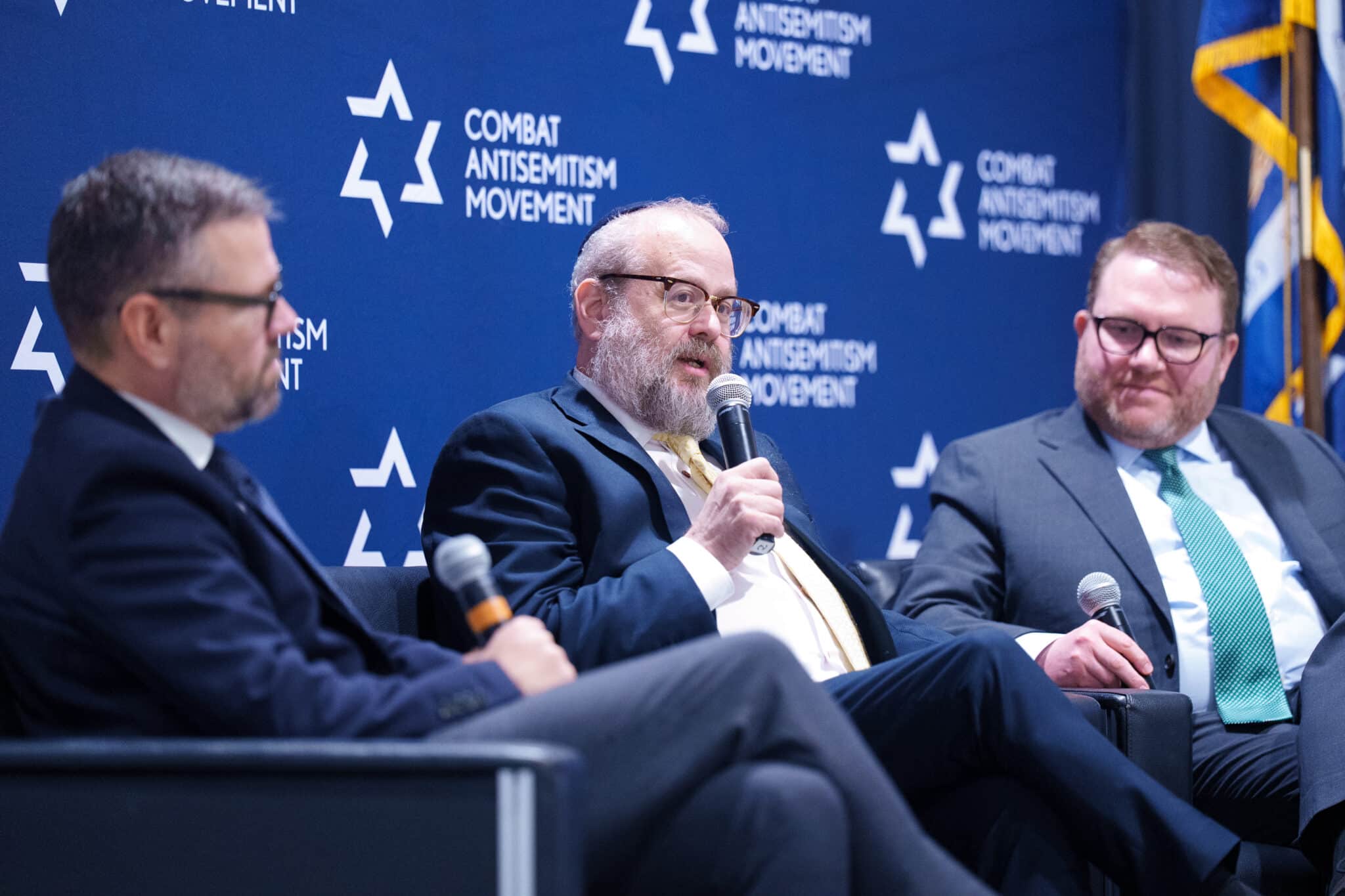
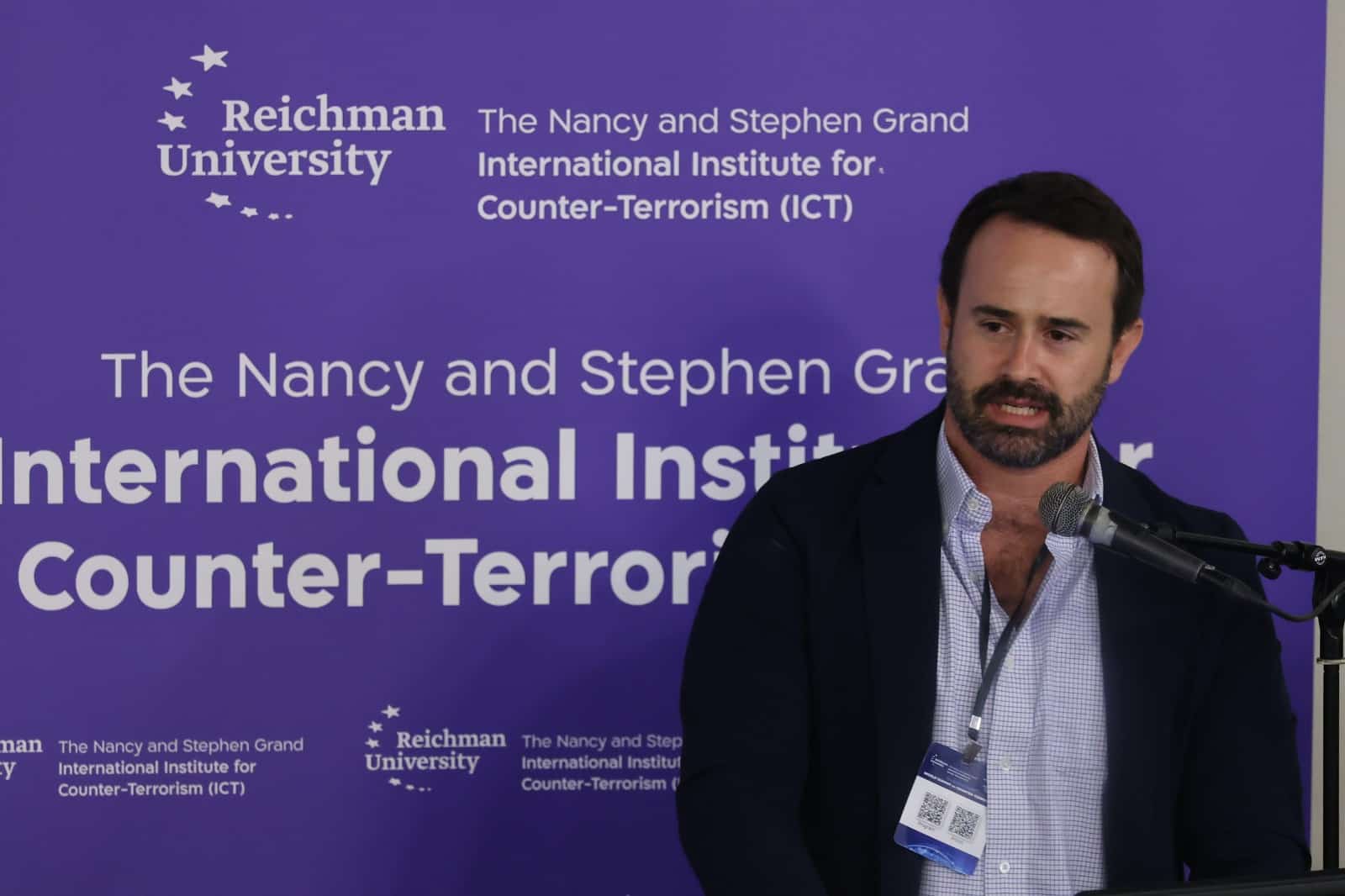
At last week’s 2026 Shabtai Shavit World Summit on Counter-Terrorism, organized by Reichman University’s International Institute for Counter-Terrorism (ICT), Combat Antisemitism Movement (CAM) CEO Sacha Roytman argued that today’s explosion of antisemitism could not be understood by looking only at individual demonstrations, online posts, or attacks against Jews.
These are visible manifestations of something much deeper — an infrastructure of ideas, institutions, communities, and technologies that has been built over decades.
Roytman traced one important starting point to the Soviet Union, particularly after the Six0Day War in 1967, when Soviet anti-Zionist propaganda increasingly presented Israel as an extension of Western imperialism and Zionism through the language of racism and colonialism. Former Romanian intelligence chief Ion Mihai Pacepa later argued in Disinformation that Soviet intelligence deliberately used anti-Zionism and the Palestinian cause as part of a broader effort to generate hostility toward Israel, the United States, and the West.
The significance of this strategy was not simply the production of propaganda. It was the construction of a worldview that could survive the Soviet Union itself. Israel could be placed inside a broader narrative of colonialism and Western oppression, while hostility toward Jews could sometimes be repackaged in political language that appeared different from traditional antisemitism.
The next step was institutionalization. In 1975, the United Nations General Assembly adopted Resolution 3379 declaring Zionism a form of racism. Although it was repealed in 1991, the vocabulary it helped legitimize remained. The Durban conference in 2001 represented another important transition, as anti-Israel campaigning became increasingly embedded in the language of human rights, international law, apartheid, and civil society.
Universities added another layer. Political ideas gained academic language, professors, conferences, research, and institutional credibility. But the importance of universities was not only what was taught. Universities educate future elites. Students become journalists, lawyers, politicians, diplomats, executives, professors, and NGO leaders. What enters the university today can influence institutions decades later.
This is where foreign funding becomes particularly important.
The U.S. Department of Education has reported tens of billions of dollars in disclosed foreign gifts and contracts to American universities since reporting requirements began in 1986. As of February 2026, Qatar alone accounted for approximately $8.8 billion across roughly 1,300 reported transactions, making it the largest country source in the federal dataset. In 2025 alone, American universities reported more than $1.1 billion from Qatari sources.
If a country builds relationships with universities for twenty or thirty years, the relevant question is not simply what happened on campus when the money arrived. It is also who was educated there, what intellectual environment developed around them, and where those students later exercised influence.
That is why Roytman connected the present challenge to the historical idea of the “long march through the institutions.” The phrase emerged in the late 1960s around the idea that lasting political transformation could be achieved not through one revolution but through a generational movement into education, media, government and other centers of influence.
Today, the actors and ideologies are different, but the strategic lesson remains important. Influence should not be measured only by immediate outcomes.
A hostile tweet is immediate.
A demonstration is visible.
An attack against a Jewish institution demands an immediate response.
But if we evaluate the threat only at that level, we will always be reacting to the final product rather than understanding the system that produced it.
The modern environment is multi-layered. Historical propaganda provides narratives. International institutions can provide legitimacy. Universities educate future elites. Foreign governments can finance institutions and relationships. Activist organizations transform ideas into communities. Social media connects those communities. Algorithms amplify their messages, and artificial intelligence increasingly automates their production.
October 7th exposed how powerful that combination has become. The terminology, organizations, campus networks, influencers, and digital infrastructure did not need to be invented after the massacre. Much of it already existed and could be activated immediately.
The Soviet Union is gone, but influence operations did not disappear with it. Today, states including China, Iran, Qatar, and others pursue their own very different forms of political, economic, informational and institutional influence. They should not be treated as one coordinated system, but they demonstrate the same fundamental reality — strategic competition is increasingly fought through institutions, information, and long-term influence as much as through conventional power.
For CAM, this changes how antisemitism must be confronted. The objective cannot simply be to respond faster to the next demonstration or condemn the next attack. Those responses are necessary, but they address the output rather than the infrastructure.
“We need to understand every layer,” Roytman said. “Who builds the narrative, who legitimizes it, who funds institutions, who educates the next generation, who organizes the networks and who amplifies the message.”
The lesson is ultimately straightforward — if the infrastructure was built over decades, defeating it requires more than reacting to what happened yesterday. It requires understanding and confronting the system that produces tomorrow’s hatred.
Read more: