|
Getting your Trinity Audio player ready...
|
This article is part of the Combat Antisemitism Movement’s series on “Globalize the Intifada.” For the full analysis of the slogan’s origins, ideology, and real-world consequences, see the pillar page.
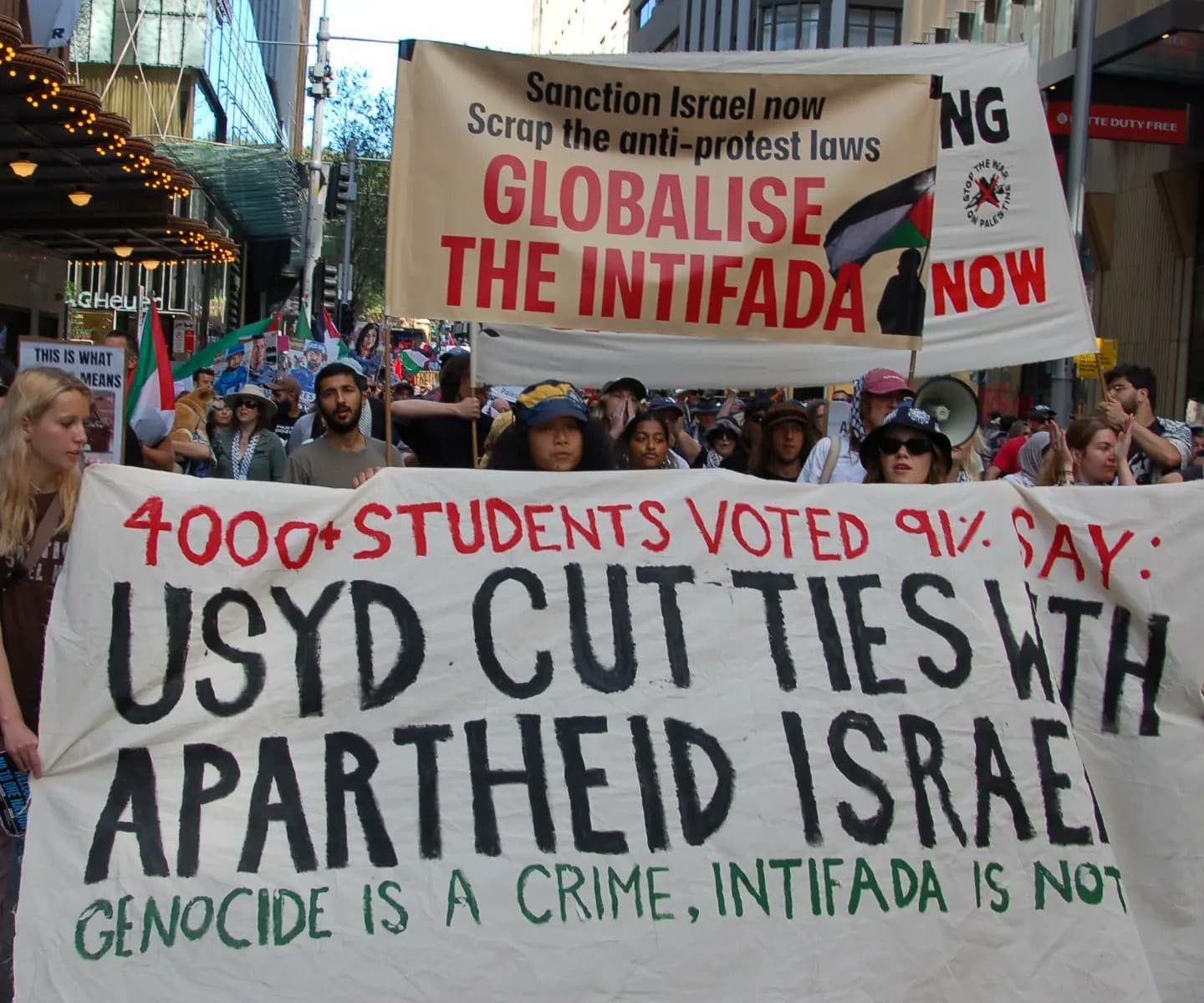
“Globalize the Intifada” did not spread through protests alone. Over time, the slogan moved into music festivals, fashion labels, gallery spaces, posters, livestreams, and algorithm-driven social media feeds. Once absorbed into culture, the phrase became easier to repeat, harder to challenge, and far more difficult to isolate from mainstream audiences.
The slogan no longer appeared only at demonstrations or in explicitly political environments. It became entertainment, aesthetic identity, and youth-oriented digital content. In the process, rhetoric rooted in campaigns of anti-Jewish violence was detached from its historical reality and repackaged as rebellion, style, and cultural performance.
From Protest Chants to Algorithmic Culture
Before intifada rhetoric appeared on major festival stages or commercial apparel, it spread through short-form digital media. TikTok, Instagram Reels, livestream clips, and protest footage pushed chants, slogans, and imagery into millions of feeds.
Videos paired intifada chants with trending audio, rapid edits, protest montages, and stylized visuals designed for easy repetition and circulation. Algorithms rewarded emotional intensity and confrontation. Users who had never encountered the historical meaning of the intifadas were introduced to the language stripped of context and reframed as aestheticized resistance.
Chants once associated with suicide bombings, shootings, stabbings, and attacks on civilians began circulating as audio clips, memes, protest soundtracks, and social identity markers.
When Intifada Rhetoric Entered Music
As intifada rhetoric spread online, musicians and performers increasingly absorbed it into mainstream entertainment.
Songs celebrating violence against Israeli civilians circulated widely across TikTok and streaming platforms, where algorithms amplified them far beyond activist spaces.
What began as online cultural content eventually reached one of the world’s largest mainstream music festivals.
At the June 2025 Glastonbury Festival, musician Bob Vylan led the crowd in chanting “Death to the IDF” before an audience of thousands while millions more watched clips spread online. The performance transformed eliminationist rhetoric into a participatory spectacle amplified through livestreams, reposts, reaction videos, and algorithmic distribution.
The consequences extended beyond the festival itself. The following day, the UK-based Community Security Trust (CST) recorded the highest daily total of antisemitic incidents in the first half of 2025. CST documented twenty-six reports connected to hostile online and offline reactions following the chants.
The significance of Glastonbury was not limited to one slogan or one performer. The festival demonstrated what happens when rhetoric associated with anti-Jewish violence moves from activist spaces onto mainstream cultural stages.
Later that month, the track “Boom Boom Tel Aviv” spread rapidly across TikTok and other social media platforms during the Iran-Israel war. The song glorified missile attacks on Tel Aviv and showed how rhetoric celebrating violence against civilians could spread rapidly through entertainment platforms and viral social media culture.
Once integrated into entertainment culture, the language reached audiences far beyond organized political movements.
Turning Violence Into Fashion and Identity
As the slogan spread through music and social media, it also entered commercial fashion.
Dozens of small brands marketed hoodies, shirts, patches, and accessories featuring “Globalize the Intifada,” often alongside imagery associated with armed struggle.
At the University of Michigan, the TAHRIR coalition sold sweatshirts displaying the slogan beside a keffiyeh-clad figure holding a rifle. Jewish students described the design as threatening and intimidating. University administrators declined to intervene despite formal complaints.
International brands followed similar patterns. In Denmark, the streetwear label Netwalker13 released a “Global Intifada” collection featuring slogans such as “From tha river to tha streets” and “O Allah, crush them,” alongside drawings of armed fighters. The company openly advertised, “We don’t sell to Zionists.”
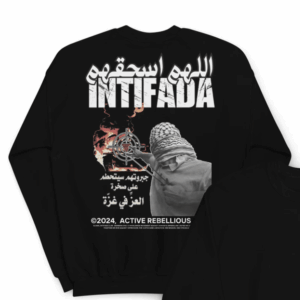
The shift from chant to apparel changed the slogan’s social function. Clothing turns political messaging into public identity. A slogan printed on a hoodie or jacket no longer functions only as protest rhetoric. It becomes branding — something consumers wear, display, photograph, promote, and integrate into personal image.
Murals, Posters, and Intifada Imagery
Art spaces became another channel for mainstreaming intifada rhetoric.
In Oakland, the EastSide Arts Alliance hosted a 2025 exhibition titled If Every Poster Was a Stone. Curated by the Palestinian Youth Movement Bay Area, the exhibit romanticized the violence of the First Intifada and framed protest art as the contemporary equivalent of the uprising’s “stones.” The exhibition presented confrontation and violence not as historical tragedy, but as political and cultural inspiration.
Across Europe, murals echoed similar themes. Artists combined Palestinian nationalist imagery with masked fighters, slingshots, rifles, and intifada slogans. Murals and posters appeared near transit hubs, schools, universities, and cultural centers.
The imagery often reached audiences disconnected from the historical reality behind the symbols themselves. Younger viewers could absorb the aesthetic without understanding the campaigns of bombings, shootings, lynchings, and attacks against civilians associated with the rhetoric.
The more the language circulated through art, fashion, and music, the easier it became to treat it as symbolic rebellion rather than rhetoric tied to anti-Jewish violence.

When Extremism Becomes Mainstream Culture
The cultural spread of “Globalize the Intifada” changed how the slogan functioned publicly.
Once embedded inside playlists, fashion, viral videos, concert performances, and curated visual culture, the phrase no longer depended on formal activist spaces to circulate. Algorithms, entertainment platforms, influencers, and consumer branding carried it into mainstream social environments.
What earlier generations would have recognized immediately as rhetoric associated with anti-Jewish terror increasingly circulated as entertainment, identity, and youth culture. That transformation gave extremist language broader legitimacy, wider reach, and greater protection from scrutiny.
The slogan’s mainstreaming did not occur despite culture. It occurred through culture.
Continue Reading:
- The Intifadas: The Terror Campaigns Behind ‘Globalize the Intifada’
- The Organizations Behind ‘Globalize the Intifada’ and the Campaign to Target Israel and America
- The Terror Network Behind ‘Globalize the Intifada’
- ‘Globalize the Intifada’ on Campus: How the Slogan Became a Weapon Against Jewish Students
- Synagogues Under Siege: ‘Globalize the Intifada’ at Synagogue Doors
- Zohran Mamdani: When ‘Globalize the Intifada’ Reaches Elected Office
- The Bondi Beach Hanukkah Massacre: When ‘Globalize the Intifada’ Became Reality