|
Getting your Trinity Audio player ready...
|
This article is part of the Combat Antisemitism Movement’s series on “Globalize the Intifada.” For the full analysis of the slogan’s origins, ideology, and real-world consequences, see the pillar page.
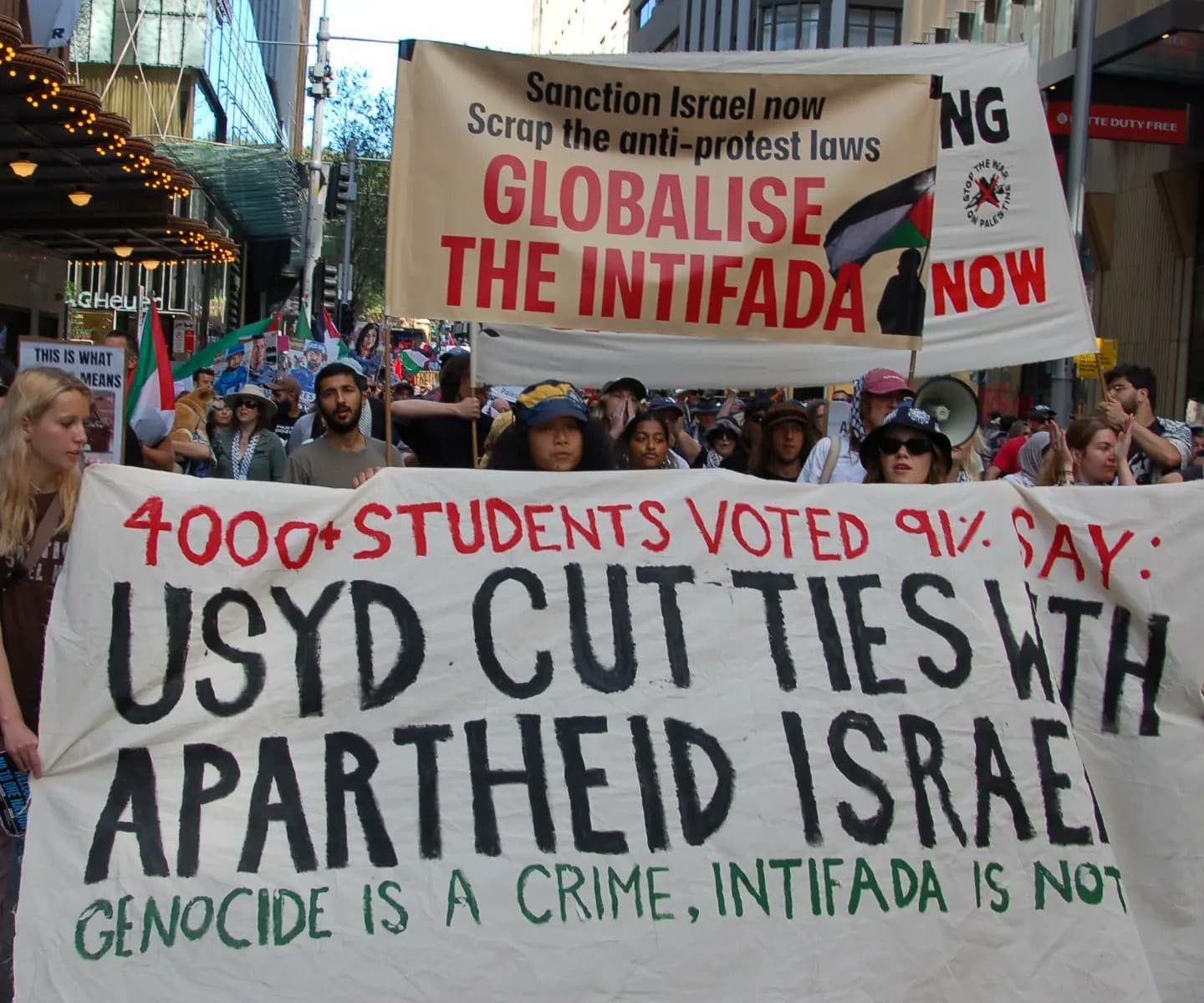
For years, “Globalize the Intifada” circulated in activist networks, on campuses, and outside synagogues. On January 1, 2026, it reached City Hall. When Zohran Mamdani was sworn in as mayor of New York City, he became the first elected official in the United States to take office having explicitly refused to condemn the slogan, and then to dismantle on his first day every institutional protection built to shield Jewish communities from the intimidation it produces. This page documents his record, his response to the Park East Synagogue confrontation, and what his election represents.
A Political Record Built on Anti-Israel Activism
New York City Mayor Zohran Mamdani’s refusal to denounce the “Globalize the Intifada” slogan reflects a long-standing pattern of anti-Israel and antisemitic activism. While in college, he co-founded a Students for Justice in Palestine chapter that promoted the framing of terrorism as “resistance.”
Over the years, Mamdani endorsed the Boycott, Divestment, and Sanctions (BDS) movement and pressured others to adopt it, insisting that candidates and public figures follow the same line. He authored legislation targeting Jewish charities, refused to co-sponsor a Holocaust remembrance resolution, and vowed to arrest Israel’s prime minister. He has repeatedly accused Israel of “genocide,” weaponizing language historically associated with the Holocaust. At every stage, he minimized or dismissed Jewish fears of intimidation and violence, in line with a worldview that elevates anti-Israel extremism from protest rhetoric to political principle.
We pay our electeds with our tax $$$ to represent us but they go on paid-for trips to Israel.
We have 3 letters for them: #BDS
Every elected must be pressured to stand with Palestinians, oppose Apartheid & assert that the fight for dignity knows no exception.#FreePalestine pic.twitter.com/xczCuhTnyn
— Zohran Kwame Mamdani (@ZohranKMamdani) May 12, 2021
Condemning the Jewish Event Instead of the Intimidation
That pattern became unmistakable in November 2025, when protesters surrounded Park East Synagogue in Manhattan and shouted antisemitic chants during a Nefesh B’Nefesh aliyah event. Mamdani did not address the intimidation directed at Jews entering and leaving the synagogue. Instead, he wrote that the aliyah event itself was a “violation of international law.”
His response reframed the incident entirely. The danger facing Jews at a house of worship went unmentioned. The Jewish event became the object of condemnation.
For many New Yorkers, this confirmed a shift already underway. A slogan tied to deliberate attacks on civilians was no longer treated as incitement. It was being normalized as legitimate political expression by an incoming mayor of New York City. Mamdani’s stance showed how quickly that erosion places Jewish communities at risk.
Dismantling Jewish Protections on Day One
On January 1, 2026, Mamdani was sworn in as mayor of New York City. Within hours, he revoked a series of executive orders issued by his predecessor, Eric Adams, including several used to confront antisemitism, regulate protest activity, and protect Jewish communities from intimidation.
Among the revoked measures was New York City’s adoption of the International Holocaust Remembrance Alliance (IHRA) Working Definition of Antisemitism. Adams had implemented the definition to guide law enforcement, education, and community relations in identifying anti-Jewish hate, including certain forms of anti-Zionist rhetoric. Mamdani eliminated that standard immediately.
He also rescinded the city’s anti-BDS restrictions, which had barred city agencies and officials from supporting or participating in boycott, divestment, and sanctions campaigns against Israel.
In addition, he revoked safeguards limiting protests at or near synagogues and other houses of worship. Adams had enacted those measures to protect vulnerable religious institutions from harassment and intimidation. Those measures were the direct institutional response to years of escalating protest activity at Jewish sites, including the November 2025 Park East confrontation that had taken place just weeks before Mamdani took office.
Rhetoric that once belonged to protests now shaped policy.
When ‘Globalize the Intifada’ Reaches City Hall
“Globalize the Intifada” moved through a predictable sequence. A slogan born in activist networks entered campuses, then cultural spaces, then synagogue doors, and finally elected office. Each stage normalized the one that followed.
Mamdani’s election represents something the campaign’s architects could not have anticipated in 2021 — a sitting mayor of the city home to the largest Jewish community outside Israel who had refused to condemn the slogan, responded to synagogue intimidation by condemning the Jewish event rather than the protesters, and then used his first hours in power to strip away every protection that had been built against exactly that kind of intimidation.
What the campaign’s architects launched in Brooklyn in 2021 had, by January 2026, reached the New York City Mayor’s Office.
Continue Reading:
- The Intifadas: The Terror Campaigns Behind ‘Globalize the Intifada’
- The Organizations Behind ‘Globalize the Intifada’ and the Campaign to Target Israel and America
- The Terror Network Behind ‘Globalize the Intifada’
- ‘Globalize the Intifada’ on Campus: How the Slogan Became a Weapon Against Jewish Students
- Synagogues Under Siege: ‘Globalize the Intifada’ at Synagogue Doors
- The Bondi Beach Hanukkah Massacre: When ‘Globalize the Intifada’ Became Reality
- Cultural Incitement: How ‘Globalize the Intifada’ Entered Music, Fashion, and Art